A tasting menu is a curated sequence of small courses built as a sensory journey rather than as an à la carte meal. Most run between a handful to a dozen courses, with a moderate number in the middle being the most common format, according to MICHELIN inspector guidance. The menu typically opens with an amuse-bouche, builds through a progression of flavors, pauses for a palate cleanser, then closes with cheese or dessert. Choose a shorter menu for a focused taste of a kitchen’s style, or a longer one when you want full immersion.
TL;DR:
- Most tasting menus include 5 to 9 courses, with menus beyond 12 courses becoming rare due to guest fatigue and longer service times.
- Each course serves a specific purpose, from setting the tone with amuse-bouche to building flavor intensity with fish, pasta, and meat courses.
- Duration for a full tasting menu can range from 1.5 hours for shorter menus to over 4 hours for extensive ones, especially with wine pairings.
- Wine and beverage pairings vary from full course-by-course to selective glasses and non-alcoholic options, affected by budget and preference.
- Shorter menus often reveal a chef’s core style more clearly and are better suited for first-time diners, while longer menus offer a complete culinary journey.
Table of Contents
- How many courses should you expect, and why do menus vary?
- What role does each course play, from amuse-bouche to dessert?
- How long does a tasting menu actually take?
- How do wine and beverage pairings work?
- What should you expect from a 5, 7, or 12-course menu?
- Can tasting menus accommodate dietary restrictions and allergies?
- How does a contemporary kitchen like Aflamas approach course design?
- How does a tasting menu change across cuisines and regions?
- How do chefs actually design a tasting menu?
- Why shorter menus sometimes say more than longer ones
- Ready to experience a tasting menu built around fire and season?
- FAQ
- Sources
How many courses should you expect, and why do menus vary?
When a restaurant labels a menu “5-course” or “12-course,” it is telling you how much time and variety to expect, not just how much food. According to MICHELIN inspector guidance, a professional tasting menu typically includes a range of courses, with a moderate number being the industry standard. Menus that stretch beyond 12 courses become uncommon for a practical reason: guest fatigue sets in, and service time balloons past what most diners want to commit to on a weeknight.
The course count also signals intent. A shorter menu tends to be tightly edited, showing a handful of dishes that represent a kitchen’s clearest ideas. A longer menu invites you into something closer to a narrative, where smaller, more exploratory courses build toward a fuller picture of what the chef can do.
- Short menus (5 to 7 courses) suit diners who want a focused, efficient introduction to a kitchen.
- Mid-length menus (7 to 9 courses) are the most common format and balance variety with a manageable pace.
- Long menus (10 to 12-plus courses) suit special occasions where the meal itself is the entire evening’s plan.
What role does each course play, from amuse-bouche to dessert?
Every course in a tasting menu has a job to do beyond simply tasting good. The amuse-bouche, typically a single bite, opens the meal and acts as the kitchen’s handshake: a quick signature flavor that sets tone and expectation before the real sequence begins.
From there, courses generally move from lighter to richer. Raw or lightly cooked seafood often appears early, followed by more structured fish courses, then pasta or grain-based dishes that bridge toward the meatier plates. A palate cleanser, often a small sorbet or something acidic, tends to appear partway through to reset your palate before the richest courses arrive. Cheese and dessert close the sequence, acting as a deliberate wind-down rather than an afterthought.
- Amuse-bouche: one bite, meant to introduce the kitchen’s voice.
- Light starters: raw or lightly cooked items that wake up the palate.
- Fish or seafood course: more structured, often sauced.
- Pasta or grain course: a textural bridge toward heavier dishes.
- Meat course: typically the richest savory point of the meal.
- Palate cleanser: a small acidic or frozen element to reset taste buds.
- Cheese and dessert: the closing arc, moving from savory to sweet.
Portion size shifts deliberately across this arc. An amuse-bouche is a single bite, while a pasta or meat course may be more substantial, and this variation is intentional rather than inconsistent.
Pro Tip: Pace yourself on bread and early courses. A long tasting menu is a marathon, and the richest plates usually arrive in the middle, not at the start.
How long does a tasting menu actually take?
Duration is one of the most underestimated parts of planning a tasting menu night. A short menu of 5 to 7 courses generally runs 1.5 to 2 hours, while a longer 10-plus course menu can stretch to 3 to 5 hours once wine pairings, course introductions, and kitchen timing are factored in.
Front-of-house staff coordinate closely with the kitchen to keep every table roughly in sync, since many dishes are plated to be served at a precise temperature or texture. That coordination is part of why tasting menus rarely allow much flexibility on timing once service begins.
- Ask about expected duration when booking, especially for evening reservations with plans afterward.
- Mention time constraints upfront. A kitchen can sometimes tighten pacing if you have a show or flight to catch.
- Expect wine pairings and course supplements to add time, since each addition usually comes with its own brief introduction.
- A slower pace is usually a sign of a fuller, more leisurely-paced menu rather than a service delay.
How do wine and beverage pairings work?
Pairings generally come in three tiers, and picking the right one shapes both your bill and your experience. A full tasting pairing matches a different pour to every course, which maximizes variety but also maximizes cost and alcohol intake over a long meal. A selective multi-glass approach, where two or three wines bridge several courses each, preserves much of the pairing logic while keeping things lighter and more affordable. À la carte drinks, ordered by the glass or bottle independent of the menu, give you full control but skip the sommelier’s course-by-course logic entirely.
Non-alcoholic pairings have become increasingly common, often built around teas, shrubs, or juice reductions designed with the same course-by-course thinking as their wine counterparts. If you want to go deeper into pairing principles, a resource like Res Fortes’ guide to food and wine pairings covers the basics of why certain combinations work.
- Tell the sommelier your usual preferences (red versus white, dry versus sweet) before the meal starts.
- Set a budget range upfront so pairing suggestions stay within what you want to spend.
- Ask for a selective pairing if you want fewer, better-chosen glasses rather than one per course.
- Request a non-alcoholic pairing menu if you are not drinking. Many venues now build a parallel discovery sequence.
What should you expect from a 5, 7, or 12-course menu?
A 5-course menu is usually the most editorial version of a kitchen’s style: one standout starter, a seafood or fish course, a main, and a dessert, with little room for filler. A 7-course menu adds a palate cleanser and often a secondary protein course, giving more texture variety without dramatically extending the evening. A 12-or-more-course menu becomes a full exploration, often including multiple small seafood courses, a pasta course, and sometimes a second dessert or petit-four course beyond the main finale.
Themed and seasonal menus layer another variable on top of length. Some restaurants run limited menus built around a single ingredient, a region, or a seasonal festival, often pairing each course with a specific drink and a short table-side introduction, a format seen in events like “4 countries, 4 courses” tastings.
- Pick a 5-course menu for a quicker, more affordable introduction to a kitchen.
- Pick a 7-course menu when you want variety without committing an entire evening.
- Pick a themed or seasonal menu when you are specifically curious about a region, festival, or ingredient focus.
- Pick a 12-plus course menu for a celebration where the meal itself is the main event.
Can tasting menus accommodate dietary restrictions and allergies?
Most tasting menu kitchens can accommodate vegetarian, vegan, and gluten-free requests without much trouble, since these are common enough that chefs build alternate components in advance. Severe allergies or highly specific restrictions sometimes require a custom-built menu rather than simple substitutions, particularly on longer tasting formats where ingredients repeat across courses.
The best time to flag a dietary need is at booking, not at the table, since it gives the kitchen time to plan substitutions that keep the course count and flow intact rather than simply removing a dish. Some substitutions carry a small supplement, particularly when a kitchen needs to source a separate protein or produce item.
- Note dietary restrictions when you book, ideally a day or two ahead for complex allergies.
- Expect vegetarian, vegan, and gluten-free swaps as standard; ask directly about lactose-free options.
- Confirm whether a substituted course carries an extra charge before the meal starts.
Pro Tip: If you have multiple dietary needs in one group, mention the full list at once. Kitchens plan substitutions more smoothly when they know everyone’s restrictions upfront rather than course by course.
How does a contemporary kitchen like Aflamas approach course design?
A contemporary kitchen builds each tasting sequence around what is seasonally available, then layers in a signature technique, such as open-flame cooking, to give the menu a consistent identity from course to course. We design our sequencing so each plate builds sensory momentum rather than simply alternating proteins, and we accommodate vegetarian, vegan, gluten-free, and lactose-free diets without breaking that structure. Readers curious about what this looks like in practice can see a full sequence on our signature menu page, or review options built for private celebrations on our group menu page.

How does a tasting menu change across cuisines and regions?
The core structure of a tasting menu, small courses building toward a finale, holds across most fine dining traditions, but the content inside that structure shifts by region. A Japanese kaiseki-influenced tasting menu tends to emphasize seasonal ingredients presented with minimal intervention, often moving through rice and soup courses that would be unusual in a European sequence. A classic French-rooted tasting menu leans on sauce work and butter-based richness, often building toward a single showcase meat course. Spanish and Mediterranean kitchens frequently foreground live-fire cooking, olive oil, and seafood, with vegetable courses treated as equally important as protein-centered ones rather than as a side note.
Regional ingredient availability also reshapes what a “typical” course looks like. A coastal kitchen might build three separate seafood courses into a sequence where an inland kitchen would use just one, substituting game, mushrooms, or root vegetables instead. Spice-forward cuisines, from South Asian tasting formats to some Latin American interpretations, sometimes restructure the usual light-to-rich progression entirely, building a different kind of intensity arc based on heat and aromatics rather than richness alone.
What stays consistent, regardless of region, is the underlying logic: an opening bite to set tone, a middle stretch that explores variety, and a deliberate close. Diners who travel for food will notice that the vocabulary of courses, cheese, dessert, palate cleanser, changes shape by region even when the overall shape of the meal does not.
How do chefs actually design a tasting menu?
Designing a tasting menu starts less with individual dishes and more with an arc: what feeling or idea should the meal build toward by the final course. Many chefs begin with one or two signature techniques or ingredients they want to showcase, then work backward to figure out which supporting courses create the right contrast in texture, temperature, and intensity. A rich course is rarely followed immediately by another rich course, since that flattens the experience rather than building it.
Seasonality often drives the rough skeleton of a menu before specific dishes are decided. Once a chef knows what produce or proteins are at their peak, the sequence gets built around maximizing contrast, light courses next to dense ones, acidic elements next to fatty ones, cold plates breaking up a run of hot ones.
The finished sequence is usually tested and adjusted in service, since a menu that reads well on paper does not always pace correctly once real plates and real timing enter the picture. A tasting menu, at its best, reflects fewer individual recipes and more a single, sustained idea carried across every course.

Why shorter menus sometimes say more than longer ones
A long tasting menu impresses with range, but a short one often reveals more about a kitchen’s actual point of view, since there is no room to pad weaker courses between stronger ones. First-time tasting menu diners are usually better served by a 5 or 7-course format, or by asking the sommelier for a selective pairing rather than committing to a full wine-by-wine sequence on an unfamiliar meal.
— YellowRock
Ready to experience a tasting menu built around fire and season?
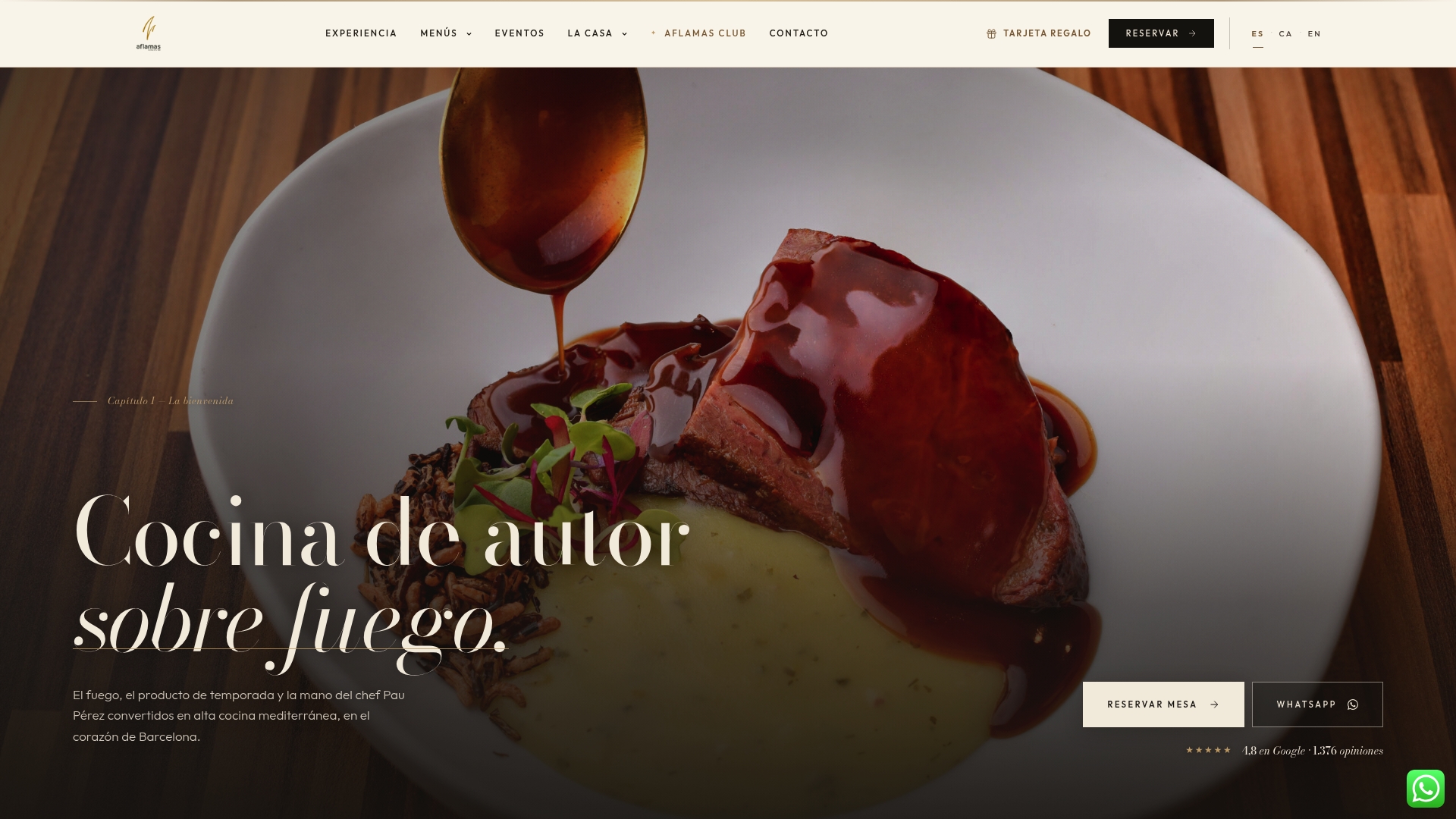
If this guide has you ready to book a tasting menu rather than just read about one, some tasting menus are built around priorities such as seasonal ingredients, deliberate course sequencing, and flexibility for dietary needs. Our Menú Ejecutivo offers a shorter, 35 euro per person introduction, while our Menú Selección Autor at 90 euros per person is built for full immersion in our kitchen’s style. For celebrations or private groups, our group menu page covers options designed specifically for that setting.
- Mention any dietary restrictions when you book so we can plan substitutions in advance.
- Ask about pacing and pairing tiers when reserving, especially for longer seasonal menus.
- Consider a gift card if you are planning this experience for someone else.
Browse our full tasting menu lineup or check availability directly to reserve your table.
FAQ
What is a 12-course tasting menu?
A 12-course tasting menu is an extended sequence of small plates, typically moving through multiple seafood, pasta, and meat courses before closing with cheese and dessert. According to MICHELIN inspector guidance, menus in this range sit at the upper edge of common practice, since going much longer risks guest fatigue and extended service time.
How many courses does a tasting menu have?
Most tasting menus run 5 to 12 courses, with 6 to 9 courses being the most common format across fine dining kitchens, according to MICHELIN inspector guidance. The exact count depends on the restaurant’s style and whether the menu is a quick introduction or a full immersive experience.
What is a 7-course menu?
A 7-course menu is a mid-length tasting format that typically includes an amuse-bouche, a couple of starters, a fish or seafood course, a main protein course, a palate cleanser, and a dessert. It sits within the most common course range cited by MICHELIN inspector guidance and balances variety with a manageable evening length.
Is a tasting menu worth it?
A tasting menu is worth it when you want a curated, chef-guided experience rather than making your own choices from a standard menu, since it shows a kitchen’s range and point of view in a single sitting. Whether it is worth the price depends on your priorities: a shorter menu like our Menú Ejecutivo at 35 euros per person offers a lower-commitment way to try the format before considering a longer, more immersive option.