Veganism is a lifestyle and ethical stance that excludes animal products from food, clothing, and other consumer choices, while plant-based describes a dietary pattern centered on plants without the same lifestyle commitments. You can eat plant-based without being vegan, but if you follow a strict vegan diet, you typically need a vitamin B12 supplement to avoid deficiency.
TL;DR:
- Vegan diets require B12 supplements because natural sources are almost exclusively animal-based, unlike most plant-based diets which can rely on fortification.
- Labels for plant-based products vary widely in fortification, making it necessary to check for added B12, calcium, and vitamin D to meet nutritional needs.
- Vegans extend their choices beyond diet to clothing and household items, while plant-based eaters generally do not, with motivations stemming from ethics versus health and convenience.
- Plant-based diets focusing on whole foods tend to support better health, whereas highly processed plant-based foods may contain high saturated fat, sugar, and salt levels.
- When dining out, it is essential to notify kitchens in advance and clarify ingredient sourcing and cross-contact controls to ensure the meal aligns with plant-based or vegan preferences.
Table of Contents
- What Does “Vegan” Mean Beyond Food?
- How Flexible Is the Term “Plant-Based”?
- Vegan vs Plant Based: Scope, Motivation, and Daily Life
- Nutrition and Health: What to Watch For
- Reading Labels on Plant-Based Milks and Meat Substitutes
- Environmental and Ethical Framing: Why the Language Differs
- How to Choose the Right Approach for You
- Dining Out: How Fine-Dining Menus Accommodate Vegan and Plant-Based Guests
- Using These Terms Respectfully in Conversation and on Menus
- Taste Both Approaches on an Aflamas Tasting Menu
- FAQ
- Sources
What Does “Vegan” Mean Beyond Food?
Veganism started as an ethical position, not a nutrition plan. It asks you to avoid animal exploitation wherever practical, which stretches into clothing, cosmetics, and household goods, not just what’s on your plate.
That scope creates gray areas that plant-based eating doesn’t touch:
- Honey counts as an animal product for most vegans, since it comes from bee labor, even though it contains no meat or dairy.
- Leather, wool, and silk fall outside a vegan wardrobe, regardless of whether the animal was harmed during collection.
- Cross-contact in professional kitchens, like fries cooked in the same oil as fish, matters to vegans in a way it often doesn’t to plant-based eaters.
- Cosmetics and household products tested on animals conflict with vegan principles even when the product itself contains no animal ingredients.
The Vegan Society, which coined the term in 1944, defines veganism as a philosophy that excludes all forms of animal exploitation and cruelty, extending well past the dinner table.
How Flexible Is the Term “Plant-Based”?
Plant-based has no single governing definition. It describes an emphasis, how much of your diet centers on plants, rather than a hard rule about what’s excluded entirely.
That flexibility produces several common variations:
- Whole-food plant-based diets minimize processed ingredients and build meals around vegetables, legumes, and whole grains.
- Plant-forward eating simply shifts the ratio toward plants without eliminating meat or dairy altogether.
- Flexitarian diets stay mostly plant-based with occasional meat, often for convenience or social reasons.
- Marketing use of “plant-based” frequently blurs these lines, applying the label to anything from a lentil stew to a heavily processed meat substitute.
Consumer research suggests shoppers find “plant-based” more approachable and less ideological than “vegan,” which is part of why food brands lean on it even when the product overlaps entirely with vegan ingredient lists.
Vegan vs Plant Based: Scope, Motivation, and Daily Life
The clearest way to separate these terms is to look at what each one governs and why someone adopts it.
- Scope: veganism covers your whole lifestyle, while plant-based usually refers only to food choices.
- Motivation: vegans are often driven by animal welfare ethics, while plant-based eaters more commonly cite health, environmental impact, or convenience.
- Labeling: a vegan shopper checks for animal-derived additives and testing practices, while a plant-based eater focuses mainly on ingredient lists.
- Wardrobe and goods: vegans extend their choices to clothing and cosmetics, while plant-based eating leaves those categories untouched.
- Dining out: a vegan diner asks about cross-contact and sourcing, while a plant-based diner may accept a dish cooked alongside animal products as long as the dish itself contains none.
These distinctions matter most at the point of decision, when you’re reading a menu, shopping for a gift, or explaining your choices to a host who wants to get it right.
Nutrition and Health: What to Watch For
Both approaches can support good health, but strict vegan diets carry specific risks that plant-based eating with occasional animal products doesn’t share.
B12 is the central concern. Vitamin B12 occurs naturally almost only in animal products, so vegans need a reliable fortified source or supplement. The German Nutrition Society (DGE) states that a vegan diet can be health-promoting for healthy adults when well planned, but mandates B12 supplementation, and recommends specialist medical supervision for children, pregnant or breastfeeding people, and older adults.
Beyond B12, a few other nutrients deserve attention on a vegan or heavily plant-based diet:
- Iron and zinc from plant sources absorb less efficiently than from meat, so variety and preparation methods (like soaking legumes) help.
- Calcium needs a reliable source once dairy is removed, whether from fortified foods or calcium-rich greens.
- Iodine can run low without dairy, eggs, or iodized salt in the diet.
- Vitamin D depends on sunlight or fortified foods regardless of diet type, but it’s worth checking when other dairy-linked nutrients are also absent.
EFSA’s micronutrient assessments document these bioavailability differences and flag B12, iodine, iron, calcium, and vitamin D as the nutrients most likely to fall short on a strict vegan diet without planning.
Food quality matters as much as the label itself. Harvard T.H. Chan School of Public Health cautions that not all plant-based diets are healthy: highly processed plant-based foods can run high in saturated fat, sugar, and salt, meaning a diet built on plant-based snack foods and meat substitutes doesn’t automatically outperform a balanced omnivorous one.
Reading Labels on Plant-Based Milks and Meat Substitutes
Fortification varies widely across plant-based products, and skipping the label is the easiest way to end up short on key nutrients.
- Check for “fortified with B12” or “contains B12” on the front or ingredients panel.
- Compare the calcium content to cow’s milk, since many plant drinks fall noticeably short unless fortified.
- Choose “unsweetened” versions when possible, since flavored plant drinks often carry added sugar.
- Look at protein content if the drink or substitute is meant to replace a protein source in your diet.
- Scan for vitamin D, which some but not all fortified plant drinks include.
AGES (the Austrian Agency for Health and Food Safety) reports that plant-based drinks often lack calcium and B12 unless specifically fortified, and recommends checking labels rather than assuming parity with dairy. Separate AGES monitoring of the European market found that fortification is inconsistent across brands, so the same product category can vary from carton to carton.
Pro Tip: Keep one fortified, unsweetened plant drink as your household default rather than rotating brands, so you always know what nutrients you’re getting.
Even with a well-fortified product, a B12 supplement is still typically necessary if you’re strictly vegan, since fortified drinks alone rarely cover full daily requirements.

Environmental and Ethical Framing: Why the Language Differs
Evidence consistently points to plant-rich diets lowering environmental impact, with the largest gains coming from cutting red and processed meat rather than eliminating every animal product.
- The WHO European Region found that plant-based diets reduce environmental impact and associate with lower risk of several noncommunicable diseases, while also noting that strict vegan diets raise micronutrient concerns without planning.
- Veganism’s ethical core centers on animal welfare, treating environmental and health benefits as secondary outcomes rather than the main point.
- Plant-based messaging tends to lead with health and environmental framing, which makes it a more inclusive entry point for people unwilling to commit to full veganism.
- Public health campaigns often favor “plant-based” specifically because it reads as practical rather than moral, lowering resistance to dietary change.
How to Choose the Right Approach for You
Picking between vegan and plant-based comes down to matching the label to your actual goal, not adopting a term because it sounds more serious or more flexible.
- Identify your primary driver: animal welfare points toward veganism, while health, environment, or taste preferences point toward plant-based eating.
- Assess your nutrient risk honestly, and consult a dietitian if you’re pregnant, breastfeeding, raising children, or managing a chronic condition, since the DGE flags these groups for specialist supervision under a vegan diet.
- Start with plant-forward swaps, like replacing one meat-based meal a day with legumes or tofu, rather than overhauling everything at once.
- Build a label-checking habit for fortified products, prioritizing B12, calcium, and vitamin D coverage.
- Decide in advance how you’ll handle supplementation, since relying on food alone to meet B12 needs is unreliable on a strict vegan diet.
Dining Out: How Fine-Dining Menus Accommodate Vegan and Plant-Based Guests
A well-run kitchen can adapt a full tasting menu for vegan and vegetarian guests without losing the sensory experience the meal is built around, as long as substitutions are planned rather than improvised at the table.
- Confirm ingredient sourcing in advance, particularly for sauces, stocks, and garnishes that commonly hide animal products.
- Ask about cross-contact controls if strict vegan preparation matters to you, since shared equipment can introduce trace animal ingredients.
- Request substitutions with enough notice for the kitchen to rework a course rather than simply omit an element.
- Expect a restaurant that regularly serves vegan, vegetarian, gluten-free, and lactose-free guests to have a clear process for these requests rather than treating them as exceptions.
We build tasting menus with these accommodations as a standard part of planning, not an afterthought layered onto a fixed menu.
Using These Terms Respectfully in Conversation and on Menus
The most useful guideline is simple: use the term that matches intent. Call something vegan only when it excludes all animal products and byproducts, and call something plant-based when it emphasizes plants without that stricter promise.
For hosts and menu writers, phrasing like “plant-based option, naturally vegan” clarifies both the ingredient profile and the lifestyle fit in one line, as outlined in why offer vegan catering at your next event. Precision here matters more than enthusiasm, and it costs nothing to ask a guest which term fits their actual practice rather than guessing.
— YellowRock
Taste Both Approaches on an Aflamas Tasting Menu
We build tasting menus with adaptability for vegan, vegetarian, gluten-free, and lactose-free guests, so you can explore fire-based, chef-driven cooking without compromising on how you eat.
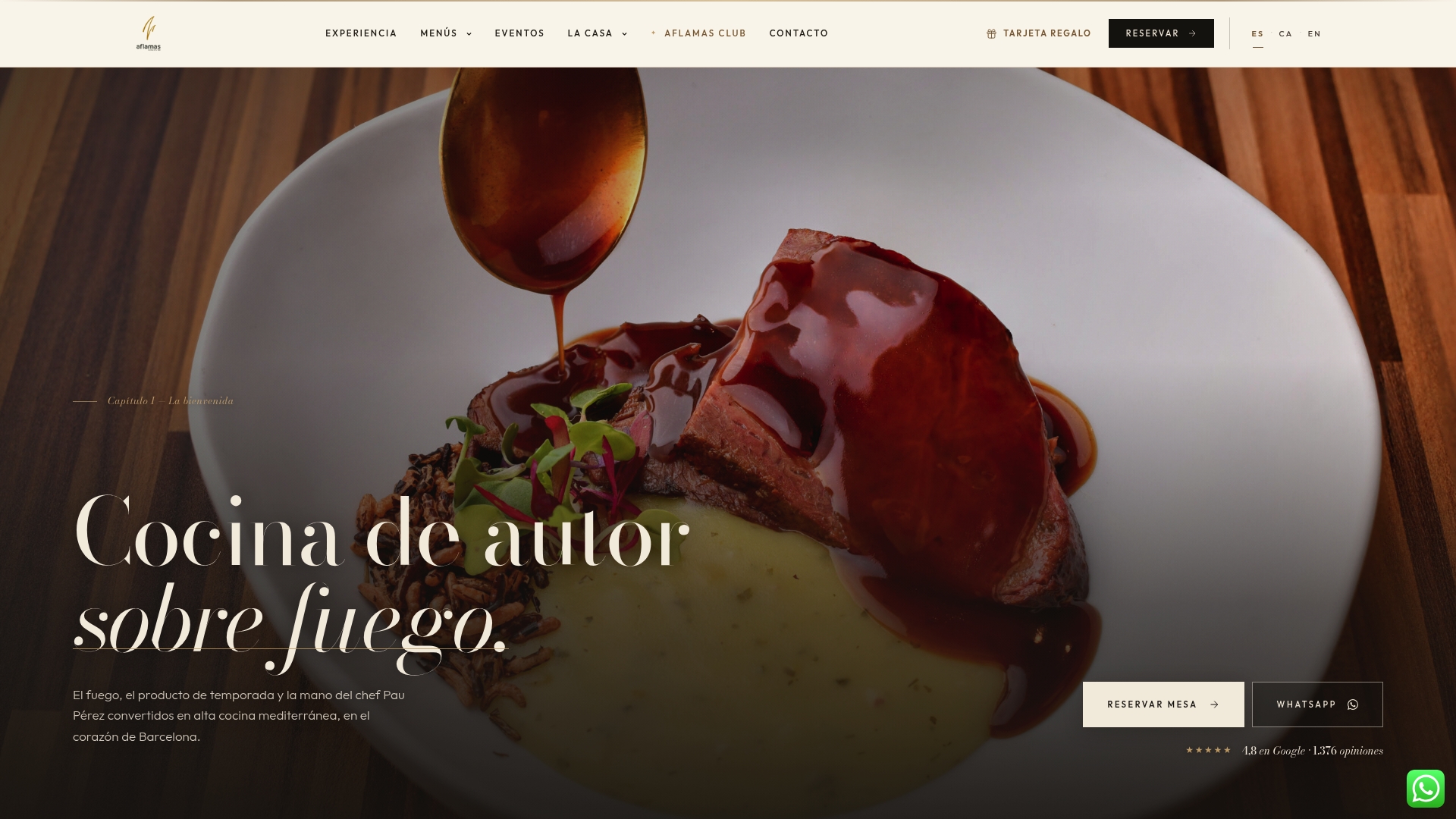
Our Menú Selección Autor and Menú Temporada both offer vegan and vegetarian adaptations on request, and our tasting menu page outlines how we handle substitutions for groups and individual diners alike. If you’re planning a private event, our group menus extend the same flexibility. Reserve a table and tell us your dietary approach when you book, and we’ll build the experience around it.
This article is general information, not a substitute for advice from a qualified doctor. Consult a qualified healthcare professional about your own circumstances before acting on anything here.

FAQ
Is plant-based the same as vegan?
No. Plant-based describes a diet that emphasizes plants, while vegan is a broader lifestyle that excludes animal products from food, clothing, and other goods. A diet can be plant-based without meeting the stricter standard of veganism.
Does 100% plant-based mean vegan?
Not necessarily. A diet can be entirely plant-based in its food sources while the person still uses non-food animal products like leather or wool, which a strict vegan would avoid. The terms describe different scopes, not degrees of the same thing.
Why do vegans eat plants if they are living?
Veganism’s ethical concern centers on sentience and the capacity to suffer, which most plant-based foods don’t involve in the way that raising and slaughtering animals does. The distinction vegans draw isn’t about biological life itself but about avoiding exploitation and cruelty toward animals specifically.
Can I follow a plant-based diet at a fine-dining restaurant?
Yes, many fine-dining kitchens, including ours at Aflamas, adapt tasting menus for plant-based, vegan, and vegetarian guests with advance notice. Checking ingredient sourcing and cross-contact practices ahead of your reservation helps ensure the meal matches your needs.