The fastest way to build a memorable intimate wedding dinner is to pick one focused format, a private tasting or chef’s table, a family-style long table, or an elegant picnic, and design the menu and flow around it. Small guest counts make dietary adjustments and personal touches far simpler to pull off. A chef-driven private tasting, like the kind offered at Aflamas, shows how that focus turns into an easier, more personal evening.
TL;DR:
- Small guest counts of 6 to 14 are ideal for private tastings, which simplify menu customization and pacing through chef-led, multi-course dinners.
- Family-style long tables suit groups of 10 to 24 and benefit from few shared dishes, with careful timing to ensure smooth flow and conversation.
- Outdoor picnics or casual board dinners work best for 6 to 16 guests but require backup planning for weather and surface conditions.
- Dietary needs are easiest to manage when collected early, with substitutions and accessibility considerations integrated into menu planning before the event.
- Staffing remains necessary at around one server per 6 to 8 guests, with service styles scaled to reduce complexity but not eliminate personalized attention.
Table of Contents
- Creative dinner formats and how to execute each
- Menu types and portioning templates for small guest lists
- Venue, seating, and logistics checklist for intimacy and smooth flow
- Managing dietary needs, accessibility, and personalization for a small guest list
- Why a chef-driven private tasting simplifies an intimate wedding
- Entertainment options appropriate for small dinner weddings
- Invitations and guest list considerations specific to intimate weddings
- Coordination of service style and staffing for a smaller event
- Incorporating personal touches and storytelling into the dinner experience
- A few planning notes from experience
- Book a private tasting or group menu with Aflamas
- FAQ
- Useful pages for planning your dinner
Creative dinner formats and how to execute each
Once you know your guest count and mood, the format almost chooses itself. Each option below works differently, so pick the one that matches the energy you want.
- Private tasting or chef’s table: best for 6 to 14 guests who want a curated, multi-course meal with the chef explaining dishes as they arrive; menu consultation happens in advance so courses reflect your story.
- Family-style long table: shared platters down the center of one table suit 10 to 24 guests and keep conversation loose; set a steady serving rhythm so dishes rotate every 15 to 20 minutes.
- Seated plated tasting: structured courses with timed pacing work well for 8 to 20 guests who want a more formal evening; pair each course with a wine note from the host or sommelier.
- Elegant picnic or board-style dinner outdoors: pack boards, linens, and a weather backup for 6 to 16 guests; low tables and cushions create a relaxed, photogenic setting.
- At-home chef or intimate catered dinner: brief your chef on kitchen access, equipment, and timing at least two weeks ahead, and confirm a backup plan if the kitchen is small.
Pro Tip: Choose the format first, then build the menu around it, never the reverse, so the pacing and portions match the mood you want.
A private tasting removes most of the guesswork because the menu, pacing, and room are planned together from the start. A long table, on the other hand, rewards simplicity: two or three shared dishes per course are easier to manage than six small plates. Outdoor picnics need the most backup planning, since weather and surface conditions can shift the whole setup within hours. Whichever format you choose, write out the serving order before the day arrives so your host, caterer, or chef has one shared script to follow.

Menu types and portioning templates for small guest lists
Portion planning gets easier once you separate it by format and headcount.
- 6 to 12 guests: offer 4 to 6 tasting courses, or 3 to 4 family-style dishes plus dessert; plan roughly a moderate portion of protein per person across the meal.
- 12 to 20 guests: scale to 5 to 7 tasting courses, or 4 to 5 shared platters, doubling serving dishes rather than portion sizes to keep the table from feeling crowded.
- 20 to 30 guests: keep tasting menus to 4 to 5 courses for timing reasons, or run 5 to 6 family-style dishes with two serving stations to avoid bottlenecks.
Three templates worth copying: a casual family-style menu of roasted vegetables, one shared protein, a grain salad, and a simple fruit dessert works for a relaxed afternoon; a plated tasting of a raw starter, a fire-cooked main, and a composed dessert suits a formal evening; a picnic board of cured meats, cheeses, seasonal fruit, and individual tarts travels well and needs no plating staff.
Venue, seating, and logistics checklist for intimacy and smooth flow
A private dining room offers climate control and dedicated service, while a home setting feels personal but demands more planning for equipment and cleanup. Outdoor patios add atmosphere but need a rain plan.
Seating shapes the feel of the room: a round table suits 6 to 10 guests and keeps conversation shared, while a long rectangular table works better past 12 and lets you mix families and friend groups along its length. Place cards help guide quieter guests into easier conversations.
- Confirm the gap between ceremony and dinner, ideally 60 to 90 minutes, so guests have time to settle without losing energy.
- Test lighting at the hour you’ll actually be eating, not earlier in the day.
- Book rentals and confirm a weather backup at least two weeks out.
- Walk through timing with your venue or chef the week before, course by course.
Managing dietary needs, accessibility, and personalization for a small guest list
Collecting dietary details early keeps the kitchen calm later. A simple RSVP field asking about allergies and preferences, paired with one designated contact who compiles the list, covers most cases without extra back and forth.
Common substitutions, plant-based proteins for vegan guests, gluten-free grains, and dairy-free sauces, are easiest to plan when the chef sees the full list before finalizing courses. For accessibility, check table height for wheelchair users, keep walkways clear, and dim lighting gradually rather than switching it all at once for guests sensitive to sudden changes.
Why a chef-driven private tasting simplifies an intimate wedding
A chef-led tasting menu puts dietary adaptation and pacing in one conversation instead of several. At Aflamas, menu consultations happen ahead of the event, so vegetarian, vegan, gluten-free, and lactose-free needs get built into the course sequence rather than patched in in the day.
A smaller guest list means every course can be planned around the people actually eating it.
Booking typically starts with a conversation about group size, dietary notes, and the general feel you want, followed by a tasting confirmation before the date.
Entertainment options appropriate for small dinner weddings
Live music scaled to the room works better than a full band for a dinner of 10 or 20 guests. A single guitarist or pianist during the meal, shifting to a curated playlist afterward, keeps volume low enough for conversation. Services like Musica Luxe can help match a performer to the size and tone of the room.
Speeches work best kept short and placed between courses rather than at the very start, so they don’t compete with the first bites of food. Two or three speakers, each under three minutes, usually land better than a long single toast.
Interactive elements suit small groups particularly well. A shared toast where every guest adds one sentence, a recipe card exchange, or a short story round at the table all work because everyone can actually hear and participate, something that’s much harder at a 150-person reception. Keep any interactive moment to one per dinner so it feels special rather than scripted.
Invitations and guest list considerations specific to intimate weddings
The guest list comes first, since it determines everything from table shape to menu scale. Most couples planning an intimate dinner start with the people they’d want at a quiet Sunday dinner, then build outward only as space allows.
Invitations for a small dinner can be more detailed than a traditional wedding invite, since you’re not mailing hundreds. Mentioning the format directly, “an intimate seated dinner” or “a family-style evening”, helps guests arrive with the right expectations for dress and pacing. Include dietary request fields directly on the RSVP rather than following up separately later.
Cutting a guest list is easier when you set a clear boundary early, such as immediate family and those who’ve been part of your life for a set number of years, and apply it evenly rather than case by case.
Coordination of service style and staffing for a smaller event
Staffing scales down with guest count, but not as much as people expect. A dinner for 12 still typically needs one server for every 6 to 8 guests to keep courses moving without rushing anyone.

Family-style service needs fewer staff than a fully plated tasting, since guests serve themselves from shared platters once food reaches the table. A plated tasting, by contrast, needs coordinated timing between kitchen and servers so every guest’s course arrives within a minute or two of the others.
If you’re hosting at home or an outdoor venue, confirm in advance whether your caterer or chef brings their own service staff or expects you to arrange it separately. A private dining room, by comparison, usually has staffing built into the booking, which removes one more thing to coordinate.
Incorporating personal touches and storytelling into the dinner experience
Small dinners give you room to make the meal personal in ways a large reception can’t. A menu card that explains why a dish was chosen, a family recipe adapted by the chef, or a toast structured around how the couple met all land differently when every guest at the table actually knows the story.
Place settings can carry a personal note too: a handwritten card with one memory per guest, or a small object tied to a shared trip or tradition. These details take minutes to plan for a dinner of 12, where they’d be impossible to replicate at scale for 150.

Consider weaving one story into the meal itself, timing a toast or short remark to land right before the course that means the most to the couple, rather than saving every personal moment for one long speech at the end.
A few planning notes from experience
Leave 12 to 15 minutes between courses so conversation doesn’t feel rushed, but the table never goes quiet either. Pick one course to be the memorable one, and let the rest support it rather than compete with it. A small guest list means you can trade spectacle for depth, and that trade is almost always the better one.
— YellowRock
Book a private tasting or group menu with Aflamas
A smaller guest list means more attention per plate, and that’s where a chef-led evening makes the difference. We offer group menus built around your dietary needs, pacing, and guest count, from an intimate tasting menu for close family to a fuller celebration through Alma, Fuego, or Pasión.
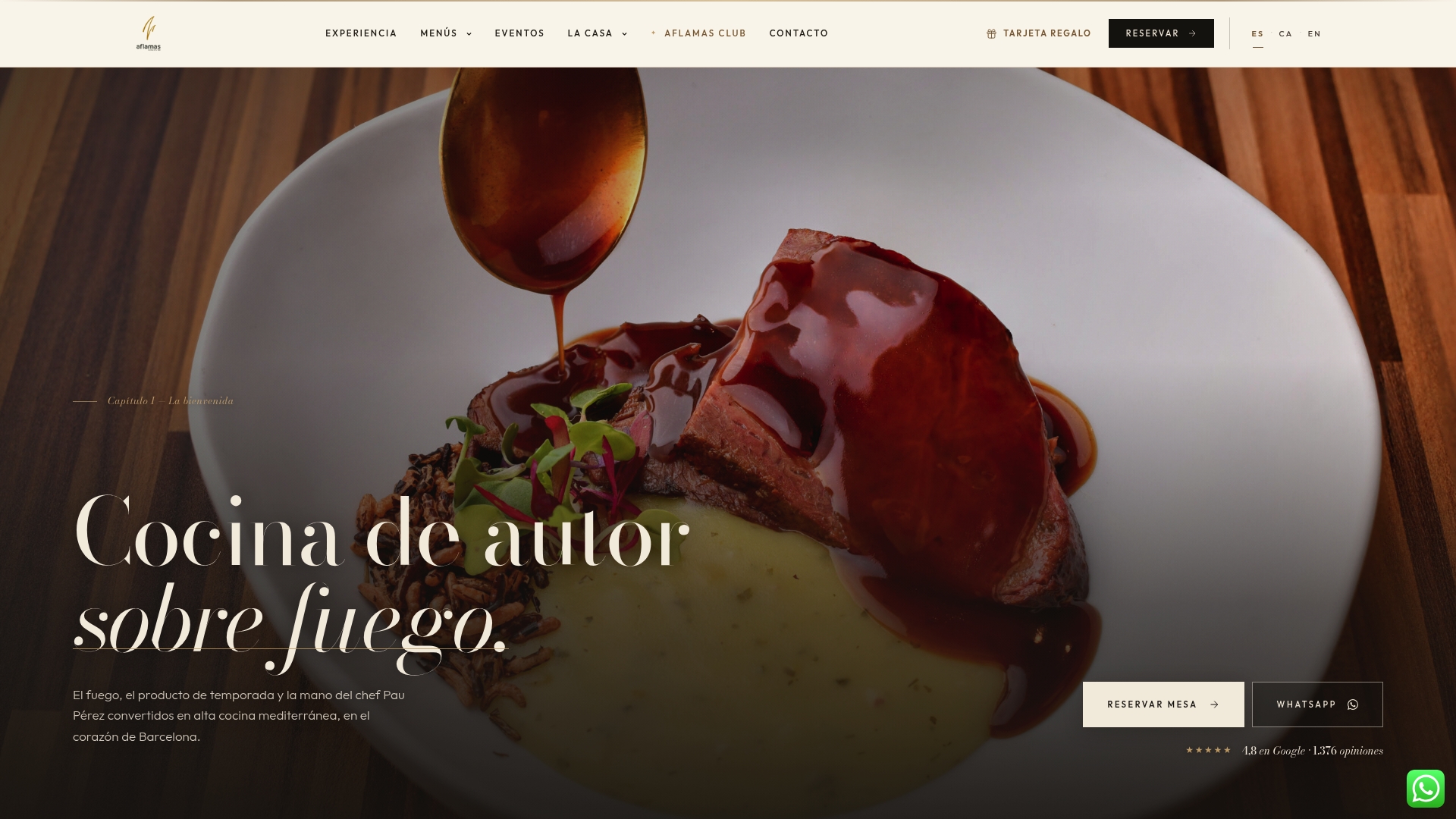
The next step is a short conversation about your group size and any dietary notes, followed by a tasting confirmation ahead of your date. Reach out through our group menu page to start planning your evening.
FAQ
What are some ideas for an intimate wedding?
A private tasting menu, a family-style long table, or an outdoor picnic-style dinner all work well for intimate weddings. Each format suits a different group size and mood, so match it to your guest count and the atmosphere you want.
What are some good ideas for dinner at a wedding?
Shared family-style platters, a multi-course chef-led tasting, or a relaxed board dinner with cheeses and cured meats all suit smaller weddings. The right choice depends on whether you want a formal pace or a looser, conversation-driven meal.
What are some good food ideas for a small wedding?
Seasonal, fire-cooked dishes with local ingredients work well for a small group because portions can be tailored exactly to headcount. Menus that build in vegetarian, vegan, gluten-free, and lactose-free options from the start, rather than as substitutions, tend to run smoother on the day.
How do I handle seating for a small wedding dinner?
Round tables suit groups of 6 to 10 and keep conversation shared, while a long table works better past 12 guests and lets you mix different groups along its length. Place cards help guide quieter guests into easier conversations.
Useful pages for planning your dinner
For menu details and private-group booking, our group menu and tasting menu pages cover formats and consultation steps. For music, Musica Luxe helps match a performer to a small room, and for destination dinners, Centro House offers nearby stays.