Orange wine pairs best with foods that match its texture and tannin: savory roasted dishes, aged cheeses, bold salads, and spiced cuisines that can stand up to a wine with real grip. Lighter, shorter-contact styles suit delicate seafood, while fuller, longer-macerated bottles (like the Spanish Tragolargo Orange Naturwein) hold their own against roasted meats and game. Our tasting menus are designed with this logic in mind.
TL;DR:
- Pair tannic orange wines with fat or protein from aged cheese, cured meats, and roasted dishes; acidity cuts through richer foods.
- With spicy curries, choose fruit forward wines with moderate tannin and serve them slightly cooler; lime or vinegar in the dish can temper heat.
- Raw seafood and ceviche suit lighter, shorter contact wines, while grilled fish can handle fuller styles because char and oil meet their structure.
- Serve orange wine at 10–14 degrees Celsius, not refrigerator cold, and let young, structured bottles breathe for 15–30 minutes.
Table of Contents
- Why Orange Wine Pairs Differently
- Practical Pairings by Cuisine
- Dish-Specific Recommendations That Work
- Getting Temperature and Service Right
- How Sommeliers Use Orange Wine on a Tasting Menu
- A Note on Experimenting With Orange Wine
- Taste These Pairings at Aflamas
- FAQ
- Sources
Why Orange Wine Pairs Differently
Orange wine gets its structure from skin contact: the juice sits with the grape skins the way red wine does, picking up tannin, a deeper color, and savory, sometimes oxidative aromatics that white wine never develops. That structure changes the pairing math. You are no longer just matching flavors; you are matching texture.
The practical rule is simple. Tannin wants fat or protein to soften against. Acidity wants richness to cut through. Savory, nutty, or oxidative notes want roasted or caramelized flavors to echo. Pairing by structure rather than by flavor keeps your choices reliable even across wildly different orange wine styles, from a two-week skin-contact Malvasía to a six-month amphora-aged field blend.
Spice adds a wrinkle. Chile heat tends to amplify how tannic and alcoholic a wine feels on the palate, which is why very spicy dishes can turn a confident orange wine into a harsh one. The fix is usually one of three moves:
- Choose a lighter, more fruit-forward orange wine for your spiciest dishes.
- Serve it a few degrees cooler to tame the perceived heat.
- Balance the dish itself with acid, such as a squeeze of lime or a vinegar-forward sauce.
A roasted chicken thigh with a tannic, long-macerated orange wine works because the fat buffers the tannin. A green curry with the same wine can feel aggressive, while a crisper, fruitier orange wine handles the coconut fat and chile without a fight.
Pro Tip: When in doubt, taste the wine alone first and name its loudest feature, tannin, acid, or savoriness, then build the dish around taming or matching that one trait.
Practical Pairings by Cuisine
Once you know the structural rule, matching cuisines gets fast. Here is how it plays out across the dishes people actually cook and order.
Mediterranean small plates are a natural starting point. Roasted peppers, romesco, and grilled sardines all carry a mix of smoke, acid, and olive oil richness that suits a citrusy, grippy orange wine. The Spanish Tragolargo Orange Naturwein, made from Moscatel de Alejandría and Malvasía with about two weeks of skin contact, shows exactly this profile: citrus, apricot, and a textured mouthfeel that holds up to charred Mediterranean starters without overwhelming them.

Spicy Asian and Indian cooking is one of the most frequently recommended orange wine categories, and for good reason. Dishes like chicken satay, coconut-based curries, and tandoori vegetables bring fat, char, and warm spice that a bold, tannic white would struggle with but orange wine handles comfortably, provided you lean toward fruit-forward, moderate-tannin bottles and keep the pour slightly cooler when the heat level climbs.
Middle Eastern cooking leans into the oxidative, nutty side of orange wine. Za’atar-dusted flatbreads, muhammara (the walnut and red pepper dip), and herb-heavy salads like tabbouleh echo the savory, slightly nutty notes that longer skin contact produces. These are dishes where flavor and structure point in the same direction.
Latin and grilled seafood dishes, fish tacos, charred corn, grilled prawns, call for restraint. A lighter-contact orange wine, with brighter acid and less tannin, keeps the citrus and char in the dish front and center instead of fighting a heavy, grippy pour.
Barbecue and slow-roasted meats are where the fullest orange wines shine. Think:
- Slow-roast pork with a charred crust
- Roasted root vegetables with caramelized edges
- Mushroom-forward barbecue sides
These dishes have enough umami and fat to meet a longer-macerated, more tannic orange wine on equal footing.
Dish-Specific Recommendations That Work
Cuisine is a useful starting filter, but individual dishes still need their own logic.
- Aged cheese rewards tannin and savory aromatics almost automatically. Aged Manchego, nutty alpine styles like Gruyère, and washed-rind cheeses all have enough fat and funk to meet an orange wine’s structure head-on.
- Charcuterie and cured meats, chorizo, salumi, cured ham, bring salt and fat that soften tannin and let the wine’s savory side come forward.
- Poultry and game sit in the middle of the weight spectrum. Roasted chicken with an herb jus or a simply prepared duck breast suits a mid-weight orange wine better than either a featherlight or a heavily tannic one.
- Seafood needs the most care. Raw preparations and ceviche call for lighter, shorter-contact orange wines, while grilled or roasted fish, with more char and oil, can handle a fuller style.
- Vegetarian dishes built on umami, mushroom risotto, braised lentils, roasted root vegetables, match the wine’s texture almost dish for dish. Understanding what umami means for pairing helps explain why these earthy, slow-cooked dishes feel so natural alongside skin-contact wines. Our vegan pairing approach uses this same umami-to-texture logic when building plant-based tasting courses.
Getting Temperature and Service Right
Serving orange wine too cold is one of the most common mistakes. A band of about 10 to 14 degrees Celsius lets savory aromatics open up and softens tannin that feels harsh straight out of the refrigerator.
- Serve at 10 to 14 degrees Celsius rather than ice-cold.
- Open young, structured bottles 15 to 30 minutes before pouring, or give them a brief decant.
- Use a slightly larger glass to let aromatics develop, even when pours are small.
- Adjust the plate, a squeeze of citrus, a finishing oil, or a controlled pinch of salt, to soften excess tannin on contact.
We follow the same decanting versus aerating timing with our own skin-contact selections, since a young, tannic orange wine often needs that short window of air before it shows its best side.
Pro Tip: If a bottle tastes tight or bitter on first pour, give it ten more minutes in the glass before deciding it’s a bad match.
How Sommeliers Use Orange Wine on a Tasting Menu

In tasting-menu service, orange wine often gets poured early to mid-sequence in small portions, around 3 ounces, specifically because its tannin lets it bridge white and red courses without stepping on what follows. A roasted vegetable course with a touch of char pairs naturally with a medium-contact orange wine: the caramelized edges meet the wine’s savory notes, and the portion stays small enough that the tannin never fights the next pour. We apply this same 3-ounce pour logic across our own tasting menus.
Sommelier Rico Jauch describes orange wine as a conversational style, one that rewards patience and often reveals new aromatics with a little air, which is part of why it fits tasting-menu pacing so well:
Orange wine tends to surprise people, and giving it a few minutes to open often changes what you taste entirely.
Rico Jauch, interviewed on orange wine production and flavor
A Note on Experimenting With Orange Wine
Orange wine rewards curiosity more than any rulebook can capture. The structural guidelines here are a starting point, not a ceiling, and some of the best pairings come from simply trying a bottle against a dish you love and paying attention. A guided tasting menu, where pours are chosen course by course, is a fast way to build that instinct.
— YellowRock
Taste These Pairings at Aflamas
We build our tasting menus around the same structural logic covered here: matching tannin to fat, acidity to richness, and savory depth to roasted or caramelized flavors, so every pour earns its place on the plate.
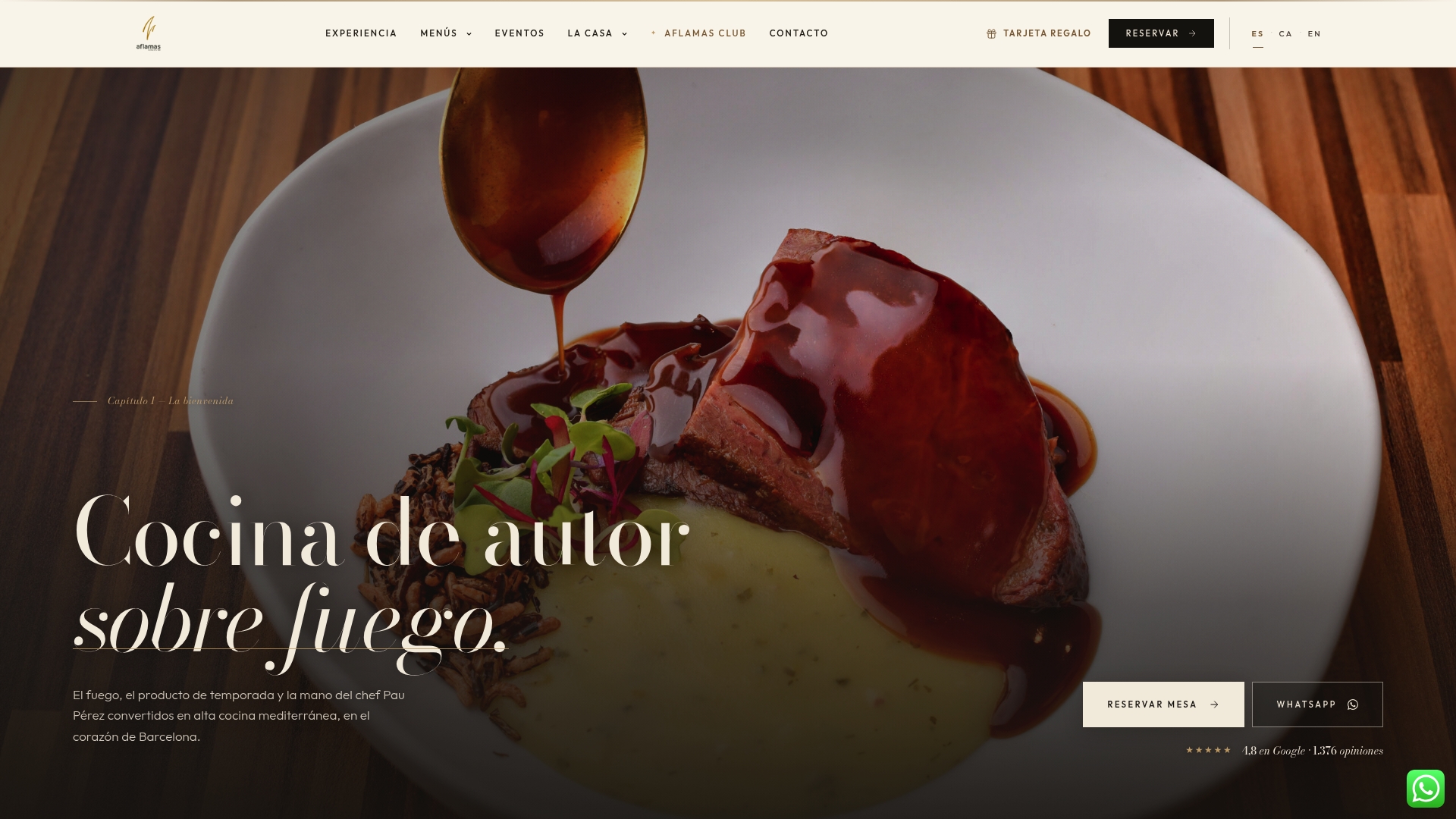
Our chef-driven menus range from the Menú Ejecutivo at €35 per person to the multi-course Menú Festival at €150 per person, with wine pairing built into the sequence course by course. Menus can be adapted for vegetarian, vegan, gluten-free, and lactose-free diets, aiming to accommodate various dietary needs.
- Pours matched thoughtfully to each course.
- Adaptations available for special dietary guests.
- Private dining spaces are offered for groups and celebrations.
If you want to taste orange wine pairings built the way this article describes, explore our tasting menu and reserve a table.
FAQ
What foods pair well with orange wine?
Savory roasted dishes, aged cheeses, charcuterie, and bold spiced cuisines like Middle Eastern or Indian cooking pair well because they match the wine’s tannin and texture. Umami-rich vegetarian dishes, including mushroom and lentil preparations, also work naturally with skin-contact wine.
What are the different types of skin-contact wine?
Skin-contact, or orange, wines vary mainly by how long the juice stays with the grape skins and how oxidative the resulting style becomes, ranging from a few days to several months of maceration. Shorter contact tends to produce lighter, more floral wines, while longer contact produces fuller, more tannic, savory styles like Tragolargo Orange Naturwein.
Why do people drink orange wine?
Many drinkers are drawn to orange wine because it offers red-wine-like structure and tannin in a wine made from white grapes, giving it unusual versatility at the table. It also tends to work as a conversational, exploratory style that pairs well with tasting-menu formats and curious eaters.
Is orange wine sweet or dry?
Orange wine is almost always dry; its deeper color and savory aromatics come from skin contact, not residual sugar. The perception of fruitiness some drinkers notice is typically ripe fruit character rather than actual sweetness.