The simplest rule in wine pairing is this: balance intensity and match the dominant component in your dish, whether that’s acid, sweetness, fat, or tannin. Start by choosing a wine with slightly more acidity than your food, a touch more sweetness if the dish is sweet, and a tannic red when the meal is fatty or grilled. Beyond that, trust your palate. Pairing rewards experimentation far more than memorization.
TL;DR:
- Choose wine for the sauce or seasoning, not the protein: buttery salmon favors a rounder white, while charred salmon suits an acidic light red.
- For spicy dishes, choose a slightly sweet Riesling or Gewürztraminer; a dry red with more alcohol can intensify chili’s heat.
- Salt can make tannin taste harsher, so choose lower tannin wines with very salty food; fatty dishes, by contrast, can soften a tannic red.
- Artichoke, chicory, and vinegary dressings can make wine taste metallic or bitter, so serve them with a simple, unoaked white.
- Taste a disappointing wine by itself before changing the pairing; musty or vinegar aromas and flat, brown flavors can signal a flawed bottle.
Table of Contents
- Beginner checklist: 9 practical pairing tips you can use at the table
- Taste components explained: how acidity, sweetness, tannin, fat, salt, and alcohol change pairings
- Congruent vs complementary pairings: choose matching or contrasting strategies
- Intensity and the sauce rule: why the sauce or dominant component usually decides the wine
- Classic pairings to memorize (meat, fish, poultry, vegetarian, spicy food, desserts)
- Pairing cheese and chocolate: practical starter rules
- How to practice: a short tasting workflow, experiments, and ‘joker’ bottles to keep at home
- Explanation of common wine faults and how they affect pairing decisions
- [Chef and sommelier perspective: how defining culinary experiences teaches the basics](#chef-and-sommelier-perspective-how-defining-culinary-experienceshttpswildfoodzcom20260607defining-culinary-experiences-a-travelers-guide-teaches-the-basics)
- An alternative: learn pairings faster with a guided tasting at Aflamas
- FAQ
- Sources
Beginner checklist: 9 practical pairing tips you can use at the table
A few rules cover most situations you’ll run into at a restaurant or your own kitchen table. These come straight from how professionals approach a wine list, including the “acids go with acids” principle a master sommelier uses as a starting point for most pairings.
- Pick a wine more acidic than the food. A squeeze of lemon on fish calls for a crisp Sauvignon Blanc, not a soft, low-acid white.
- Match sweetness to sweetness. A barely-off-dry Riesling keeps a fruit tart from making your wine taste flat and sour.
- Match intensity, not just flavor. A delicate sole doesn’t need a powerful Cabernet; it needs a light white that won’t drown it.
- Pair tannin with fat. A seared ribeye softens the grip of a tannic Malbec, and the tannin, in turn, cuts through the richness.
- Match the sauce, not the protein, since a cream sauce and a tomato sauce on the same chicken breast call for different wines, as WineFolly points out.
- Cool the heat with sugar. A slightly sweet Gewürztraminer tames a spicy curry better than a dry, high-alcohol red.
- Keep bubbles and rosé in your back pocket. Both work with fried food, salty snacks, and mixed-plate meals where nothing else quite fits.
- Serve wine at the right temperature. A red that’s too warm tastes boozy and flat; a white that’s too cold mutes its fruit.
- Taste, adjust, repeat. If a pairing feels off, change one variable at a time, like the wine’s sweetness or the dish’s acidity, until it clicks.
Pro Tip: Pour two different wines next to the same dish and taste them side by side. The contrast can teach you more than any chart.
Taste components explained: how acidity, sweetness, tannin, fat, salt, and alcohol change pairings
Pairing rules work because wine and food share a small set of sensory levers. A sensory framework built around seven elements, alcohol, sweetness, fat, acidity, salt, protein, and phenols (tannin), explains why some combinations sing and others fall flat.
- Acid brightens a dish and makes wine taste fresher next to rich food.
- Sweetness softens bitterness and spice, but can make a dry wine taste thin.
- Tannin creates a drying sensation that pairs well with protein and fat.
- Fat coats the palate and can mute a wine’s acidity, so richer dishes often need brighter wines.
- Salt amplifies flavor and can make tannin taste harsher, which is why very salty dishes often suit lower-tannin wines.
- Alcohol adds weight and heat, and can intensify the burn of spicy food.
Try two quick experiments at home. Eat a salty potato chip, then sip a tannic red; notice how much harsher the tannin feels. Next, take a bite of something fatty, like cheese or steak, and taste a high-acid white; the fat should make the wine taste rounder and less sharp.
Congruent vs complementary pairings: choose matching or contrasting strategies
Two useful strategies can guide many pairing decisions.
- Congruent pairing means matching similar flavors and textures, like a buttery Chardonnay with a creamy risotto, or a light Pinot Noir with duck breast. This works best with delicate, cohesive dishes where you want the wine to extend the dish’s flavor rather than fight it.
- Complementary pairing means using contrast to create balance, like a sparkling wine cutting through fried chicken, or a sweet Riesling calming a spicy stir-fry. This shines with bold, salty, or spicy dishes that need something to offset their intensity.
Practice both. Try a soft goat cheese with a crisp Sauvignon Blanc for a congruent match, then try the same cheese with a slightly sweet sparkling wine for a complementary one. Notice which one feels more natural for the dish in front of you.
Intensity and the sauce rule: why the sauce or dominant component usually decides the wine
The sauce, not the protein, usually drives a successful pairing. Sauces concentrate acid, fat, sweetness, or spice far more than the base ingredient does, so a wine chosen for the “fish” or “chicken” on the plate often misses the mark.
A simple workflow fixes this: taste the sauce first, name its dominant trait, then pick a wine to match or balance it.
- Taste the sauce or seasoning before deciding anything else.
- Name the dominant component, acid, sweetness, fat, or spice.
- Match it or offset it with a wine that shares or balances that trait.
Salmon in a buttery beurre blanc calls for a rounder white that won’t clash with the fat, while the same salmon grilled with a charred crust pairs better with something with a bit more acid and smoke-friendly character, like a light Pinot Noir.
Pro Tip: When in doubt, taste the sauce on a spoon by itself. It tells you more about the right wine than the protein ever will.

Classic pairings to memorize (meat, fish, poultry, vegetarian, spicy food, desserts)
A short list of reliable matches gives you a starting point whenever you’re staring at a wine list.
- Cabernet Sauvignon or Syrah with grilled red meat, because their tannin and smoky notes echo the char and fat.
- Pinot Noir with salmon, since its moderate tannin and red fruit don’t overwhelm the fish.
- Chardonnay with creamy pasta or chicken dishes, where its body and often subtle oak complement the sauce.
- Off-dry Riesling with spicy Asian food, because its sweetness softens chili heat, a point echoed in guidance on pairing wine with spicy food.
- Sparkling wine or Champagne with fried or salty food, since acidity and bubbles cut through oil and salt.
- Rosé with grilled vegetables or light meats, a flexible middle ground between red and white.
- Sweet wine with rich desserts or blue cheese, where sugar balances intensity instead of fighting it.
These are starting points, not fixed rules. Swap in what’s available locally or what you already enjoy. A general matching guide suggests thinking in terms of a wine’s body, acidity, and sweetness rather than chasing an exact bottle, which makes substitution far less intimidating.
Pairing cheese and chocolate: practical starter rules
Cheese and chocolate trip up a lot of beginners because both carry strong, specific flavors that can clash easily with wine.
- Soft cheeses like brie pair well with light, crisp whites or sparkling wine.
- Hard, aged cheeses such as aged cheddar or Manchego suit fuller reds that can stand up to their intensity.
- Washed-rind cheeses often do better with a slightly sweet white than with a dry red, which can taste bitter against them.
- Blue cheese pairs classically with sweet wine, since sugar balances its salt and sharpness, a principle echoed in guidance on cheese and wine.
For chocolate, sweeter wine generally beats drier wine. Milk chocolate works well with creamy, lower-acid wines, while very dark, high-cocoa chocolate needs a fuller-bodied red or a dedicated sweet wine to avoid tasting bitter against the wine’s tannin.
A few ingredients are notorious troublemakers: artichoke, chicory, and strongly vinegary dressings can make many wines, especially oaked ones, taste metallic or overly bitter. When a dish includes any of these, lean toward a simple, unoaked white rather than something structured.
How to practice: a short tasting workflow, experiments, and ‘joker’ bottles to keep at home
Build instincts with a three-step workflow: taste the wine alone, taste it with a bite of food, then compare two different wines against the same dish. The shift in flavor each time is the lesson.
- Sip the wine by itself and note its acidity, sweetness, and body.
- Take a bite of food, then sip again, paying attention to what changed.
- Repeat with a second wine on the same dish to feel the contrast directly.
Keep a few versatile “joker” bottles on hand: a dry Riesling, a sparkling wine, and a light, fruity red like Garnacha. Serve whites chilled and reds slightly below room temperature, and use a simple tulip-shaped glass for most styles. For young reds that taste tight or harsh, a quick decant or aeration can soften them before you pour.
Explanation of common wine faults and how they affect pairing decisions
Not every disappointing pairing is a pairing problem. Sometimes the wine itself is flawed, and no amount of matching fixes that.
The most common fault is cork taint, which gives wine a musty, wet-cardboard smell and flattens its fruit, making even a perfect pairing taste dull. Oxidation is another: a wine exposed to too much air turns brownish and tastes stale or sherry-like, losing the fresh acidity that made it a good match in the first place. Volatile acidity, often described as a nail-polish or vinegar smell, signals a wine that’s started to turn and will clash with almost anything on the plate.

A less obvious issue comes from the food side. Certain ingredients, like artichoke and very vinegary dressings, can make a perfectly sound wine taste metallic or bitter, which is easy to mistake for a flawed bottle. Before blaming the pairing, taste the wine on its own. If it smells musty, smells like vinegar, or tastes flat and brown instead of fresh, the problem is the bottle, not your food choice. Send it back or open a new one rather than trying to “fix” it with a different dish.
Chef and sommelier perspective: how defining culinary experiences teaches the basics
Multi-course tasting menus are built on the same logic covered here, just stretched across several plates. Courses typically move light to heavy, with a palate cleanser to reset the tongue before the next pairing, and small pours let diners sample different wine styles instead of committing to one bottle for the whole meal.
Dietary needs reshape the sequence rather than simplify it. A vegetarian or vegan course swaps animal fat for olive oil or nuts, which still gives a wine something to soften against, while gluten-free and lactose-free dishes shift sauces but rarely the core pairing logic. We built our vegan wine pairing approach around exactly this idea, adjusting the wine to the course’s real texture and intensity rather than defaulting to a single “safe” bottle.
— YellowRock
An alternative: learn pairings faster with a guided tasting at Aflamas
Reading about acid, tannin, and fat only goes so far. Tasting them side by side, with someone explaining why each pour was chosen, can help teach the same lessons.
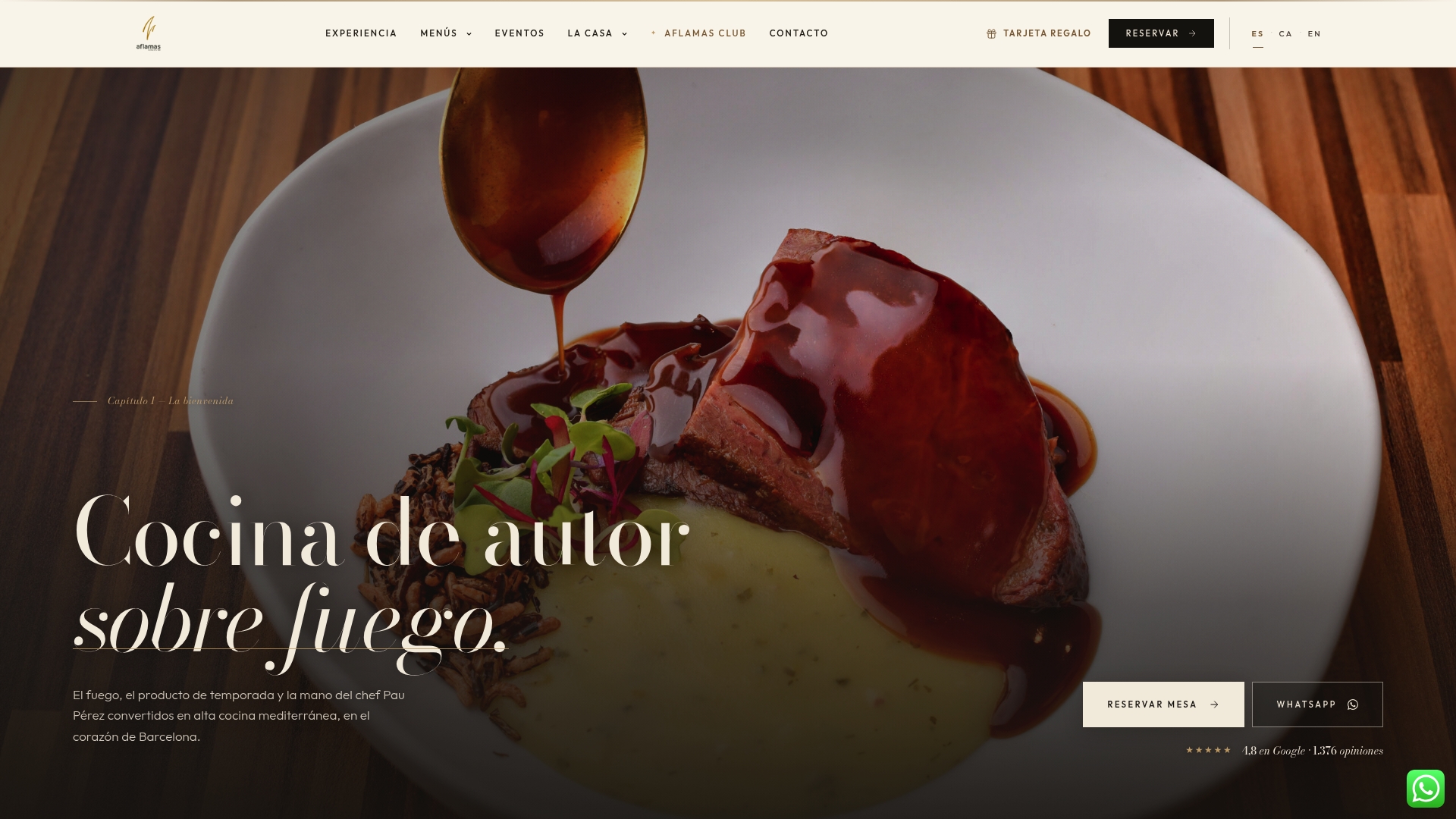
At our restaurant in Barcelona, we build each tasting menu around fire-based cooking and seasonal, local ingredients. We walk you through why each course is paired the way it is. We also host private events and group celebrations with personalized menus, and we offer gift cards if you’d rather give someone else the experience. If you want to feel how these rules play out across a full meal, reserve a tasting menu and taste the logic for yourself.
FAQ
What are the six basic rules for pairing food with wine?
The core rules are: match intensity, balance acid with acid, pair sweetness with sweetness, use tannin with fat, match the wine to the sauce rather than the protein, and adjust for salt and spice. These principles come from beginner frameworks used by sommeliers and wine educators, and they cover most everyday pairing decisions.
What is the 75-85-95 rule for wine?
This isn’t a recognized standard in the sourcing behind this guide, and definitions of it vary widely online. Rather than relying on an unverified numeric rule, focus on matching intensity and the dominant flavor component, which covers the same ground more reliably.
What is the 30/30 rule for wine?
Numbered rules aren’t backed by the sommelier and wine-education sources used here. Skip memorizing numbered rules and instead practice the acid, sweetness, fat, and tannin framework described above, since it applies to nearly any dish.
What are the two basic rules when pairing food and wine?
The two most useful rules are matching intensity (light wine with light food, bold wine with bold food) and matching the dominant component, usually acid, sweetness, or fat, between the wine and the dish. Most beginner mistakes trace back to ignoring one of these two factors.
Do I need expensive wine to pair well with food?
No single price point guarantees a good pairing, since balance and intensity matter far more than cost. A modest, high-acid white can outperform an expensive but poorly matched red on the same plate.
Sources
- Food and Wine Pairing Basics (Start Here!)
- [Systematisch genießen: Die Sensorik gelungener Wein-Speisen-Kombinatio
– vinodo](https://vinodo.de/blogs/news/systematisch-geniessen-die-sensorik-gelungener-wein-speisen-kombinationen) - Food and wine pairing: 8 tips from a Master Sommelier
- Deutsches Weininstitut: Käse & Wein