Vegan fine dining is a technique-driven multi-course tasting experience that places plant ingredients, texture, and sourcing at the center, not an afterthought bolted onto a conventional menu. This vegan fine dining guide walks through what to expect at the table, the chef techniques that build flavor without animal products, and how to evaluate a restaurant before you book, including a look at how Aflamas puts these principles into practice.
TL;DR:
- Many vegan fine dining menus feature complex techniques such as fermentation, long reductions, and smoking to mimic the depth and richness of traditional animal-based flavors.
- Choosing a restaurant requires confirming it is truly vegan and assessing their sourcing practices, technique descriptions, and ability to handle various allergies for a quality experience.
- Sourcing ingredients locally and seasonally enhances flavor in vegan dishes, with many kitchens now embracing farm-to-table commitments and sustainability as a mark of culinary excellence.
- Michelin recognition for vegan cuisine remains rare, but a focus on sustainability and technical mastery is steadily elevating the category, with many high-end establishments adopting plant-based techniques.
- Vegan tasting menus typically cost similar to traditional fine dining options, with pricing depending on course count, technique, and whether pairing options are included.
Table of Contents
- What a vegan tasting menu actually includes
- How to choose a vegan fine-dining restaurant
- Techniques that build flavor without animal products
- Aflamas: adapting high gastronomy for vegan diners
- Creativity, tradition, and pleasing a mixed table
- Why Michelin recognition and sustainability are reshaping the category
- Booking Aflamas for a vegan tasting experience or private event
- Sources
- FAQ
What a vegan tasting menu actually includes
A vegan tasting menu generally runs four to eight courses or more, and a full sitting often stretches to several hours when paired drinks and pacing are part of the plan. The structure mirrors classic fine dining: a small opening bite to set the tone, vegetable-forward intermediate courses that build complexity, one or two composed mains with a clear technical centerpiece, and a dessert course that closes with contrast rather than sweetness alone.
What changes is the substitution logic. Instead of butter-poached fish or a meat jus, you get reductions built from roasted vegetables, mushroom stocks, or fermented plant bases that carry the same depth. Expect:
- An opening snack or amuse-bouche designed to wake up the palate before the main sequence starts
- Vegetable-led intermediate courses that showcase a single ingredient treated several ways
- A composed main course built around a technical anchor, such as a slow reduction or a smoked element
- A dessert that uses fat and acid for balance rather than relying on sugar alone
Pricing often scales with course count and with whether a pairing is included. Many kitchens now offer non-alcoholic pairings priced close to their wine counterparts, reflecting a broader shift toward treating juice, tea, and fermented pairings as a serious part of the menu rather than a consolation option.
How to choose a vegan fine-dining restaurant
Not every restaurant that lists a plant-based option is built for this kind of meal, so a short checklist saves you from a disappointing booking.
- Check whether the menu is explicitly vegan or just “plant-forward,” since the second often still uses dairy or honey in finishing touches.
- Look for language describing technique: fermentation, foraging, house-aged ingredients, or an on-site garden signal real craft rather than a token dish.
- Search for sourcing or sustainability credentials, such as farm-to-table sourcing or a Green Star acknowledgment from Michelin, which signals a kitchen that treats sourcing as a quality standard.
- Confirm reservation windows and pacing: a true tasting menu needs a few hours, so a restaurant rushing you through courses is cutting corners.
- Ask how allergies beyond veganism (gluten, nuts, soy) are handled, since a kitchen confident in its craft will have clear answers rather than vague reassurances.
Pro Tip: Call ahead and ask specifically how the kitchen builds its sauces and stocks. A kitchen that can describe its technique in a sentence or two is usually the one worth the reservation.
Red flags include menus that describe dishes only by their missing ingredients (“no meat, no dairy”) rather than what they actually contain, and venues that cannot say where their produce comes from.
Techniques that build flavor without animal products
The craft of vegan fine dining lives in a handful of methods that replace what fat, collagen, and dairy normally do. Fermentation develops umami over time, the same way miso or aged cheese does. Long reductions concentrate vegetable or mushroom stocks into something with body and depth. Smoking and controlled char add the savory edge that a seared steak would otherwise provide, and emulsion techniques, including aquafaba whipped in place of egg whites, create the lift and structure that classic pastry relies on.
Ingredient choices matter as much as method:
- Mushrooms, including lion’s mane, mimic the chew and richness of meat when roasted or seared
- Sea vegetables add a briny depth that stands in for fish-based stocks
- Aged plant fats and cultured nut butters bring the richness that butter or cream would normally carry
- Legumes, particularly lentils, work as the base for custards and terrines when cooked down and set
Plant butter analogues, starch-based gels, and lentil custards are now common substitutions, and when done well they hold their own against the originals rather than acting as a stand-in. Sourcing within roughly 50 kilometers of the kitchen tends to sharpen these results further, since produce picked closer to peak ripeness carries more of the flavor these techniques are built to showcase.
Aflamas: adapting high gastronomy for vegan diners
Aflamas structures its tasting menus with adaptations for vegan, vegetarian, gluten-free, and lactose-free diets built in rather than treated as a special request. Guests can review options on the tasting menu page before booking, which describes adaptations across dietary needs.
Its approach to seasonality, detailed on a seasonal menu page, follows the logic of sourcing ingredients near their peak and using fire-driven techniques. For groups and private events, adaptable group menus extend dietary flexibility to celebrations and private dining rooms. Diners planning ahead can request dietary adaptations at the time of reservation, allowing the kitchen to plan courses with technical care.
Creativity, tradition, and pleasing a mixed table
Vegan fine dining works best when it treats tradition as a reference point rather than a constraint. A kitchen that reimagines a classic reduction or a composed terrine using plant ingredients is translating technique, not abandoning it, and that translation is what makes a tasting menu land with diners who did not choose it for ethical reasons.

This matters at a mixed table, where one guest may be vegan and the rest are not. A menu built on technique rather than restriction tends to satisfy everyone, because the dish is judged on flavor and texture rather than on what it lacks. Chefs who succeed here usually keep one foot in classic technique, using reduction, emulsion, and fermentation the same way a traditional kitchen would, while building the other foot around ingredients that have historically been treated as side players: mushrooms, legumes, and sea vegetables promoted to the center of the plate.

The result is a style of cooking that reads as inventive without feeling like a gimmick, and that balance, more than any single ingredient swap, is what separates a serious vegan tasting menu from a workaround.
Why Michelin recognition and sustainability are reshaping the category
Vegan Michelin-starred restaurants remain uncommon worldwide, and coverage of Vienna’s Jola notes this scarcity directly, even as it also reports that plant-based butter has become a credible technique in starred kitchens. That rarity is changing shape rather than disappearing: Michelin’s Green Star program, which recognized 14 new restaurants in Germany in 2025 for sustainable and farm-to-table practices, signals that sourcing itself is now a mark of quality, separate from the traditional star.
Sustainability and flavor are not competing goals here. A kitchen with close supplier ties or an on-site garden tends to cook with ingredients at their peak, which is a flavor advantage before it is an ethical one. Expect non-alcoholic pairings to keep closing the gap with wine pairings in both price and ambition.
— YellowRock
Booking Aflamas for a vegan tasting experience or private event
This restaurant exemplifies the guide’s criteria: fire-driven technique, seasonal sourcing, and dietary adaptations built into the menu rather than offered as an exception.
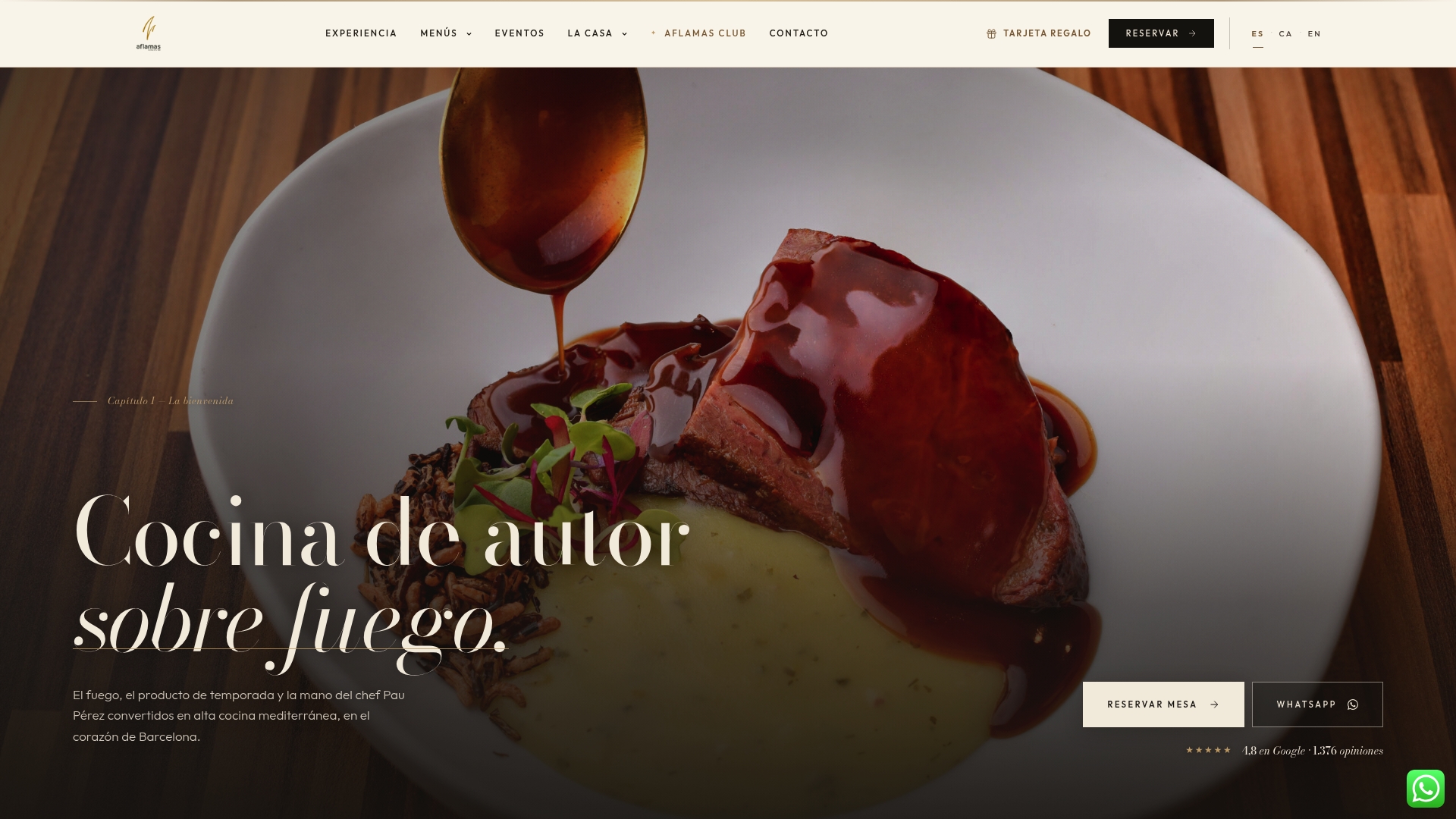
A few starting points depending on what you’re planning:
- Options like the Menú Ejecutivo start at published prices and suit shorter, structured introductions to the kitchen’s style.
- The Menú Temporada follows seasonal ingredients more closely, with pricing details available on the site.
- Longer, more elaborate sequences like the Menú Selección Autor and Menú Festival are available with pricing details on the site.
- Groups and private celebrations can be arranged through group menu options, with dietary adaptations available on request.
- A gift card is available for anyone who wants to give the experience rather than book it themselves.
Tasting-menu slots fill quickly, so check the menu pages and reserve ahead, especially if you need vegan adaptation built into a group booking.
Sources
- Michelin-Stern für das vegane Jola: „Auch pflanzliche Butter ist in“ – DiePresse
- 14 neue Grüne Sterne bereichern Deutschlands Gastro-Szene – Guide Michelin
FAQ
What are some examples of fine dining vegan dishes?
Examples include mushroom-based terrines built with lentil custard, smoked vegetable mains finished with reduced plant stocks, and desserts that use aquafaba in place of egg whites for structure. These dishes rely on fermentation, reduction, and emulsion rather than simple ingredient swaps to deliver richness.
Is there a Michelin starred vegan restaurant?
Yes, though vegan Michelin-starred restaurants remain uncommon worldwide, as reporting on Vienna’s Jola shows. Most high-end plant-based recognition currently comes through vegetarian restaurants that also offer a vegan tasting menu variant, such as TIAN in Vienna.
Has a vegan restaurant ever won a Michelin star?
Yes, Jola in Vienna is one documented example of a fully vegan restaurant earning Michelin recognition, though such restaurants remain uncommon globally, according to DiePresse’s coverage. The broader trend shows sustainability-focused recognition, like Michelin’s Green Star, growing faster than vegan-specific stars.
Is there a vegan Michelin star specifically?
Michelin does not award a separate category called a “vegan star.” Instead, fully vegan restaurants can earn the same star rating as any other restaurant, and some also receive the Green Star for sustainable practices, as seen in Michelin’s Green Star announcements.
What does a vegan tasting menu typically cost?
Pricing varies widely by course count and city, but fine-dining vegan tasting menus often follow the same pricing structure as their omnivore counterparts at the same restaurant. At Aflamas, for example, tasting menus range from the Menú Ejecutivo at 35 euros per person to the Menú Festival at 150 euros per person, depending on length and format.