
Yes, dining alone works, and it usually works better than people expect. The fastest way to feel comfortable is to pick a low-pressure venue like a café or bar seat and go before the dinner rush hits. Once that first meal goes fine, upgrading to a chef’s counter or a tasting menu, like the one Aflamas builds around fire-driven, seasonal cooking, feels less like a leap and more like a natural next step.
TL;DR:
- Counter-service venues, food halls, and bars are ideal for easing into solo dining due to their quick turnover, casual atmosphere, and acceptance of individual diners.
- Booking tables at the bar, a corner, or a chef’s counter offers a quieter, more private experience while still providing natural social interaction if desired.
- Ordering small plates, a tasting menu, or a single entrée helps maintain engagement and pacing during longer solo meals, preventing boredom or stagnation.
- Recognizing the spotlight effect and using props like books or notebooks can significantly reduce social anxiety and make solo dining more comfortable.
- Solo dining in formal or group-oriented restaurants is more manageable when choosing early or late hours, booking at the bar, and framing the experience as mindful, restorative solitude.
Table of Contents
- What Venues Make Solo Dining Easiest?
- How Do You Calm Solo Dining Nerves Before You Sit Down?
- Which Seat Should You Book for a Solo Meal?
- What Should You Order When Eating Alone?
- Why Solo Dining Can Actually Be Restorative
- Is Eating Alone Self-Care or a Sign of Loneliness?
- How Should You Handle Staff Interaction and Personal Space?
- How Can You Make the Most of Restaurant Staff as a Solo Diner?
- How Do You Handle Solo Dining in Formal or Group-Oriented Settings?
- How Can Technology Improve or Hurt Your Solo Dining Experience?
- How Does Solo Dining Culture Differ Around the World?
- How Do You Budget for Solo Dining Without Overspending?
- How Do You Handle Solo Dining During Holidays or Social Events?
- A Small Challenge Worth Taking
- Where Aflamas Fits for a Deliberate Solo Tasting Experience
- Sources
- FAQ
What Venues Make Solo Dining Easiest?
Not every restaurant is built for a single diner, but plenty are practically designed for it. The trick is matching the venue to your comfort level and your goal for the meal, whether that’s a quick, functional lunch or a slower, more deliberate evening out.
Cafés and counter-service spots are the easiest entry point. Nobody blinks at a solo customer ordering a sandwich and a coffee, and the transactional pace of counter service means there’s no server hovering to ask where “the rest of your party” is. You order, you sit, you eat on your own clock.
Food halls work almost the same way but with more variety. You can graze between vendors, sit at shared communal tables without the pressure of a formal table for one, and leave whenever you want. The social norm at a food hall already assumes people come and go independently, so a solo diner blends right in.
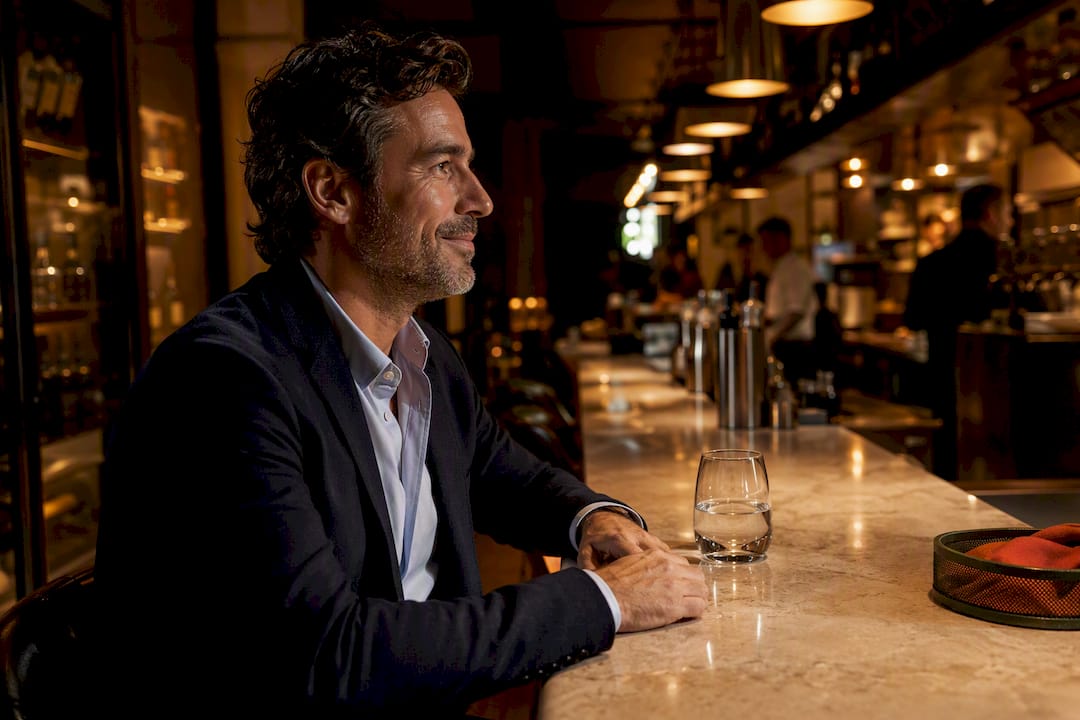
Bars, whether attached to a restaurant or standalone, offer built-in conversation if you want it and total anonymity if you don’t. Bartenders are used to solo regulars, and a stool at the bar rarely feels like a spotlight the way an empty two-top table can.
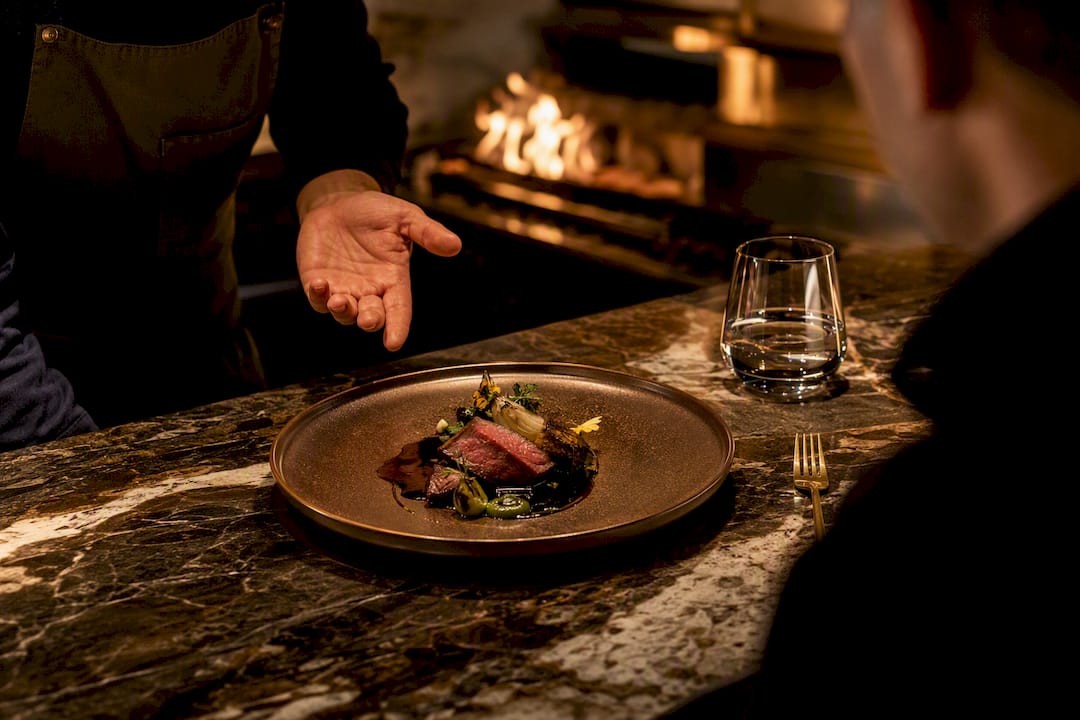
Tasting-menu counters, the kind found at higher-end kitchens including Aflamas, flip the whole equation. Instead of feeling exposed, you’re positioned to watch the cooking happen, and the courses arrive on a rhythm set by the kitchen rather than by your own small talk. It’s arguably the most solo-friendly format there is because the format assumes focused, individual attention on the food.
When scouting a venue for your first solo attempt, look for a few practical signals:
- High table turnover (a sign the staff moves efficiently and won’t linger awkwardly at your table)
- Counter or bar seating built into the floor plan, not an afterthought
- Menu items sized for one person, not family-style platters that assume a group
- A visible open kitchen or chef’s counter, which shifts the “entertainment” away from needing a dining companion
Research on solo restaurant behavior backs this up: restaurants that offer the right seating mix and train staff to handle single diners well tend to serve solo guests more profitably, partly because solo meals move through tables faster, which is good for the restaurant’s turnover and good for you if you’re eating on a tighter schedule.
How Do You Calm Solo Dining Nerves Before You Sit Down?
The anxiety around eating alone is almost always bigger in your head than it is in the room. Most other diners are wrapped up in their own conversations, phones, and plates, not clocking whether you came with company.
Here’s a sequence that works for a lot of first-timers:
- Call ahead if you’re nervous about the host stand. Say, “I’d like a table for one, please,” in the same flat, confident tone you’d use to order coffee. There’s nothing to explain or apologize for.
- Bring a prop, but use it deliberately. A paperback, a notebook, or an e-reader signals that you’re occupied and content, which tends to work better than a phone because it reads as intentional rather than distracted. Food & Wine’s guidance on solo dining points to props like these as one of the simplest anxiety reducers available.
- Give yourself a physical reset at the door. A slow breath, shoulders down, chin level. Walking in stiff and scanning the room for judgment is what actually invites a second look, not the solo status itself.
- Have a two-minute exit plan. If the room genuinely feels off (too loud, too formal for your mood, oddly staffed), it’s fine to say you’ve changed your mind and step back out. That escape valve alone can lower your baseline anxiety before you’ve even ordered.
Pro Tip: Order something small within the first sixty seconds of sitting down, even just sparkling water or bread. It gives your hands and your attention somewhere to go immediately, instead of sitting there with nothing to do while you wait for the menu to arrive.
One more thing worth knowing: the fear that everyone is staring has a name. Psychologists call it the spotlight effect, and it’s the same bias that makes you think people noticed a stain on your shirt when almost nobody did. Coverage in the Times of India on the psychology of eating alone notes that recognizing this bias, and reminding yourself the room genuinely isn’t watching, is often enough to defuse it in the moment.
Which Seat Should You Book for a Solo Meal?
Your seat shapes the whole experience more than almost any other decision you’ll make before the meal starts.
- The bar or counter gives you built-in scenery: bartenders to chat with, other regulars, and the general bustle of the room. It’s the lowest-friction option and usually the fastest table a restaurant can offer a single guest.
- A corner or window table trades that built-in stimulation for privacy. You get quiet, you get a view, and you avoid the higher noise and traffic that comes with sitting at a busy counter. MICHELIN Guide inspectors specifically point to corner and window seating as an underrated option for solo diners who want a calmer, more contemplative meal rather than constant activity around them.
- A chef’s counter or open-kitchen seat turns the meal into something closer to a performance you’re invited to watch. It’s the format tasting menus, including the one at Aflamas, tend to lean on, because it gives a solo guest something to focus on that isn’t a phone or an empty chair across the table.
Booking as a single diner is usually simpler than people assume. Most online reservation systems default to “party of two,” so don’t be afraid to call the restaurant directly and ask for a table for one. MICHELIN’s own inspectors recommend exactly this: be upfront, be flexible on time, and call if the online system won’t cooperate.
Timing matters differently depending on your goal. If this is a low-stakes practice run, aim for the slow hours, right when the doors open or midafternoon, when staff have more bandwidth and the room is quieter. If you’re treating yourself to something special, like a tasting-menu night out, book a proper prime-time slot. You’ve earned the full experience, not just the leftover hour nobody else wanted.
What Should You Order When Eating Alone?
Portion strategy changes everything about how a solo meal feels.
A single large entrée can leave you staring at one plate for forty-five minutes with nothing else to do. Small plates, a tasting menu, or a few shared-style dishes ordered just for yourself break the meal into a rhythm, course, pause, course, that keeps things moving and keeps your attention engaged.
- Small plates let you sample more of the menu and naturally space out the meal without needing anyone to split dishes with.
- A tasting menu does the pacing work for you. The kitchen decides when the next course arrives, which removes the awkward guesswork of ordering everything at once and then sitting empty-handed between bites.
- A single, well-chosen entrée still works fine for a quick, no-frills solo lunch. It’s just not the format that keeps a longer solo dinner feeling alive.
Don’t be shy about asking staff to adjust the tempo. Servers handle this constantly, and a simple “I’d love it if you could space the courses out a bit” or “I’m in a bit of a rush, could we move a little faster” is completely normal and expected.
Pro Tip: Instead of scrolling between bites, try naming one specific flavor or texture in each dish, silently or in a notebook. It’s a small mindfulness habit that keeps you present in the meal instead of performing “being fine” for an audience that isn’t watching anyway.
Why Solo Dining Can Actually Be Restorative
The instinct to treat a solo table as something sad gets the science backward. A recent Journal of Hospitality & Tourism Research study found that when solo diners deliberately engage with the atmosphere, the plating, the smell of the kitchen, the texture of a dish, they report meaningfully less of the emptiness that people associate with eating alone. The framing you bring to the table changes the emotional outcome more than the empty chair across from you does.
That spotlight effect mentioned earlier isn’t just an interesting factoid. It’s the mechanism behind most solo-dining discomfort, and once you name it, it tends to lose its grip.
Eating alone, when approached intentionally, functions less like a symptom of loneliness and more like a form of positive solitude, one that supports mindful eating, sharper self-connection, and a real boost to confidence.
That framing comes from coverage in HuffPost on the unexpected benefits of dining solo, and it lines up with what MICHELIN inspectors say from the professional side of the table: solo dining done right is often the purest way to actually focus on the food instead of the conversation around it.
Restaurants have caught up to this shift, too. Industry research on solo dining behavior shows that well-run restaurants can serve single diners profitably by adjusting seating layouts and training staff, which means the “sorry, table for one?” awkwardness is fading faster than most people realize.
Is Eating Alone Self-Care or a Sign of Loneliness?
It depends entirely on intention, and that distinction matters more than the act itself. A person forced into every meal alone because of circumstance experiences something different from someone who books a solo dinner on purpose because they want an hour of unstructured, undistracted time.
The second version is what psychologists increasingly frame as positive solitude: a chosen, bounded period of being alone that restores rather than drains you. It shows up in the small choices, ordering exactly what you want without negotiating, lingering over dessert with no one checking their watch, sitting with your own thoughts instead of managing someone else’s mood.
None of that erases the real, harder experience of chronic loneliness, and solo dining isn’t a cure for isolation that runs deeper than one meal. But treating every solo table as a red flag misses a genuinely common and healthy behavior. A lot of people who dine alone by choice describe it less as “nobody wanted to come” and more as “I wanted the table to myself.” Both things can be true for different people on different nights, and the useful question isn’t whether you’re alone, it’s whether you chose to be.
How Should You Handle Staff Interaction and Personal Space?
Solo dining etiquette is mostly about signaling your intentions clearly, without over-explaining yourself.
If you want to be left alone, a friendly but brief “I’m all set for now, thank you” closes the door on extra small talk without being rude. If you’d rather chat, a couple of open questions to your server, about the menu, the wine list, what’s good tonight, invites exactly as much interaction as you’re looking for. Staff generally follow your lead.
On safety: well-lit, busy venues are the easy default for a first solo outing, and bar seating puts you near staff for the entire meal, which some diners find reassuring. There’s nothing impolite about asking for a specific seat when you book, or about declining a table you don’t like the feel of once you’re inside.
How Can You Make the Most of Restaurant Staff as a Solo Diner?
Staff are one of the most underused resources solo diners have. A good server can turn a quiet solo meal into an interactive one just by answering a few real questions: what’s the story behind a dish, what’s the kitchen especially proud of tonight, what pairing would they personally pick.
Asking these questions does double duty. It gives you conversation without needing a dining companion, and it often gets you better service, since staff tend to remember and look out for guests who show genuine curiosity about the food. At a tasting-menu restaurant like Aflamas, where each course is built around a specific technique or ingredient story, that curiosity turns a solo dinner into something closer to a guided tour than a meal eaten in silence.
How Do You Handle Solo Dining in Formal or Group-Oriented Settings?
Formal dining rooms and group-oriented restaurants can feel like the hardest environment for a solo diner, mostly because the room’s whole design assumes couples and parties. The fix isn’t to avoid these places, it’s to adjust your approach slightly.
Book a seat at the chef’s counter or bar if the restaurant offers one, since it sidesteps the visual imbalance of a lone diner at a table clearly meant for four. Arrive at the edges of service, right at opening or toward the end of the dinner rush, when the room has more single tables free and staff have more attention to spare. And lean into the tasting-menu format where it’s available. A structured, staff-paced multicourse meal reframes the whole visit as an experience you’re having, not a seat you’re filling.
How Can Technology Improve or Hurt Your Solo Dining Experience?
A phone at the table sends a different signal than a book does, even though both are technically “something to look at.” Scrolling reads as distraction, sometimes even discomfort, while reading looks deliberate. That’s why props like paperbacks and notebooks consistently outperform phones as anxiety reducers for solo diners.
That said, technology has real upsides when used with intention. A podcast through one earbud (leaving the other ear open for the server) can steady nerves during the walk in and the first few minutes at the table. A notes app is a fine, low-key way to jot tasting impressions if you’re the type who likes to remember what worked. The line to watch is engagement versus escape: using tech to enhance attention to the meal is fine, using it to avoid the meal entirely defeats the purpose of sitting down in the first place.
How Does Solo Dining Culture Differ Around the World?
Solo dining carries wildly different social weight depending on where you are. In much of Japan, counter seating built for one is standard at ramen shops and sushi counters, and eating alone carries no particular stigma at all. In parts of Southern Europe and Latin America, dining is culturally tied to groups and long, social meals, so a solo diner might draw a curious glance simply because the local norm skews communal rather than judgmental.
The practical adaptation is the same everywhere: default to counter and bar seating in cultures built around group tables, and treat unfamiliar customs (tipping norms, whether lingering is expected, how servers approach single guests) as something worth a quick look-up before you travel. Solo dining abroad can also be one of the most genuine ways to experience local food culture up close, since you’re not filtering the meal through anyone else’s preferences or pace.
How Do You Budget for Solo Dining Without Overspending?
A few habits keep solo dining sustainable rather than a budget drain. Treat tasting menus and higher-end solo meals as occasional milestones, not weekly habits, and save the café-and-counter-service venues for your regular rotation. Skip the extra add-ons you’d only order to be polite in a group (shared appetizers, a second bottle to split) since none of that peer pressure applies when you’re alone. And when you do want a splurge, a fixed-price tasting menu actually helps budgeting, because you know the total cost upfront instead of watching an à la carte bill creep with every extra course.
How Do You Handle Solo Dining During Holidays or Social Events?
Holidays and big social occasions are where solo dining anxiety spikes hardest, mostly because the calendar itself feels like it’s broadcasting who has plans and who doesn’t.
The reframe that helps most: a holiday meal alone isn’t a consolation prize, it’s a chance to design the exact evening you want without compromise. Book somewhere you’ve been curious about but never had the “right” occasion to try solo. If the idea of an empty seat across the table still bothers you on a specific date, shift the celebration to lunch or brunch instead of the traditionally social dinner slot, when the room’s energy is lower stakes. And if a favorite restaurant is fully booked for groups on a holiday night, that’s exactly when calling ahead for a counter seat, as MICHELIN inspectors advise, tends to work best, since single seats often open up even when four-tops don’t.
A Small Challenge Worth Taking
Confidence with solo dining doesn’t come from reading about it. It comes from doing it once, badly or awkwardly if that’s how it goes, and realizing the room didn’t care nearly as much as you thought it would.
Here’s a sixty-minute version worth trying this week: choose one venue from this guide that matches your current comfort level, book a table for one, calling directly if you need to, and savor the meal by naming one detail in each course instead of reaching for your phone. That’s the whole exercise. Do it once, and the second time gets dramatically easier.
— YellowRock
Where Aflamas Fits for a Deliberate Solo Tasting Experience
Aflamas is built around fire-driven, seasonal cooking, and the tasting-menu format it runs on happens to be one of the most solo-friendly ways to eat in Barcelona. Every course arrives on the kitchen’s rhythm, not yours, which removes the pacing guesswork that makes some solo meals feel awkward.
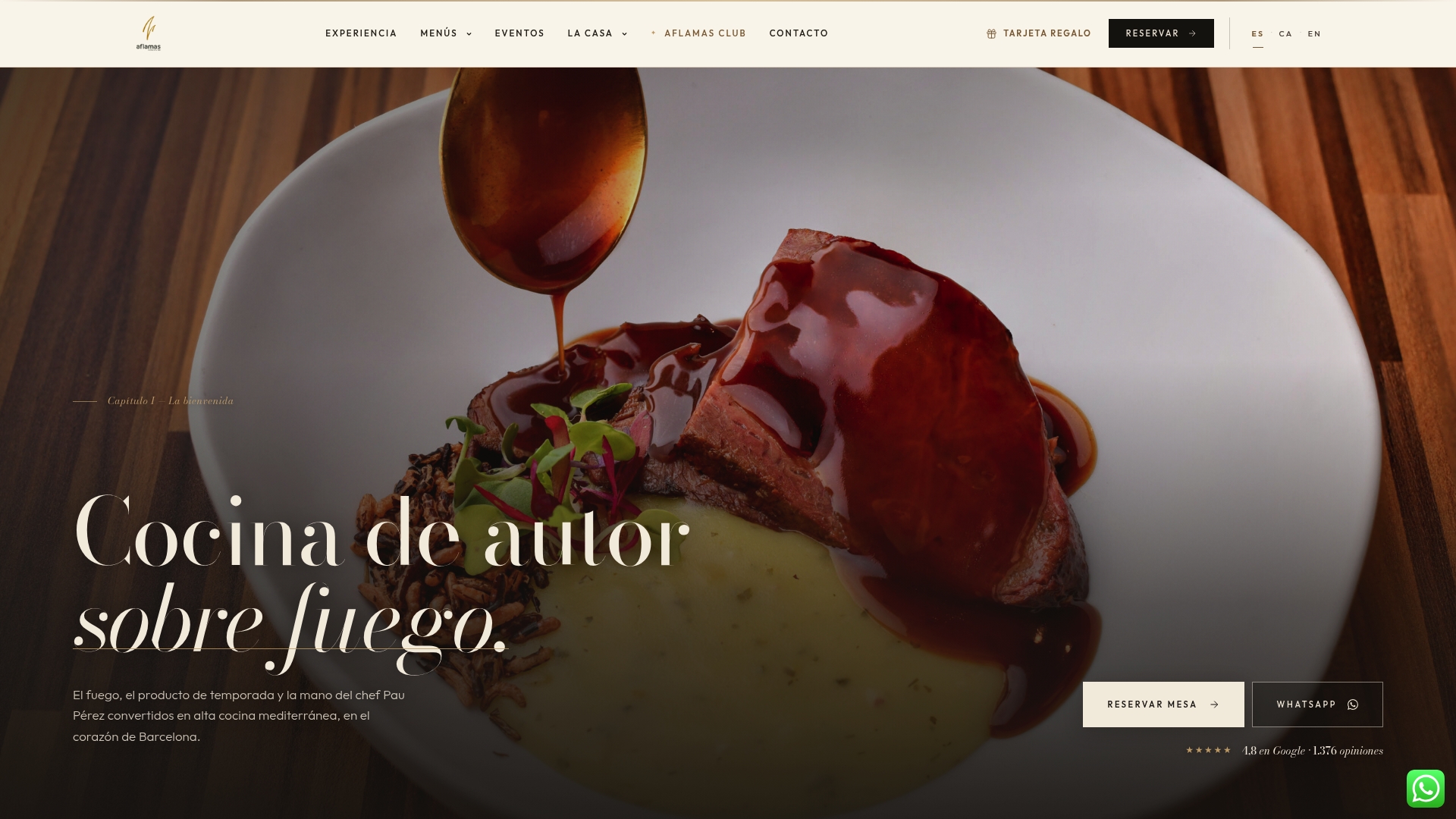
The tasting menu offers accommodations for various dietary needs, so dietary restrictions don’t limit how immersive the experience can be. If you’d rather understand the ideas behind the food before you go, the chef’s approach explains the culinary technique and sourcing philosophy behind each course, useful context if you’re the type who likes something to discuss with your server between plates. Reserve a table for one directly through Aflamas and treat the evening as exactly what it is: a meal designed around focused, sensory attention, which happens to be exactly what a good solo dinner needs.
Sources
- Journal of Hospitality & Tourism Research — How to Combat Feelings of Emptiness in Solo Dining
- The MICHELIN Inspectors’ Top Tips for Solo Dining
- How to Eat Solo at a Restaurant Without Spiraling — Food & Wine
- More People Are Dining Solo — And There Are Unexpected Benefits — HuffPost
FAQ
What Does “Solo Diner” Mean?
A solo diner is simply a customer eating a meal alone, whether by choice for self-care and focus or out of circumstance while traveling or living independently. It’s an increasingly common restaurant guest category, not a niche exception.
Is It Weird to Eat Alone at a Restaurant?
No. Most other diners are focused on their own meals and conversations, and research on the spotlight effect shows people consistently overestimate how much attention strangers pay to them.
Where Should a Nervous First-Timer Sit?
Bar or counter seating is usually the easiest starting point because it feels active and put you near staff, while a corner or window table suits someone who wants quiet and privacy instead.
How Do I Book a Table for One?
Call the restaurant directly if the online system defaults to parties of two, and simply ask for “a table for one.” MICHELIN inspectors recommend this approach specifically because reservation software often isn’t built for single-guest bookings.
Does Aflamas Work Well for a Solo Dinner?
The tasting menu at this restaurant paces courses on the kitchen’s schedule rather than the guest’s, which suits solo diners who want a structured, sensory-focused meal without the ordering guesswork.
What Should I Bring to Feel Less Self-Conscious?
A book, notebook, or e-reader works better than a phone because it signals deliberate engagement rather than distraction, a detail that shows up repeatedly in hospitality journalism on solo dining.