
A chef’s table experience puts you at a seat, counter, or private room steps from the kitchen, running on a tasting menu with real chef interaction and dishes you won’t find on the regular menu. People book it for the proximity to the cooking itself and the storytelling that comes with it. This guide covers the formats, the etiquette, the booking math, and how to recreate the feeling at home.
TL;DR:
- Booking a chef’s table usually requires scheduling two to five weeks in advance, especially during peak times or holidays.
- Costs depend on ingredients, wine pairings, and room choice, with high-end options sometimes exceeding hundreds of dollars per person.
- The typical duration is two to three hours, featuring multiple small courses with narration and opportunities for questions.
- Seatings include in-kitchen tables, counters, or private rooms, with each format offering a different level of intimacy and noise level.
- Hosting at home with a private chef can be more cost-effective for groups of four or more once wine and travel are included.
Table of Contents
- What Is a Chef’s Table, Exactly?
- Chef Counter, Kitchen Table, or Private Room: Which Format Fits You?
- How Does a Chef’s Table Dinner Actually Unfold?
- What Does a Chef’s Table Look Like in Practice?
- How to Host a Chef’s-Table-Style Event at Home
- Booking, Availability, and What Drives the Price
- Why Chefs Build Chef’s Tables, and What Diners Actually Get From Them
- Book the Chef’s Table Experience at Aflamas
- Sources
What Is a Chef’s Table, Exactly?
The chef’s table started as an informal habit: chefs pulling a spare table into or near the kitchen for family, friends, or regulars who lingered after service. The Michelin Guide traces this evolution from that casual tradition into a bookable, professional format built around direct interaction and narration.
The distinction from a standard tasting menu or private dining room comes down to access. A private room buys you privacy. A tasting menu buys you a curated sequence of courses. A chef’s table buys you both, plus a chef (or the team) explaining technique and ingredient choices as they happen.
- Groups usually run several guests, with intimate settings favoring smaller groups and some counters accommodating moderately larger ones.
- Course counts are generally several, typically more than a standard tasting menu.
- Interaction ranges from brief introductions to running commentary on every plate.
Chef Counter, Kitchen Table, or Private Room: Which Format Fits You?
Seating format determines the entire feel of the night. Chef’s tables and tasting menus show up in both Michelin-starred kitchens and small independent restaurants, and the format varies just as much as the venue.
- In-kitchen table: maximum intimacy, but you sit in real kitchen heat and noise during service.
- Chef counter: front-row proximity without the heat, since you’re adjacent to the pass rather than inside the cook line.
- Private room with a kitchen view: quieter and more curated, good for occasions where conversation matters as much as the food.
The Michelin Guide notes that some kitchens now favor team presentations over a single head chef narrating everything, which changes the energy from “star chef performance” to collaborative demonstration. Most venues handle dietary restrictions and accessibility case by case, so mention them at booking, not on arrival.
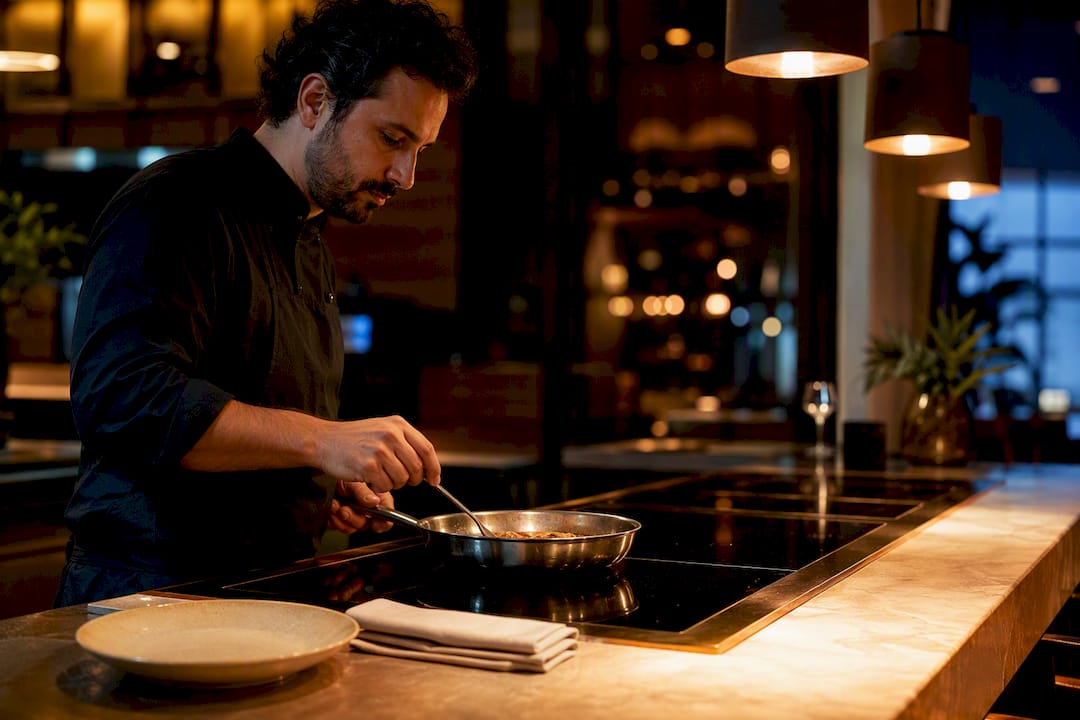
Pro Tip: If heat and noise bother you but you still want that front-row view, ask specifically for a counter seat rather than the in-kitchen table. Many restaurants now build counters with induction cooktops, which run cooler and quieter than open flame lines.
How Does a Chef’s Table Dinner Actually Unfold?
A typical chef’s table dinner runs two to three hours, longer than a standard dinner because courses come smaller and more frequently, with pauses for conversation between them.
- Welcome and introduction. The chef or a lead server greets the table and outlines the format.
- Course delivery with narration. Each dish arrives with a short explanation of technique, sourcing, or the idea behind it.
- Open interaction windows. Most chefs build in moments for questions rather than talking through the entire meal nonstop.
- Wine or beverage pairing. Often handled by a sommelier working alongside the chef, sometimes with off-menu pours tied to a specific course.
- Closing moment. A final course or gesture, sometimes an off-menu dish reserved for chef’s table guests only.
Photography etiquette matters more here than at a normal table. Ask before photographing the chef or kitchen operations, and hold your phone until there’s a natural break, not mid-plating. Chef’s tables now appear at both flagship and small independent restaurants, as reported in coverage of how tasting menus are redefining dining, meaning etiquette norms vary by venue size. A smaller kitchen table tends to be more conversational; a larger counter setup runs closer to a scripted show.
What Does a Chef’s Table Look Like in Practice?
Picture three real setups: a narrow counter facing an open flame station, a four-top tucked beside the pass where plates get finished, and a glass-walled private room overlooking the line without the noise. Each delivers a different rhythm, but all three share the same premise: you watch the work, not just the plate.
Aflamas, a contemporary restaurant in Barcelona built around fire-driven technique and local ingredients, works as a useful in-market illustration. Its tasting menu and signature menu are built around the kind of sequential, story-driven courses that define the chef’s table format, with accommodations for vegetarian, vegan, gluten-free, and lactose-free diets. Groups looking for a private setting can use its group menu options instead of a standard reservation.
- A single chef narrating the menu creates a more personal, focused tone.
- A team presentation spreads attention across multiple cooks, often feeling more like a demonstration than a monologue.
- Restaurants profiled through the chef tend to lean into the first approach, using the kitchen leader as the through-line for the whole meal.
How to Host a Chef’s-Table-Style Event at Home
Hiring a private chef recreates most of what makes a chef’s table work, minus the commute. The key is treating your kitchen like a temporary restaurant for one night.
- Book 2 to 5 weeks ahead. That’s the standard lead time cited for hosting with a private chef, and it’s echoed in guidance for private chef bookings in Spain as well.
- Prep your kitchen. Clear at least 1.5 to 2 meters of counter space, confirm your oven and burners work reliably, and think through parking or delivery access for the chef’s shopping.
- Divide responsibilities. The chef typically handles the menu, shopping, cooking, plating, and cleanup. You handle the guest list, seating, ambience, and wine.
- Send a one-page brief. List dietary restrictions, the occasion’s tone, and any kitchen quirks the chef should know before arrival.
- Confirm final headcount 48 hours out, then let the chef run the show on the night itself.
Groups of 4 to 8 tend to give you the most intimate version of this, while larger parties of up to 20 can still work with the right chef and kitchen setup, according to guidance on hiring a private chef for a dinner party.
Pro Tip: Compare the full cost of a private chef, including wine and any travel fee, against a restaurant chef’s table for the same headcount. For a party of six or more, the at-home option sometimes comes out cheaper once you factor in what you would have spent on wine markups at a restaurant.
Booking, Availability, and What Drives the Price
High-demand chef’s tables often book out weeks in advance, especially around holidays and weekends, so calling a month ahead is a reasonable habit rather than overcaution.
Price swings on a few specific factors: rare or seasonal ingredients, wine pairing tiers, the amount of dedicated staff time a small table requires, and whether you’re paying a premium for a private room versus a shared counter. Some high-end chef’s tables in other markets run well into the hundreds of dollars per person once wine pairing is included, according to one fine dining guide, so ask about pricing tiers before assuming a flat rate.
When you call to book, ask these questions directly:
- Is the menu fixed, or can courses flex around allergies?
- How is a severe allergy handled in a shared-kitchen setting?
- What’s the realistic pacing, and how long should we plan for?
- What’s the cancellation and deposit policy?
A private in-home chef can be cost-competitive for a mid-sized group once wine and travel are factored into the full bill, which is worth comparing line by line rather than assuming a restaurant seat is automatically cheaper.
Why Chefs Build Chef’s Tables, and What Diners Actually Get From Them
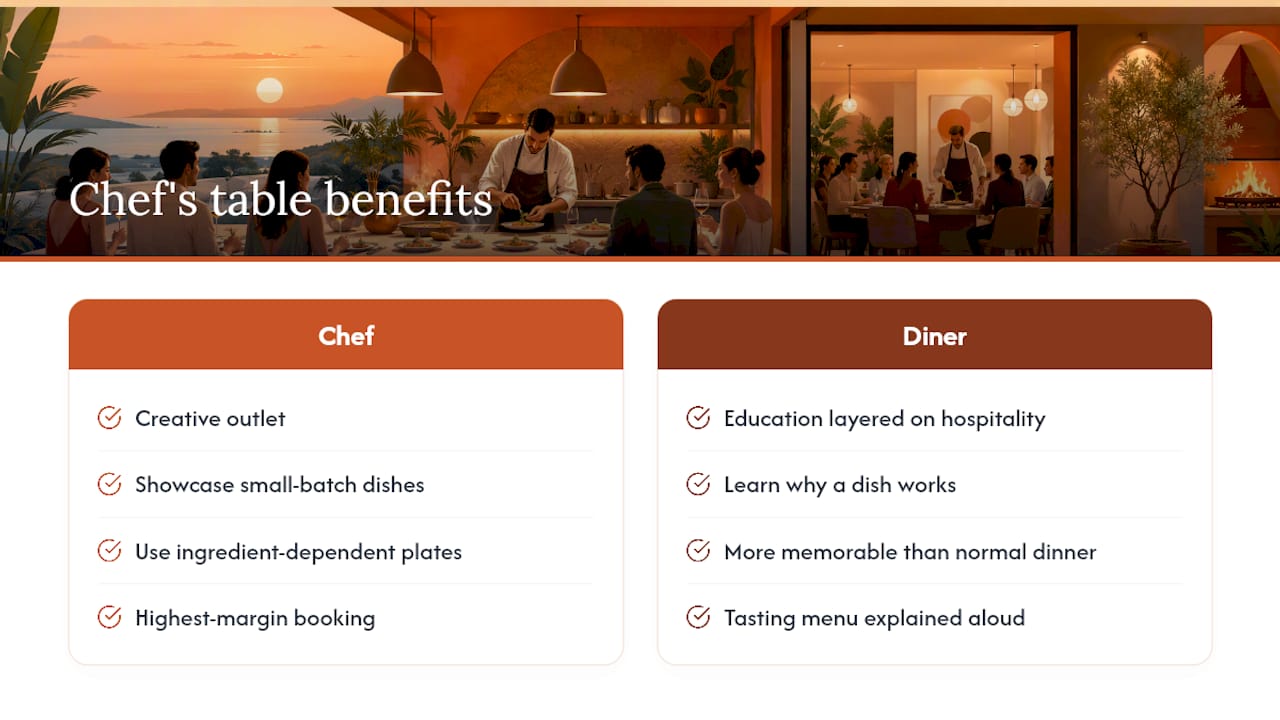
A chef’s table is as much a creative outlet as it is a revenue tool. It gives a kitchen leader a chance to plate dishes too small-batch or ingredient-dependent for the full menu, and it turns a handful of seats into the highest-margin booking in the house.
For diners, the payoff is education layered onto hospitality. You leave understanding why a dish works, not just that it tasted good. That’s a different kind of memory than a normal dinner produces, and it’s why demand for the format keeps growing even as availability stays limited by cost and seat count. Some restaurants approach chef’s tables with fire-driven technique explained in real time, building around a tasting menu designed to be talked through, not just served.
— YellowRock
Book the Chef’s Table Experience at Aflamas
If everything above sounds like what you’re after, Aflamas gives you a direct way to book it rather than piece it together yourself. You skip the counter-clearing, the chef sourcing, and the guesswork on pricing tiers. What you get instead is a fixed, curated night built around fire-driven technique and Barcelona’s local ingredients.
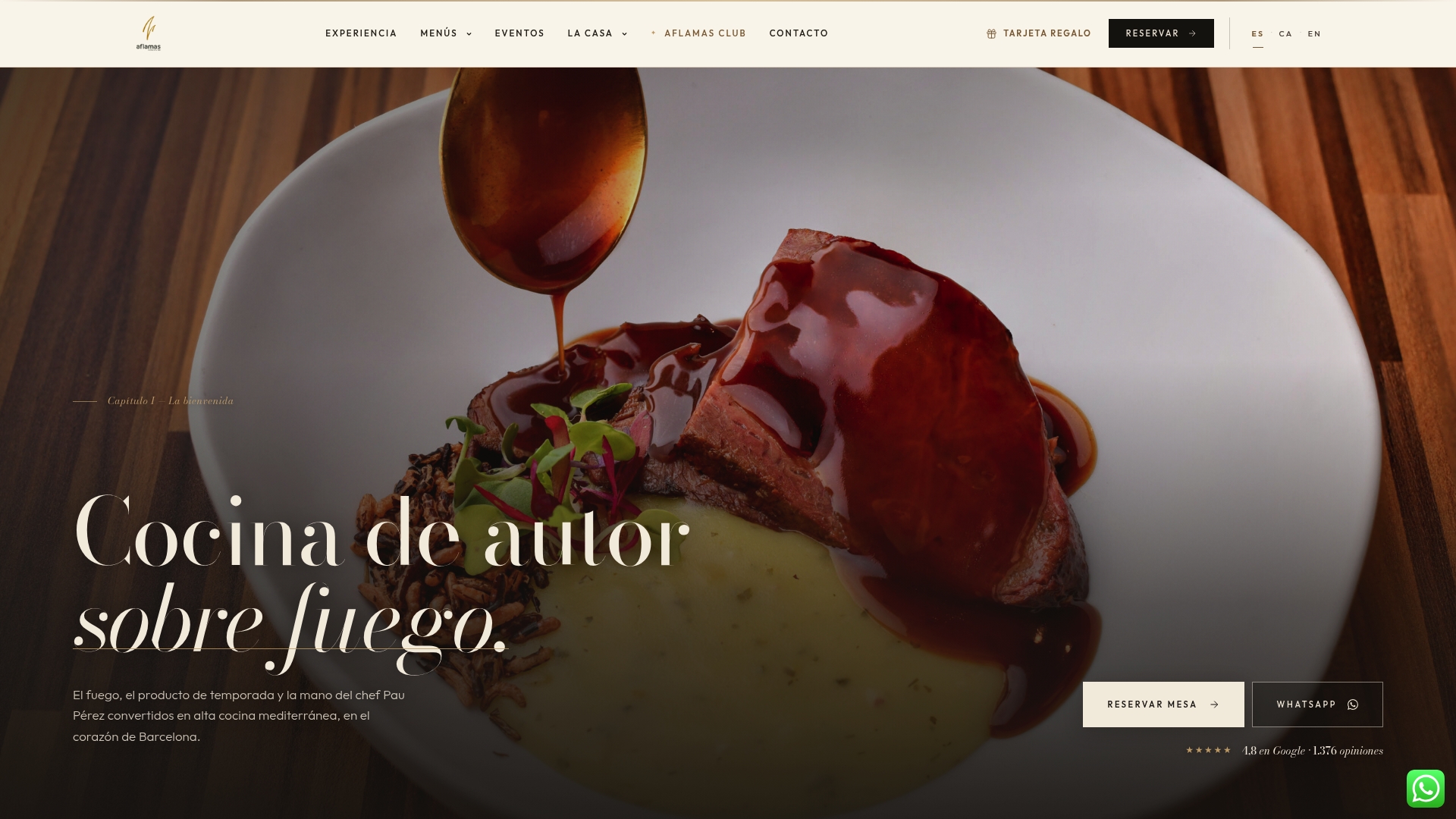
The tasting menu is the closest match to the chef-led, course-by-course format described throughout this guide, with full accommodations for vegetarian, vegan, gluten-free, and lactose-free guests. Prefer something more compact and curated? The signature menu covers that. Planning for a group or a private occasion instead of a two-top? The group menu is built for exactly that, and a gift card works if you’re booking the experience for someone else. Check current tasting menu availability and reserve your date directly through the site.
Sources
- The evolution of the chef’s table (Michelin Guide)
- Chef’s tables and tasting menus are redefining dining experiences (The Seattle Times)
- How to host a dinner party at home with a private chef (Platesfull)
- Your guide to private chef experiences in northern Spain (Northern Spain Travel)