A Michelin Star measures technical culinary excellence at the highest level, while a Bib Gourmand recognizes outstanding cooking within a set price limit. Both come from the same anonymous Michelin inspectors, but they are not ranked on the same ladder. A restaurant does not “graduate” from a Bib Gourmand to a star: they are parallel honors built for different dining occasions.
TL;DR:
- Michelin’s star system reflects technical excellence, with one star indicating worth a stop, and three stars representing a destination-worthy experience; prices are typically higher, and menus focus on tasting sequences.
- The Bib Gourmand recognizes high-quality, flavorful food within a fixed, more affordable price ceiling, usually in casual settings like neighborhood bistros or family-run restaurants; menus are simpler and more flexible.
- Both awards are based on the same strict, anonymous inspections evaluating ingredient quality, mastery, personality, value, and consistency; decor and service do not influence the ratings.
- Stars often drive rapid business changes and higher prices, while Bib Gourmand awards tend to bring steadier, local patronage without major shifts in restaurant format or pricing.
- The guide’s categories are not hierarchical; stars tend to be city-centered and focused on fine dining, whereas Bib Gourmand listings are more widespread, reflecting everyday dining options globally.
Table of Contents
- What a Michelin Star means for diners
- What the Bib Gourmand means and how it works
- At-a-glance differences between the two honors
- How Michelin inspectors judge a restaurant
- Which one should you choose for your meal
- How these standards shape a contemporary tasting menu kitchen
- Where the Michelin Guide came from and how the Bib Gourmand joined it
- How far each award reaches across cities and countries
- What each honor does for a restaurant’s business
- The kinds of restaurants each award tends to favor
- Where critics push back on both awards
- How different diners actually use these two awards
- A tasting-menu experience built around the same standards
- Sources
- FAQ
What a Michelin Star means for diners
A Michelin Star tells you a kitchen operates at a level worth planning a trip around. The scale runs from one to three, and each level, according to Wikipedia’s summary of the Guide’s own language, describes a different degree of commitment:
- One star: high-quality cooking worth a stop on your route.
- Two stars: excellent cooking worth a detour.
- Three stars: exceptional cooking worth a special journey.
Every starred restaurant, regardless of level, is judged against the same five universal criteria Michelin applies worldwide, with consistency across visits weighing as heavily as any single meal. That focus on repeatability is why a one-star kitchen can feel just as tightly run as a three-star one, even if the ambition and pricing differ.
In practice, expect a tasting menu format, longer service times, and a booking window that can stretch out weeks or months at the higher tiers. Starred restaurants tend to price around the cost of an elaborate multi-course experience rather than a quick dinner, and staff are trained to explain technique and sourcing as part of the meal. The experience is built around the kitchen’s point of view: fewer choices, more narrative, and a menu that changes with the seasons or the chef’s current obsessions.
What the Bib Gourmand means and how it works
The Bib Gourmand takes its name and its rabbit-shaped mascot from Bibendum, the Michelin Man, and was introduced in 1997 to spotlight restaurants delivering excellent food without the price tag of a starred dining room. It is not a stepping stone toward a star: it is Michelin’s answer to the question “where can I eat exceptionally well without spending a fortune?”
The mechanism behind it is a local price threshold. Inspectors look for kitchens that hit a high bar for flavor and technique while staying within a price ceiling set for that market. A commonly cited illustrative example for European cities puts that ceiling around €36 for a three-course meal, though the exact figure shifts by country and city.
Typical Bib Gourmand winners share a few traits:
- Casual settings: neighborhood bistros, family-run spots, and no-frills dining rooms rather than formal restaurants.
- Simpler formats: à la carte or short fixed menus instead of multi-course tasting sequences.
- Skilled, focused cooking: fewer components per plate, but each one executed with real technique.
The result is a category that rewards value and craft in equal measure, rather than spectacle.
At-a-glance differences between the two honors
The clearest way to see the split is to line up what each award actually signals to a diner walking through the door.
| Dimension | Michelin Star | Bib Gourmand |
|---|---|---|
| What it signals | Technical culinary excellence | Excellent food within a price limit |
| Price expectation | Multi-course tasting menu pricing | Value-driven, price-capped meal (illustrative European example: around €36 for three courses) |
| Ambience and formality | Formal to refined casual | Casual, everyday dining rooms |
| Booking difficulty | Often weeks to months ahead | Usually easier, walk-ins common |
| Menu style | Tasting menu, chef-driven narrative | À la carte or short fixed menu |
Three quick scenarios show how this plays out:
- A relaxed weeknight dinner with reliably great food: look for a Bib Gourmand address near you.
- A celebration built around a multi-course experience: book a starred restaurant well ahead of the date.
- A trip where you want to eat like a local without overspending: prioritize Bibs, since they tend to reflect regional cooking more than starred rooms do.
Local price thresholds vary enough that it is worth checking the current Guide listing for your destination before assuming the European example applies everywhere.
How Michelin inspectors judge a restaurant
Every star and Bib Gourmand decision comes from the same set of anonymous inspectors applying the same five-part framework, not from public reviews or star ratings submitted by diners. Michelin lays out the criteria plainly:
- Quality of the ingredients: sourcing and freshness, judged on the plate rather than on the label.
- Mastery of flavor and cooking technique: whether the kitchen executes its own ambitions well.
- The chef’s personality expressed through the cuisine: a point of view, not just competent replication.
- Value for money: weighed for all restaurants, but decisive for the Bib Gourmand specifically.
- Consistency: the same standard delivered across the menu and between repeat visits.
Inspectors visit anonymously, often more than once, and they do not score decor, table settings, or service style as part of the star or Bib decision. That is why a restaurant with a modest dining room can hold three stars, and why a beautifully designed space with inconsistent food will not.
Pro Tip: If a menu changes dramatically between your visit and a friend’s, ask what happened. Consistency, not novelty, is what keeps a rating intact.
Inconsistency is also the most common thread in high-profile star losses. Cases involving chefs like Gordon Ramsay losing stars at some locations over the years tend to trace back to quality dipping across visits rather than a single bad night.
Which one should you choose for your meal
The right choice depends less on prestige and more on what you actually want from the evening.
- Define the occasion first: a milestone dinner calls for a different pace than a Tuesday night meal out.
- Set your budget before you search: starred tasting menus often run into hundreds per person, while Bibs are built around an accessible ceiling.
- Decide how much formality you want: tasting menus involve pacing, courses, and narrative; Bib venues are quicker and more casual.
- Book according to the tier: reserve starred restaurants well in advance and expect a deposit or prepayment in some cases; Bib venues are typically easier to get into on shorter notice.
- Read the menu structure before booking: a fixed-price multi-course format signals a star-style experience, while a short à la carte list usually signals Bib territory.
A date night with room to linger fits a starred tasting menu. A weekday dinner where you want honestly great food without ceremony fits a Bib. A big celebration, where the meal itself is the event, is where the higher star tiers earn their reputation. Whichever you pick, confirm the current price and format on the restaurant’s own booking page rather than assuming last year’s menu still applies.
How these standards shape a contemporary tasting menu kitchen
Running a fire-driven tasting menu means living inside Michelin’s own criteria every service, whether or not a restaurant carries a star. Ingredient quality and technique are not abstract ideas: they show up in how a kitchen sources local products and how consistently a dish comes out the same way on a Tuesday as it does on a Saturday. At Aflamas, that discipline is built into the signature tasting menu format, where fire-based technique and a defined culinary point of view carry the meal rather than decor or spectacle.

Fine-dining kitchens can also borrow from the Bib Gourmand’s clarity around value. A shorter, clearly priced tasting menu option can carry the same technical rigor as a longer menu while giving diners an easier decision point, particularly for a lunch service or a first visit. The goal in either case is the same one Michelin inspectors look for: food that holds up on a return visit, not just on the night a critic happens to show up.
Where the Michelin Guide came from and how the Bib Gourmand joined it
The Michelin Guide began in 1900 as a practical handbook for early motorists, listing garages, maps, and places to eat along French roads. Star ratings for restaurants followed decades later, evolving into the one, two, and three star system diners recognize today, with each tier tied to how far a meal is worth traveling for.
The guide stayed focused on top-tier dining for most of the twentieth century, which left a gap for excellent, everyday cooking that never aimed for a tasting menu format. Michelin closed that gap by introducing the Bib Gourmand in 1997, naming it after Bibendum, the Michelin Man, and building it around value rather than ambition. The move let the Guide expand its relevance well beyond fine dining, covering the kind of restaurant a local might actually eat at every week.
Since then, both categories have expanded into new countries and cities each year, with the Bib Gourmand often growing faster than the star list because it fits so many more restaurant formats. The two systems now run side by side in most editions of the Guide, judged by the same inspectors but published as distinct honors rather than a single ranked scale.
How far each award reaches across cities and countries
Michelin Stars are concentrated in cities with a dense concourse of fine-dining restaurants, often clustering in capital cities and major food destinations where tasting-menu dining supports the higher price points stars tend to require. That concentration means some regions have very few starred restaurants simply because the format itself is rare there.
Bib Gourmand listings spread much further into everyday neighborhoods, smaller cities, and less touristed areas, because the format they reward, casual, value-driven cooking, exists almost everywhere. Michelin’s own guide materials note thousands of Bib Gourmand restaurants worldwide, a footprint that reflects how broadly the category applies compared with the far smaller pool of starred addresses.
For travelers, this difference matters practically. A city with only a handful of starred restaurants can still have a long list of Bib Gourmand spots worth seeking out, which makes the Bib list a more reliable everyday travel companion in many destinations than the star list alone.
What each honor does for a restaurant’s business
A Michelin Star tends to reshape a restaurant’s business almost overnight. Reservation demand climbs, price points can rise to match new expectations, and the kitchen often needs to formalize training and sourcing to protect consistency under closer scrutiny. That pressure cuts both ways: a star can fill a dining room for years, but losing one can hit revenue and morale hard, especially when the loss becomes public.
A Bib Gourmand tends to bring a steadier, more local kind of attention. It boosts footfall from diners looking for dependable value rather than a special occasion, and it can extend a restaurant’s reach without requiring a shift in pricing or format. Because Bib venues are typically neighborhood spots to begin with, the recognition often reinforces an existing customer base rather than transforming it.
Neither award guarantees longevity. Both stars and Bibs are reassessed with each new Guide edition, and restaurants can gain or lose the distinction as quality shifts, which keeps the incentive to maintain consistency active for as long as a kitchen wants to keep its listing.
The kinds of restaurants each award tends to favor
Michelin Stars cluster around restaurants built for the format: tasting menus, dedicated pastry and sauce stations, and kitchens staffed to execute a chef’s specific technical vision across many courses. These are almost always restaurants designed from the ground up around a culinary point of view, whether that means fire cooking, hyper-local sourcing, or a particular regional cuisine reimagined with modern technique.
Bib Gourmand winners look almost nothing like that on paper. They include neighborhood bistros, family-run trattorias, noodle shops, barbecue joints, and casual spots where the format is simple but the cooking is not. The BBC’s coverage of the award points out that Bibs often surface authentic, regional cuisines that rarely show up on a starred list, making the category a genuine window into how a place actually eats day to day.
That contrast is the clearest proof that the two honors are not measuring the same thing on a single scale. A three-star restaurant and a Bib Gourmand noodle shop can both represent the best version of what they are trying to do, just aimed at entirely different meals.

Where critics push back on both awards
Michelin Stars draw regular criticism for the pressure they put on chefs and kitchens, with some pointing to the stress of anonymous re-visits and the financial risk of losing a star as reasons the system can feel punishing rather than purely celebratory. High-profile cases, including stars pulled from restaurants tied to Gordon Ramsay, are often cited in discussions about how quickly a kitchen’s standing can shift once inspectors find inconsistency.
The Bib Gourmand faces a quieter but real critique: some diners feel it gets treated as a lesser prize simply because it sits next to the star system in the same guide, even though Michelin frames it as a distinct category built around value rather than a downgraded star. Others argue the price threshold itself is a moving target, since it varies by market and can feel arbitrary from one city’s guide to the next.
Both awards also face broader questions about whether a single guide, however long-established, should carry as much influence as it does over where people choose to eat and how restaurants price their menus.
How different diners actually use these two awards
Locals tend to lean on Bib Gourmand listings for regular dining, since they point to dependable, well-priced meals close to home. Stars, by contrast, usually mark the occasion meal: an anniversary, a work celebration, a trip built partly around one dinner. Critics and local food writers often shape which of the two gets more attention in a given city, depending on how much that culture already prizes formal tasting menus versus everyday cooking. The smartest approach treats both as tools: use Bibs to eat well often, and save stars for when the meal itself is the destination.
— YellowRock
A tasting-menu experience built around the same standards
Aflamas applies an ingredient-first, technique-driven approach built around fire cooking and locally sourced products within a contemporary tasting-menu format. The kitchen provides adaptations for vegetarian, vegan, gluten-free, and lactose-free diets, along with private dining rooms for celebrations and group events.
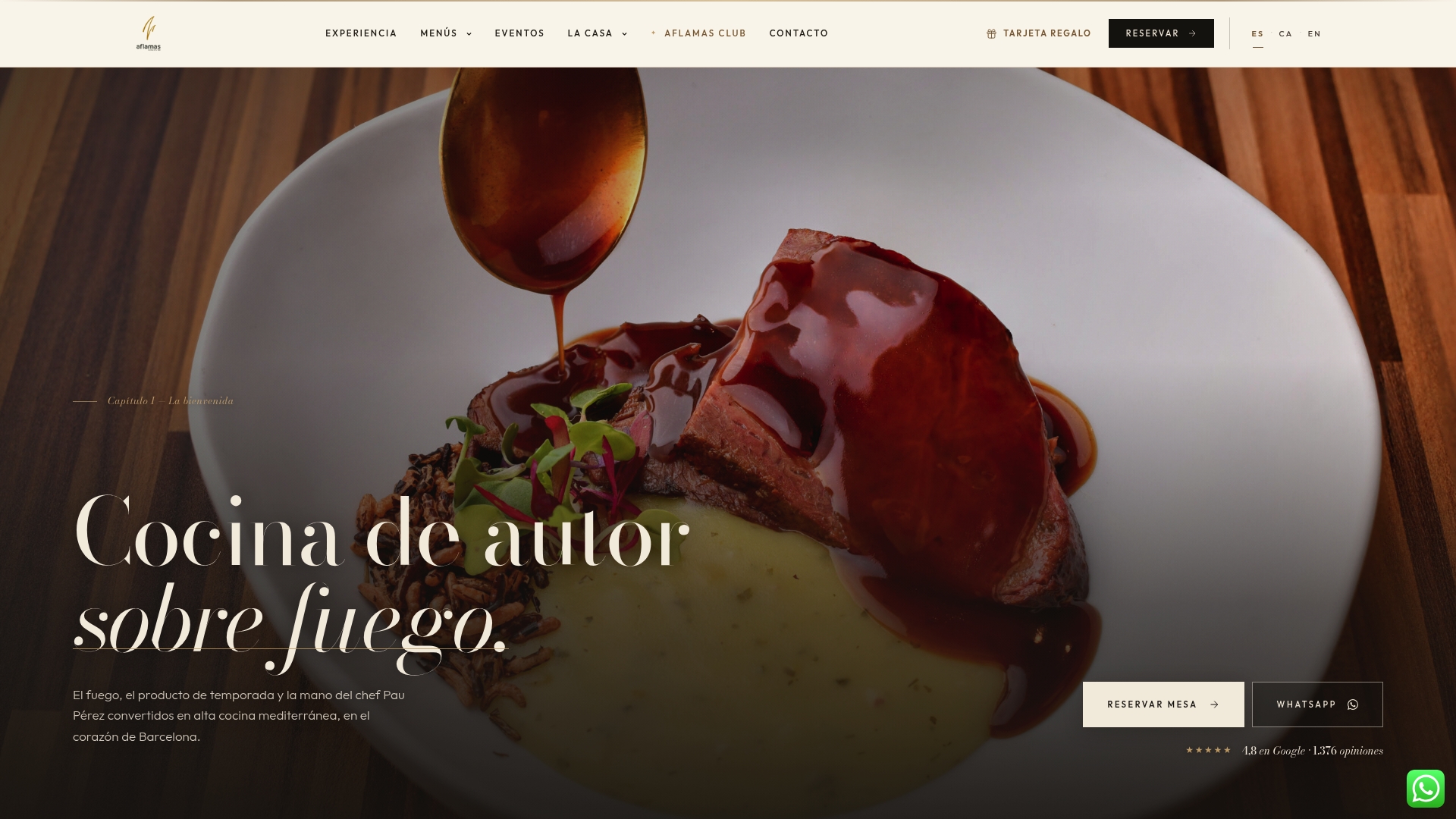
If you are looking for a refined, chef-driven meal rather than a casual value pick, you can view the current tasting menu options and check availability directly with the restaurant.
Sources
- The Michelin Guide 101 — Guide Michelin
- The other Michelin award travellers should know — BBC Travel
FAQ
Is Bib Gourmand higher than Michelin selected?
Bib Gourmand and a plain Michelin “selected” listing are different tiers within the guide, with the Bib Gourmand specifically marking exceptional value within a price limit rather than just an included restaurant. It is not ranked above or below a star: it sits in its own value-focused category.
Is a Michelin Bib Gourmand the same as a Michelin Star?
No, they are distinct honors judged by the same inspectors but built around different goals. A Michelin Star rewards technical culinary excellence regardless of price, while a Bib Gourmand rewards excellent cooking within a defined local price threshold.
Is a Bib Gourmand a big deal?
Yes, within its category it represents some of the best value dining a city has to offer, chosen by the same anonymous inspectors who award stars. It often highlights authentic, local cuisine that a purely star-focused list would miss.
Why was Gordon Ramsay stripped of Michelin stars?
Star losses at restaurants tied to Gordon Ramsay have generally been linked to inconsistent quality found during anonymous inspector visits rather than a single incident. Consistency between visits is one of Michelin’s core criteria, and dips in that consistency are the most common reason a restaurant loses a star.