A palate cleanser is a small food or drink served between courses or tasting samples to strip away lingering flavor so the next taste registers clean and true. It works by resetting your taste buds rather than sterilizing your mouth, and it shows up everywhere from wine flights to cheese boards to sushi counters. The goal is always the same: stop one flavor from bleeding into your judgment of the next one.
TL;DR:
- Neutral options like still water, sparkling water, and plain white bread are best for most general palate cleansing needs due to their low flavor impact.
- Fatty or spicy residues are most effectively cleared using dairy products like ice cream or plain crackers that reduce perceived burn and richness.
- Timing is crucial; short pauses work for similar flavors, while stronger tastes like alcohol or chili require longer intervals or more substantial cleansers such as dairy or dense crackers.
- The choice of cleanser should match the previous flavor profile, with portions kept small and low-aroma options preferred to avoid interfering with the next course.
- Sensory science shows that the interval between tastes influences judgment accuracy, and no single cleanser works perfectly for all situations.
Table of Contents
- Palate Cleanser Meaning and Purpose in Cooking
- What Are the Best Palate Cleansers to Use?
- How Do Palate Cleansers Actually Work?
- Palate Cleanser Dos and Don’ts for Servers and Home Cooks
- What Does “Palate Cleanser” Mean as Slang?
- Palate Cleanser vs. Amuse-Bouche vs. Intermezzo
- How Fine Dining Restaurants Plan Palate Cleansers
- Taste the Difference a Well-Planned Menu Makes
- Sources
- FAQ
Palate Cleanser Meaning and Purpose in Cooking
The word “palate” causes most of the confusion here. Anatomically, it’s the roof of your mouth. In tasting language, it means your entire sense of taste, the whole system that lets you tell a Chardonnay from a Sauvignon Blanc or a triple cream brie from an aged cheddar. When someone says “cleanse the palate,” they mean the second definition, and Merriam-Webster defines it plainly as cleaning and refreshing the mouth between parts of a meal.
The purpose isn’t hygiene. It’s contrast. A palate cleanser removes lingering residue from a previous course so you can assess what comes next without one flavor’s fat, acid, or spice skewing your read on the other. That’s why chefs building tasting menus and sommeliers running wine flights insert these small pauses deliberately. Skip them, and your third course might taste muted just because your second course was heavier or spicier than expected. The cleanser is a reset button, not a wash cycle.
What Are the Best Palate Cleansers to Use?
Not every cleanser works for every situation. The right choice depends on what you’re trying to erase from your mouth.
Neutral, all-purpose options work for most sequences where you just need a clean slate:
- Still or sparkling water
- Plain white bread
- Water crackers
These show up constantly because they’re cheap, low-effort, and rarely clash with anything. Water and unsalted crackers perform consistently well across a wide range of food categories, which is why restaurants default to them.
Fatty or spicy carry-over needs a different tool. Dairy fat coats the tongue and interrupts the burn from capsaicin or the lingering richness from a fatty dish. A small scoop of vanilla ice cream or a plain cracker does this better than water alone, since fat content directly reduces perceived burning sensation in controlled tastings involving alcohol and spice.
Astringent or bitter carry-over, the kind you get after a tannic red wine or strong black tea, responds better to warm water or mild pectin solutions than to anything acidic.
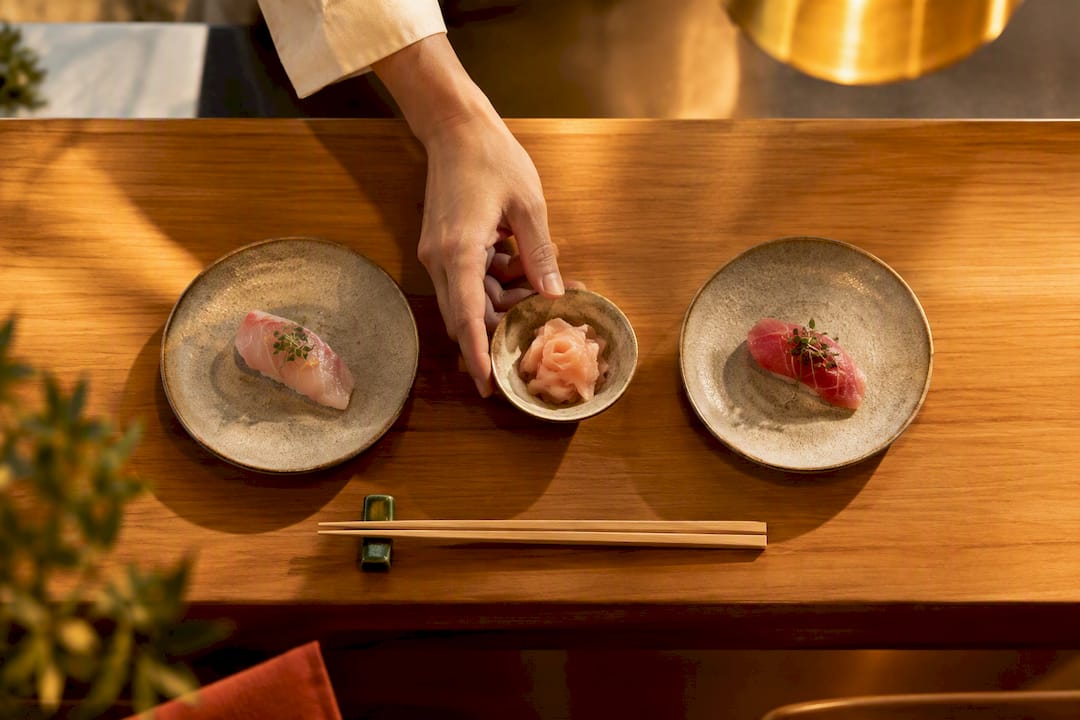
Sushi has its own cultural standard: pickled ginger, chosen specifically for its role between raw fish courses at sushi counters worldwide.
Sorbet deserves a caution. Choose restrained, low-aroma versions. A citrus or basil sorbet loaded with sugar and strong flavor stops being a reset and starts being its own course.
How Do Palate Cleansers Actually Work?
Your tongue adapts to whatever it just tasted, and that adaptation skews how you rate the next thing you eat. Sensory scientists call this taste adaptation, and it’s the entire reason cleansers exist. Leftover residue on your tongue doesn’t just sit there passively. It actively changes your perceived intensity of the next bite, making a mild dish taste blander than it is or a subtle wine taste muddier than it should.
The interstimulus interval matters more than most diners realize. Research on sensory panels shows that the gap between tastes, not just what you eat in that gap, affects how accurately you judge the next sample. A controlled study on sensory evaluation methods found that timing and rinsing procedure both shift results, and individual variability between tasters is large enough that no single protocol works perfectly for everyone.
That same research backs up something restaurants have known by instinct for years: water and unsalted crackers are the most broadly effective cleansers across many different food categories, largely because they’re low in flavor and fat, which limits how much they interfere with whatever comes next. Separate testing on alcoholic beverages found that vanilla ice cream and water crackers specifically reduced burning sensations tied to alcohol content, which is why bartenders and sommeliers reach for dairy or starch rather than citrus when a spirit is aggressive.
The practical takeaway: there’s no single perfect cleanser. You match the tool to the stimulus, accept some compromise in a casual setting, and move on. Sensory labs can control rinsing time down to the second. A dinner table can’t, and doesn’t need to.
Palate Cleanser Dos and Don’ts for Servers and Home Cooks
Getting this right doesn’t require culinary school. A few rules cover most situations.
Do this:
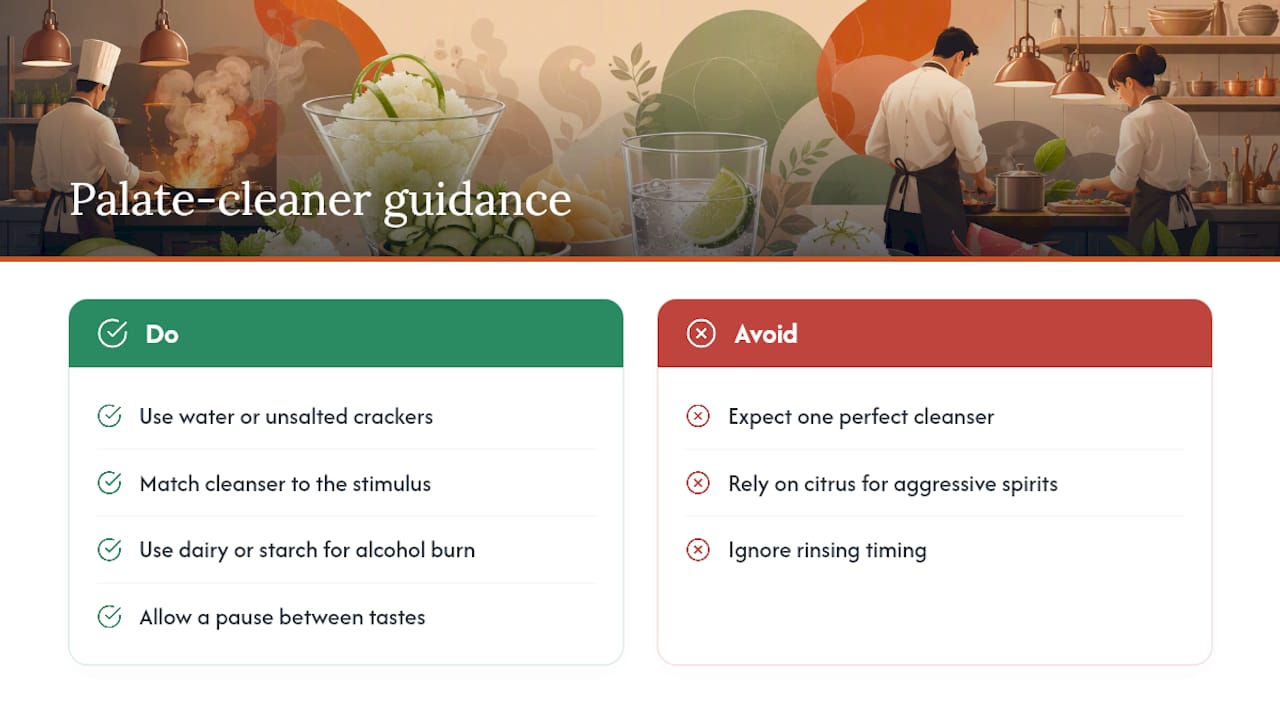
- Match the cleanser to what just hit the palate, fat for fat, heat for heat, tannin for tannin
- Keep portions small; a cleanser that fills you up defeats its own purpose
- Choose low-aroma options so the cleanser doesn’t compete with the next course
- Allow a brief pause, even 30 to 60 seconds, before serving what’s next
Avoid this:
- Don’t default to a sweet, heavily flavored sorbet between every course; it can become a course in its own right instead of a reset
- Don’t assume one quick sip of water fully resets the mouth after something intense like a chili-forward dish or a heavily oaked red wine
Timing shifts with intensity. A short pause works fine between two similar wines. Alcohol, capsaicin, or anything with strong lingering fat calls for either a longer break or a more substantial cleanser like a cracker with a bit of dairy.
Pro Tip: Reach for a restrained sorbet only when you genuinely want a sensory reset between dissimilar courses, not when you’re tempted to use it as a flavor showcase. The moment a sorbet tastes exciting on its own, it’s stopped doing its job.
What Does “Palate Cleanser” Mean as Slang?
Outside the kitchen, “palate cleanser” describes anything light and contrasting that follows something intense or repetitive. Someone might call a breezy sitcom a “palate cleanser” after binge-watching a bleak crime drama, or describe a short pop song as one after an album of dense, moody tracks. The figurative use leans on the same contrast idea as the culinary one: a deliberate break that resets your expectations before the next heavy experience. The metaphor works because it borrows exactly what makes the food version useful, a pause that clears out whatever came before.
Palate Cleanser vs. Amuse-Bouche vs. Intermezzo
These three get confused constantly, but timing gives them away. An amuse-bouche arrives first, before or at the start of a meal, meant to spark appetite and hint at the chef’s style. A palate cleanser shows up mid-meal, between courses, purely to reset taste perception. An intermezzo sits in between too, but it can be more elaborate, sometimes serving a pacing role on a long tasting menu rather than a strict sensory-reset function. If it opens the meal, it’s an amuse-bouche. If it’s a small, deliberately plain bite mid-sequence, it’s a cleanser. If it’s a bit more composed and appears specifically to slow the meal’s rhythm, call it an intermezzo.
How Fine Dining Restaurants Plan Palate Cleansers
Professional kitchens don’t toss a sorbet between courses out of habit. Every insertion point on a tasting sequence gets chosen for a reason, matched to what precedes it and what follows, while accounting for dietary restrictions that limit which options are even on the table. At Aflamas, sequencing a tasting menu means weighing sensory contrast against vegan, gluten-free, and lactose-free needs course by course.
— YellowRock
Taste the Difference a Well-Planned Menu Makes
Reading about palate cleansers is one thing. Tasting a menu where every course, pause, and reset was planned with that science in mind is another. Aflamas builds its tasting sequences around fire-based technique and seasonal, local ingredients, which means the transitions between courses get the same attention as the dishes themselves, not an afterthought sorbet dropped in halfway through.
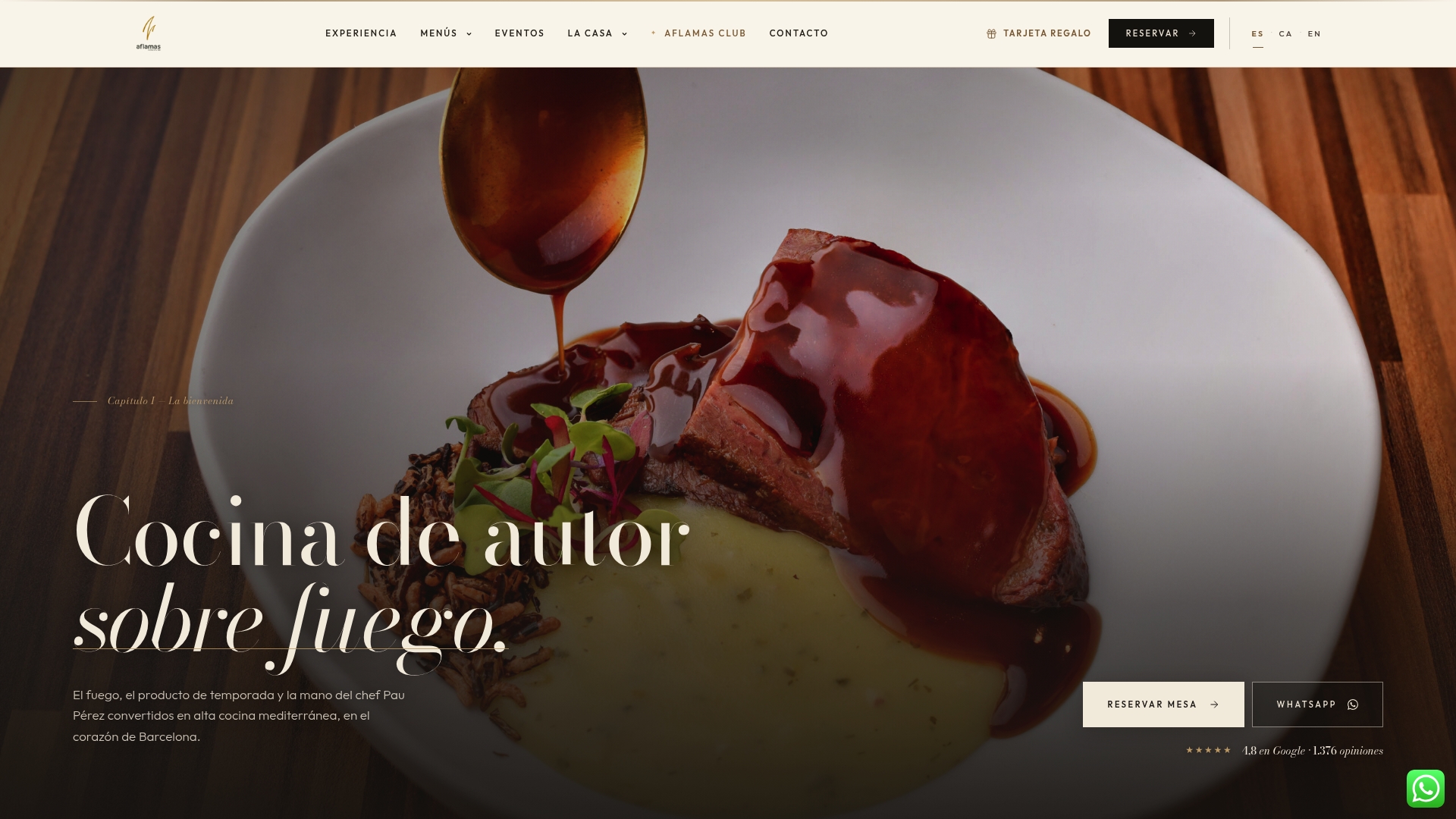
If you want to see how that plays out on a full sequence, the tasting menu walks through a chef-driven progression from opening course to dessert. Prefer something more focused on the kitchen’s signature dishes? The Menú Selección Autor runs €90 per person and centers on Aflamas’s own chef-driven creations. Planning a celebration with a group instead? The group menu options are built for exactly that. Reserve a table and taste the sequencing for yourself.
Sources
- What Are Palate Cleansers? – Escoffier Online
- Thesis on palate cleansers and sensory evaluation (Ohio State / OSU ETD)
- Journal study comparing palate cleansers for alcoholic beverages (2015 DOI)
- Palate cleanser: a way to refresh your taste buds between courses – The Nibble
FAQ
What Does the Slang Term “Palate Cleanser” Mean?
Outside of food, a palate cleanser is anything light or contrasting that gives you a break after something intense or repetitive, like a breezy movie watched right after a heavy drama. The figurative use borrows the contrast idea directly from the culinary meaning.
What Is a Palate Cleanser?
A palate cleanser is a small food or drink served between courses or tasting samples specifically to remove lingering flavor residue from your mouth. Its job is to help you judge the next flavor accurately rather than through the lens of whatever you just ate.
What Is Another Word for “Palate Cleanser”?
There’s no single perfect synonym, but people sometimes call it a “taste reset,” a “flavor break,” or in wine contexts, simply “cleansing the palate.” Culinary menus occasionally label it an intermezzo, though that term technically covers a slightly broader role than a strict cleanser.
What Drink Is a Palate Cleanser?
Still or sparkling water is the most common drink cleanser because it’s neutral and won’t compete with the next course. Some tasters also use warm water or mild tea to cut through bitterness or tannin left by a heavy red wine.
Does Aflamas Use Palate Cleansers on Its Tasting Menus?
Yes. Aflamas sequences its tasting menu courses with sensory contrast in mind, adapting choices for guests with vegan, gluten-free, or lactose-free needs while keeping transitions between dishes intentional rather than incidental.