
A gift card is stored-value money you can spend flexibly, often across many products or dates, while a voucher locks you into a specific offer, item, or experience. That single distinction drives everything else: how each gets taxed, when it expires, and how much freedom the recipient actually has. The rest comes down to redemption rules, VAT timing, and what happens if the value goes unused.
TL;DR:
- Gift cards generally allow partial use and can be spent across multiple visits or products, unlike vouchers which are usually single-use and tied to one specific offer.
- The VAT tax timing depends on whether a voucher is single-purpose, which taxes at sale, or multi-purpose, which taxes at redemption; unpublicized expiry policies can lead to consumer disputes.
- Digital gift cards and vouchers typically arrive instantly by email, but physical cards require extra days for shipping, influencing planning for holidays or special occasions.
- Consumers should verify balance check options, expiry dates, and refund policies before purchase, and always keep receipts or register the card for security and recovery.
- When choosing between a gift card or voucher for hospitality, select a gift card for flexible use across any menu or service, but opt for a voucher to ensure a specific experience or fixed date.
Table of Contents
- Gift Card vs Voucher: Clear Definitions and Quick Comparison
- How Gift Cards and Vouchers Work in Practice
- Legal and Tax Rules: Single-Purpose vs Multi-Purpose Vouchers
- A Dining Example: Menu Vouchers vs Flexible Gift Cards
- Which One Should You Actually Buy?
- Give the Gift of a Meal, Not Just a Balance
- Where to Verify These Rules Yourself
- Sources
- FAQ
Gift Card vs Voucher: Clear Definitions and Quick Comparison
A gift card works like prepaid money loaded onto a card or account. You can spend it in stages, often over months or years, and in many cases at any participating retailer if it’s an open-loop card tied to a payment network, or only at one brand if it’s closed-loop. Wikipedia’s overview of gift cards lays out that open-loop versus closed-loop split clearly, and it’s the first thing worth checking before you buy one.
A voucher, by contrast, usually represents a right to a specific product, service, or discount. Think of a spa day pass, a two-course lunch offer, or a “$20 off your next order” coupon. Vouchers tend to be single-purpose and single-use. You redeem the whole thing at once, for the thing it was issued for, and that’s the end of it.
Spanish speakers will run into a naming issue here. FundéuRAE, the language authority tied to the Royal Spanish Academy, recommends using tarjeta de regalo instead of the anglicism gift card in Spanish-language communication. You’ll also see vale and cheque regalo used loosely for both concepts, even though they don’t always mean the same thing legally.
Here’s how the two compare on the points that matter most:
- Flexibility: Gift cards usually work across a catalog or multiple visits; vouchers are typically tied to one offer.
- Transferability: Both can usually be gifted to someone else, but vouchers restricted to a named service (like one specific menu) are harder to transfer usefully.
- Partial use: Gift cards almost always allow partial spending, leaving a remaining balance. Vouchers often don’t.
- Format: Both now exist as plastic cards, printed paper, or digital e-vouchers with a QR code or redemption link.
How Gift Cards and Vouchers Work in Practice
Buying either one is usually fast, but the delivery mechanics differ. A digital e-voucher or e-gift card typically arrives by email within minutes, ready to forward or print. A physical card usually ships, which means planning a few extra days if it’s a birthday or holiday gift.
Redemption is where the real difference shows up. Follow this general sequence:
- Check the balance or terms before showing up. Most issuers post an online balance checker or ask you to call a support line.
- Present the card or code at checkout. A gift card usually gets swiped or scanned like a debit card; a voucher often needs to be mentioned or shown before the order is placed, especially at a restaurant.
- Confirm partial use rules. If a purchase exceeds the card’s value, the remainder is usually paid separately. If it’s a voucher for a fixed menu, going over budget (extra drinks, add-ons) is typically settled the same way.
- If a code is rejected, ask for a manual override. Staff can often verify a code manually if the scanner fails; keep proof of purchase handy.
Consumer-authority guidance treats a gift-card purchase as a genuine contract between buyer and business, which means the seller is expected to publish clear terms on balance checks and expiry. If those terms aren’t visible, that’s a red flag before you buy.
Pro Tip: Always keep your purchase receipt or confirmation email, and register the card online if the issuer offers that option. A registered card can usually be replaced or refunded if lost; an unregistered one often can’t.
Legal and Tax Rules: Single-Purpose vs Multi-Purpose Vouchers
This is the part most people never think about until something goes wrong, and it’s genuinely useful to understand. EU and Spanish tax law split vouchers into two categories: univalente (single-purpose) and polivalente (multi-purpose). The category decides when VAT gets charged.
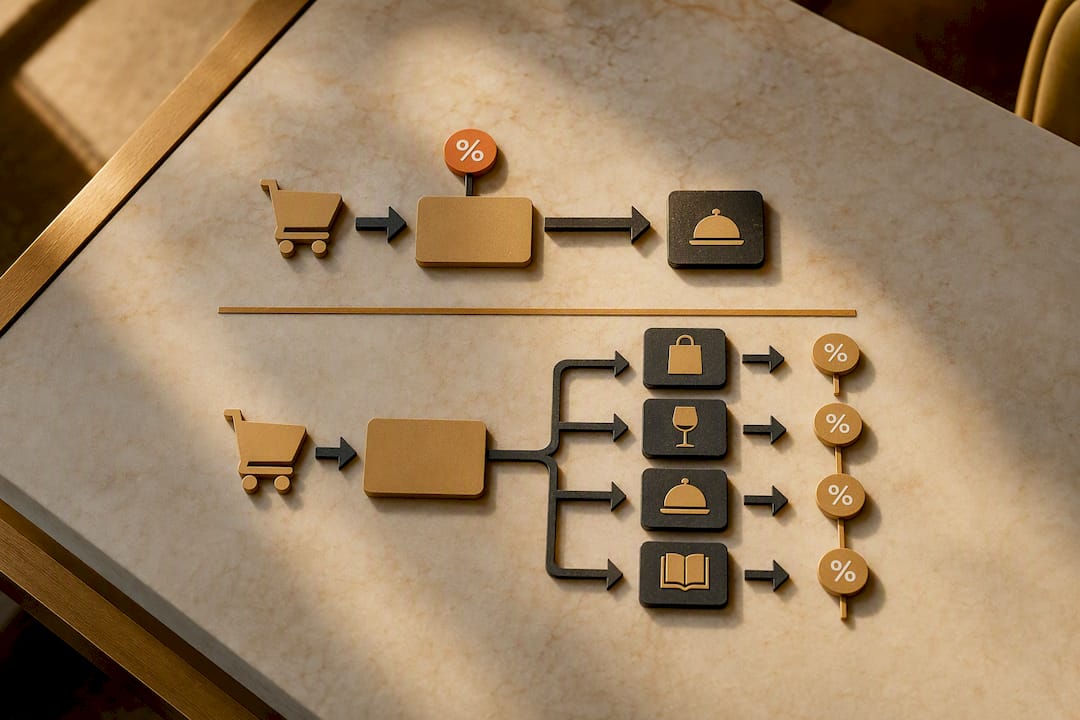
A single-purpose voucher already tells the seller exactly what tax rate applies and where, because it’s locked to one specific good or service. That means VAT is due at the moment of sale, not when the buyer eventually redeems it. A multi-purpose voucher, usable across different products or tax rates, defers VAT until redemption, since nobody knows yet what will actually be bought.
This distinction traces back to the 2016 EU directive that harmonized voucher treatment across member states. As LegalToday explains, the rule exists because tax authorities needed one consistent answer to “when does the government get its cut,” regardless of what the voucher eventually buys.
Consumer protection is the other half of this story. Spanish consumer authorities have specifically flagged abusive expiry clauses on gift cards as an inspection priority, and enforcement isn’t theoretical: retailers have been fined for offering gift cards with unfair expiry terms in the past. If a card expires unreasonably fast, or expiry terms are buried in fine print, that’s grounds for a formal complaint.
Before buying, confirm these four things:
- What happens to unused balance after expiry (forfeited, extended, refunded)?
- Is there a stated minimum validity period?
- What’s the refund policy if the business closes or the redemption fails?
- Is the balance checkable online, and does the receipt prove the purchase?
A Dining Example: Menu Vouchers vs Flexible Gift Cards
A restaurant voucher tied to one named tasting menu behaves exactly like a single-purpose voucher: it’s redeemable for that specific experience, on a booked date, and that’s it. A restaurant gift card, by contrast, usually holds a dollar value the recipient can apply toward any menu, drink pairing, or private event the restaurant offers.
Both have a place in hospitality gifting, and the right choice depends on what you actually know about the recipient:
- Menu-specific vouchers work well for a curated surprise, a set anniversary date, or a group booking where the host wants cost certainty.
- General-value gift cards work better when you’re unsure of dietary restrictions, scheduling, or which menu the person will actually want.
- Reservations almost always matter either way. A group menu booking, for instance, needs advance notice for dietary adjustments regardless of whether it’s paid with cash, card, or gift value.
Ask the restaurant directly whether dietary notes (vegan, gluten-free, lactose-free) can be attached to a gift purchase before the recipient even shows up.
Which One Should You Actually Buy?
Buy a gift card when you don’t know the recipient’s exact preference, schedule, or appetite. Flexibility is the entire point. Buy a voucher when you want to guarantee a specific outcome. A curated tasting menu, a fixed-date event, or a group booking all benefit from the certainty a voucher locks in. Neither option is objectively better. The right pick depends on whether you’re gifting choice or gifting a decision already made, and in hospitality gifting specifically, that decision usually comes down to how well you know what the recipient actually wants to eat.
— YellowRock
Give the Gift of a Meal, Not Just a Balance
A dining gift only works if the recipient can actually use it the way they want, and that’s the whole idea behind the Aflamas gift card. It’s not restricted to one fixed menu or one narrow use case. Recipients can apply it toward a seasonal tasting menu, a signature dining experience, or even a private group booking, whichever fits the occasion once they’re ready to book.
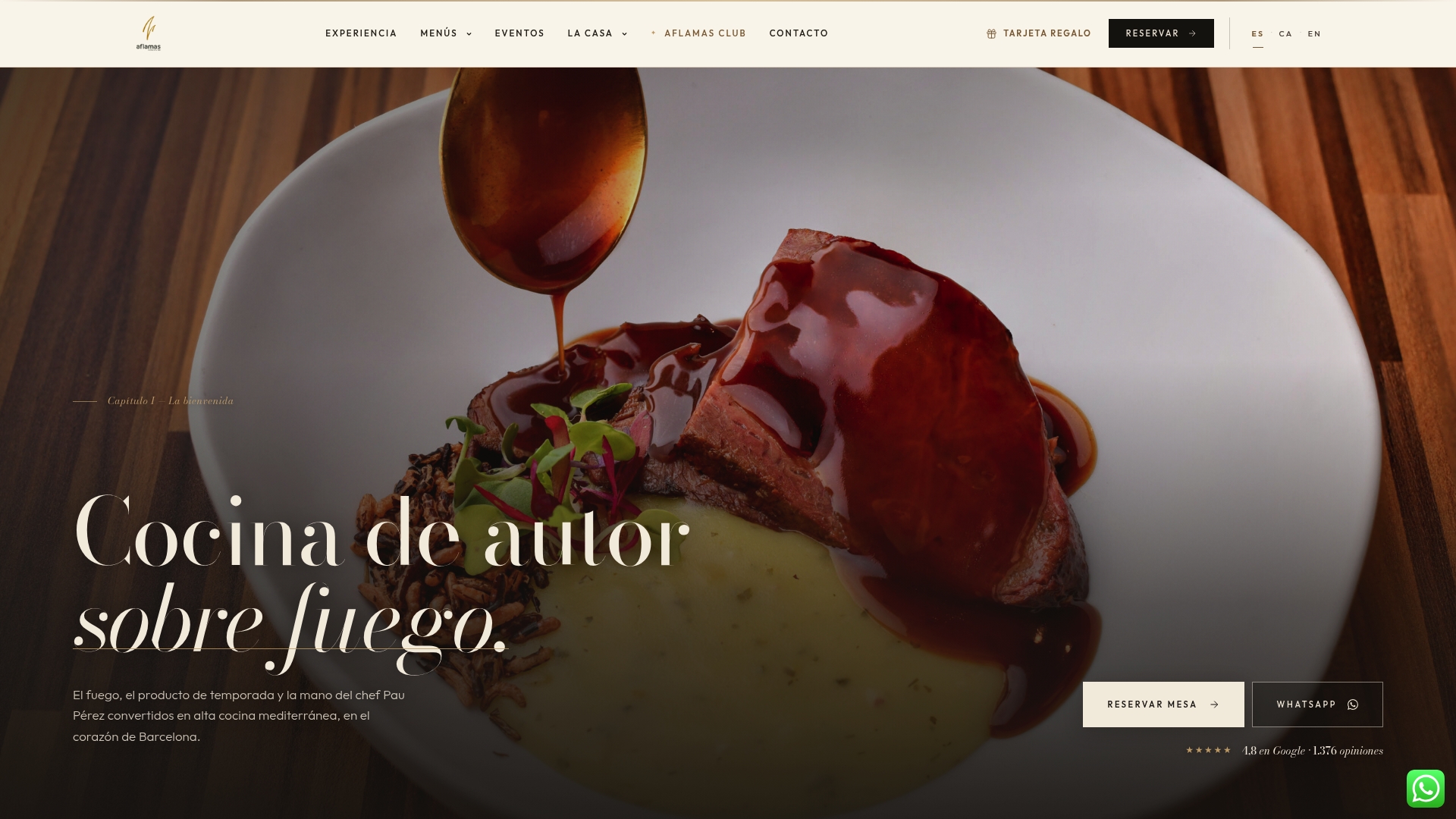
Buying one is straightforward: pick a value, complete the purchase online, and the card arrives ready to send or print. Reservations are required to redeem it, same as any table at Aflamas, so recipients should book ahead, particularly for weekends or larger groups. Balance and general terms are provided on the purchase page for transparency. If you want to see what the recipient will actually be choosing from, browse the signature menu before you buy, then pick a card value that comfortably covers it.
Where to Verify These Rules Yourself
For readers who want to check the underlying rules firsthand rather than take a summary at face value, these are the primary sources behind this article:
- FundéuRAE’s guidance on using “tarjeta de regalo” instead of the English “gift card” in Spanish.
- Consumo Responde’s reporting on gift-card inspections and consumer complaints.
- BOE’s official guidance on how EU Directive 2016/1065 sets VAT timing for vouchers.
Sources
- «tarjeta de regalo», alternativa a «gift card" | FundéuRAE
- Consumo Responde report on couponing and gift cards
- BOE guidance on vouchers and VAT (reflecting EU Directive 2016/1065)
- The VAT on gift vouchers — LegalToday
FAQ
Are a Voucher and a Gift Card the Same Thing?
No. A gift card holds general spending value across multiple purchases, while a voucher usually redeems for one specific product, service, or discount and often can’t be partially used.
Is a Gift Card Considered a Voucher?
Not typically. A gift card is closer to prepaid money, while a voucher is an entitlement document tied to a defined offer. Some multi-purpose vouchers behave similarly to gift cards, but the tax treatment still differs.
Why Do People Give Gift Cards Instead of Cash?
Gift cards let the giver contribute toward a specific brand or experience without guessing the exact item, while still giving the recipient freedom to choose what and when to spend it.
What’s the Difference Between a Gift Card and an E-Voucher?
Functionally little. A digital e-voucher, delivered by email or QR code, carries the same legal rights and tax treatment as its physical equivalent; only the delivery format changes, not the underlying terms.