An engagement dinner works best as one of three formats: an intimate plated dinner, a chef-led tasting experience, or a relaxed grazing-and-cocktail party. Pick the format that matches your guest count and desired formality, plan it 3 to 6 months before the wedding, and let the couple, parents, or close friends host. What follows is a full catalog of ideas, sample menus, and a planning checklist you can copy directly.
TL;DR:
- Choose a format that matches the guest count and desired formality, such as an intimate dinner, chef-led tasting, or casual party, and plan it 3 to 6 months in advance.
- For small families, a plated dinner or tasting menu fosters conversation, while larger groups may prefer grazing tables or backyard barbecues for relaxed mingling.
- Private restaurant dining offers a fixed menu and manages timing for speeches and gifts, making it easier to coordinate the event smoothly.
- Prioritize finalizing the guest list before selecting the format or venue to prevent awkward invitations and ensure suitable event scale.
- Booking a chef-led private dining experience simplifies planning, as menus and timing are managed by professionals, accommodating dietary restrictions and natural pauses for toasts.
Table of Contents
- Engagement Dinner Ideas by Style and Setting
- How to Choose the Format, the Guest List, and Who Pays
- Sample Menus and a Simple Planning Timeline
- Booking a Private Dining or Chef-Led Engagement Dinner
- What Actually Matters When Planning This Dinner
- Aflamas: A Chef-Led Engagement Dinner in Barcelona
- Where This Advice Comes From
- Sources
- FAQ
Engagement Dinner Ideas by Style and Setting
The best engagement celebrations start from a clear picture of scale and mood, not a Pinterest board. Here’s a working list organized by format, with quick execution notes for each.
Intimate plated dinners suit families who want a seated, conversation-first evening.
- A Mediterranean tapas tasting with small plates served in courses works for groups under 20 and lets you skip a formal seating chart.
- A seasonal farm-to-table menu built around whatever’s fresh that month gives you an easy excuse to change things up each year if you host again for anniversaries.
- Choose a seated menu when you want toasts to land cleanly. It’s much harder to quiet a standing crowd for a speech than a table already seated with wine poured.
Tasting and chef-driven experiences turn the dinner into the entertainment itself.
- A chef’s tasting menu with wine pairings gives structure automatically. Each course becomes a natural pause point for conversation or a toast.
- An olive-oil or sherry tasting bar before the meal works well for groups who want an activity before they sit down.
- A multi-course sensory dinner, four to six courses, paces the night for you. Plan toasts between the second and third course, when energy is still high but stomachs aren’t full.
Casual party-style gatherings fit bigger guest lists and looser budgets.
- A grazing table paired with a cocktail station handles 30 to 80 people without a single seating assignment.
- A backyard barbecue or low-country seafood boil works for families who’d rather eat with their hands than worry about place settings.
- A taco-and-tequila night keeps costs down and gives you a built-in theme for decorations and presentation without much extra effort.
Daytime options solve the problem of finding an evening that works for everyone.
- A champagne brunch is often easier to schedule around work calendars than a Saturday night dinner.
- A rooftop lunch or park picnic keeps things unstructured, which suits couples who find formal toasts a little awkward anyway.
- A paella party, cooked outdoors in one big pan, doubles as the centerpiece and the meal.
Venue-based ideas matter as much as the menu.
- Private dining at a restaurant gives you a fixed menu, a private space, and none of the cleanup.
- Buying out a favorite small restaurant for the night works if the guest list is under 30 and you book early.
- A boat, a rooftop bar, or a home with hired catering all work, provided you match the venue’s formality to the signature menu or catering style you’re planning around it.
Pro Tip: Pick your format before you pick your venue. A grazing table at a formal restaurant looks out of place, and a five-course tasting menu at a backyard barbecue confuses everyone about what kind of night it’s supposed to be.
How to Choose the Format, the Guest List, and Who Pays
Work through four questions before you book anything: How formal do you want this to feel? What’s the real budget? How big and how close is the family? And is this dinner celebrating a fresh engagement or happening months later as a planned event?
- Match formality to family dynamic. A close-knit family that loves ceremony leans toward a plated dinner or tasting menu. A larger, more scattered group often does better with a casual grazing party where people can move around.
- Set the guest list early. Etiquette guidance from the Emily Post Institute recommends keeping the list to your inner circle, meaning anyone you’d invite to the wedding itself. Inviting someone to the engagement dinner but not the wedding creates an awkward obligation nobody wants.
- Decide who hosts before you decide what to serve. Hosting has loosened up considerably. Parents traditionally hosted, but modern etiquette now accepts the couple themselves, friends, or a shared arrangement just as readily.
- Settle who pays without drama. If a parent offers to host and you’d rather keep things low key, a simple line works well: “That’s so generous. We were actually planning something small, but let’s find another way to include you.”
Pro Tip: If your families have different ideas about formality, split the difference literally. Host a plated dinner for immediate family, then a casual party later for the wider group.
Sample Menus and a Simple Planning Timeline
Copy whichever menu matches your format, then build backward from the date.
Plated dinner (3 courses plus dessert): a burrata and heirloom tomato starter, followed by a roasted branzino or short rib main paired with a mid-weight red or crisp white, then a citrus tart to close. Plan roughly 90 minutes for the full seated meal.
Chef-led tasting (5 courses): start light with a raw or cured seafood bite, move through a vegetable course, a pasta or grain course, a protein-forward main, then dessert. Time toasts between courses three and four, when the table is settled but not yet full.
Grazing and cocktail menu: a cheese and charcuterie board as the anchor, passed hors d’oeuvres like crostini or skewers circulating every 15 minutes, and one hot station (sliders, empanadas) to keep people fed past the first hour.
Timeline:
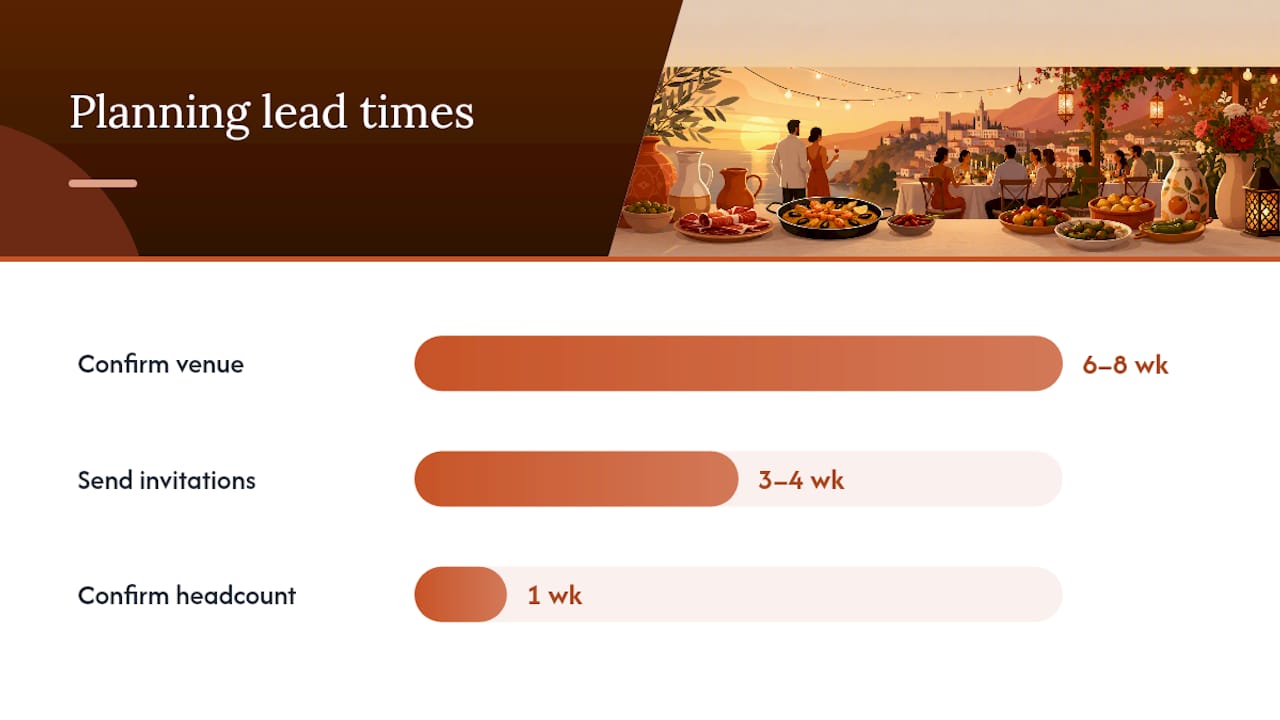
- 6 to 8 weeks out: confirm venue, format, and guest list.
- 3 to 4 weeks out: send invitations, finalize the menu.
- 1 week out: confirm headcount, seating, and toast order.
- Day of: guests arrive, welcome drinks, toasts, main meal, gift exchange between main and dessert, dessert, informal wrap-up.
In Spain, the engagement dinner, known as the cena de pedida, typically takes place several months before the wedding and usually stays limited to parents and siblings, a useful benchmark even if you’re not following the tradition closely.
Booking a Private Dining or Chef-Led Engagement Dinner
Restaurant private dining works well for engagement dinners because it hands you a fixed menu, a controlled room, and someone else managing the clock. That last part matters more than people expect: a kitchen that knows exactly when your toast is happening can time courses around it instead of around a general dinner rush.
Before you book, ask the restaurant a short list of questions:
- Is there a corkage fee if we bring our own wine?
- Can you provide a microphone or space for speeches?
- Is a menu tasting available before the event?
- What group or private menu options exist for our headcount?
- How do you handle allergies or dietary restrictions across the table?
Pro Tip: Ask specifically where the gift exchange fits in the service. Most restaurants will happily slow the pace between the main course and dessert if you tell them in advance, which is the natural lull for it.
What Actually Matters When Planning This Dinner
Most engagement dinner advice fixates on theme and décor, and that’s the part that matters least. The dinners that actually work well are the ones where the host picked a format that matched the guest list’s temperament, not the one that looked best online.
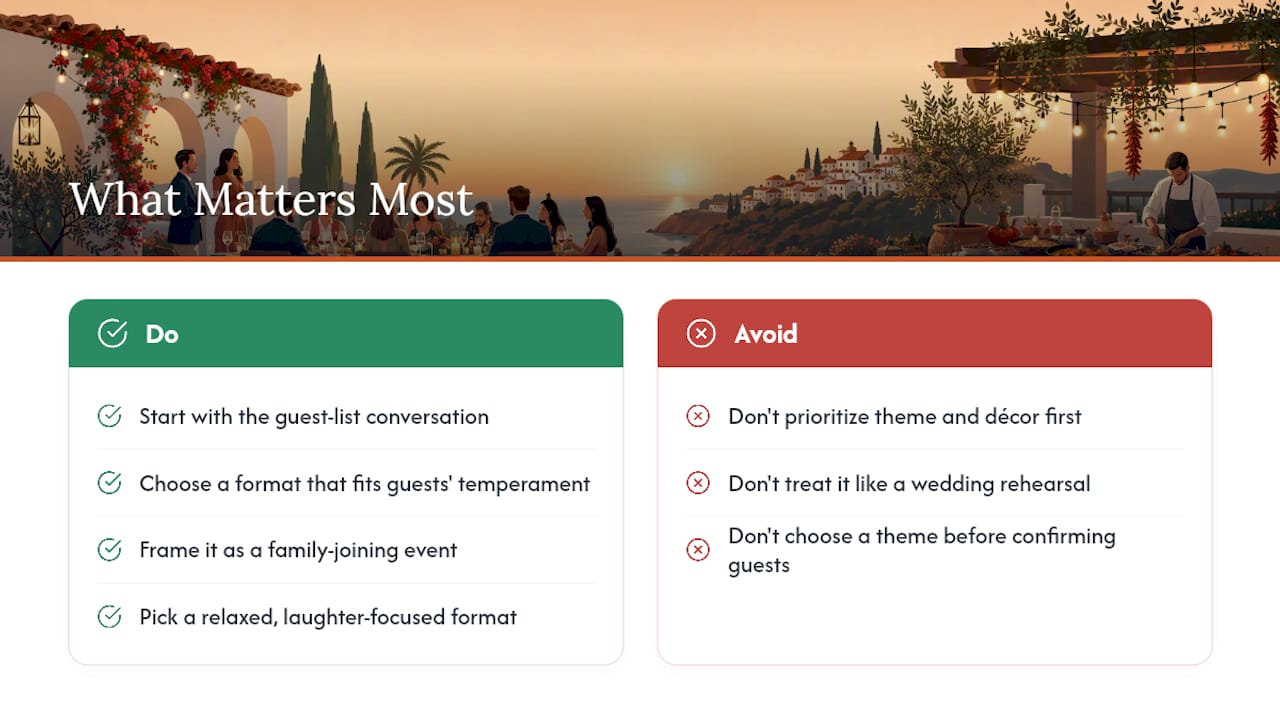
The bigger mistake is treating this like a smaller wedding rehearsal. It isn’t. Spanish wedding guidance frames the cena de pedida as an act of bringing families together, not a rehearsal for protocol, and that framing holds regardless of where you’re hosting. A backyard taco night that gets your two families laughing together beats a stiff five-course dinner nobody enjoys.
If there’s one thing to prioritize first, it’s the guest list conversation, not the menu. Get that settled, and the format usually picks itself. Couples who reverse that order, choosing a theme before deciding who’s actually coming, end up retrofitting decisions they should have made first.
— YellowRock
Aflamas: A Chef-Led Engagement Dinner in Barcelona
If you’re leaning toward the tasting-menu route rather than a DIY dinner party, Aflamas gives you the version of that idea that requires the least effort on your part. Instead of building a five-course menu and coordinating pairings yourself, you book a private dining room and let a chef-driven tasting menu do the work, with the timing of toasts and courses handled by people who do this for a living.
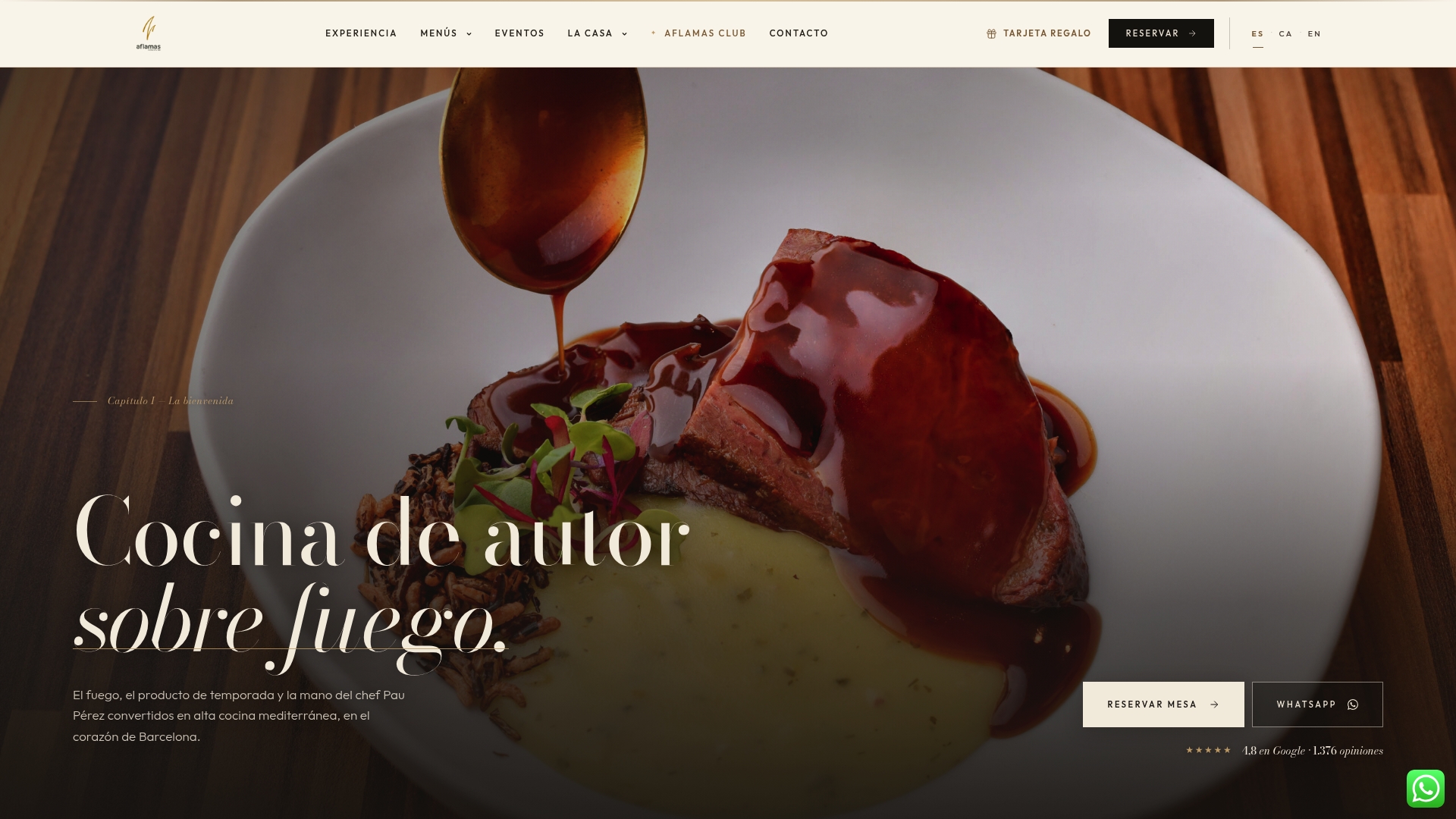
Aflamas offers tasting-menu dining suitable for both intimate dinners and larger private events. The kitchen can accommodate vegetarian, vegan, gluten-free, and lactose-free guests, and group menus can be customized for celebrations. The restaurant team can assist with timing speeches or gift exchanges to fit natural pauses between courses.
Take a look at the tasting menu or the group menu options, and reach out to ask about private dining availability for your date.
Where This Advice Comes From
- Pedir la mano: guía y tradición (Wedded)
- Bodas
- Engagement party planning & etiquette (Brides)
- Engagement party etiquette (Emily Post Institute)
Sources
- Pedir la mano: guía y tradición (Wedded)
- Bodas
- Engagement party planning & etiquette (Brides)
- Engagement party etiquette (Emily Post Institute)
FAQ
What do you do at an engagement dinner?
Guests typically arrive for welcome drinks, share a meal together, offer a toast to the couple, and often close with a small gift exchange before dessert. The exact activities depend on the format, but toasts and a shared meal are the constant.
What should you serve at an engagement dinner?
Serve food matched to your format: a three-course plated meal for a seated dinner, a multi-course tasting for a chef-led event, or a grazing table and passed appetizers for a casual party. If you’re serving alcohol, etiquette guidance from Brides recommends providing food at minimum, even at a lighter gathering.
Who throws the engagement dinner?
Historically the bride’s parents hosted, but today the couple, either set of parents, or close friends can host, and the choice usually comes down to who wants to and who’s paying.
Are engagement dinners a thing?
Yes, though they’re optional rather than expected. In Spain, the cena de pedida remains a common pre-wedding tradition, while in other places it’s a more flexible, couple-driven celebration that can happen anytime between the proposal and the wedding.