
Dry-aged fish is fish matured in controlled low-temperature, low-humidity conditions to concentrate flavor and change texture. Done under validated parameters, it’s safe and produces results you can’t get from a fillet pulled straight off the ice. The catch is that “validated parameters” means real monitoring, not guesswork: professional windows generally run for several days depending on the species, with tuna aging typically lasting a few days and whole trout around ten days, while home refrigerators can’t safely sustain the process beyond a very short period.
TL;DR:
- Fatty fish like tuna, yellowtail, and salmon age well for up to seven days at around 3°C with 78% humidity, developing richer flavor and firmer texture.
- Lean species such as halibut or sea bream require shorter aging windows of two to four days, as extended aging leads to texture degradation.
- Precise temperature and humidity control, continuous monitoring, and proper handling are essential for safe and consistent dry-aging outcomes, especially in professional settings.
- Home dry-aging beyond two days is risky due to unstable fridge environments; limiting to one or two days and closely checking for spoilage signs is safest.
- Aged fish emphasizes umami and creates a denser, more flavorful product that benefits from searing quickly and minimally seasoning for optimal taste.
Table of Contents
- What Dry-Aging Does to Fish: Enzymes, Moisture, and Flavor
- Which Fish Species and Cuts Age Well?
- How Do Chefs Control Temperature, Humidity, and Airflow?
- Preparing Fish for Dry-Aging: A Chef’s Handling Checklist
- Can You Dry-Age Fish Safely at Home?
- How Does Dry-Aging Change Flavor and Cooking Technique?
- Food Safety and Microbiology: What the Evidence Actually Supports
- Turning Dry-Aged Fish Into Menu-Ready Dishes
- How Maturation Shapes the Tasting Experience
- Taste the Results at Aflamas
- Sources
What Dry-Aging Does to Fish: Enzymes, Moisture, and Flavor
Three things happen at once when fish sits in cold, dry, moving air, and each one changes what ends up on the plate.
The first is enzymatic proteolysis. Enzymes already present in fish muscle, mainly cathepsins and calpains, keep breaking down muscle fibers after death. This is what softens texture over several days, the same biochemistry that makes aged beef tender. In fish it moves faster than in beef because fish muscle has less connective tissue and a different fiber structure, which is part of why fish aging windows are measured in days, not weeks.
The second is moisture loss. As water evaporates from the surface, everything else in the tissue gets more concentrated, including inosine monophosphate and free amino acids like glutamic acid and arginine. IMP and glutamic acid are the two biggest contributors to umami taste, so a fish that’s lost 10% of its water weight often tastes noticeably more savory than the same fish fresh, even before you factor in what the enzymes have done to texture. Research comparing dry and wet aging methods on grouper fillets found measurably higher free amino acid content in the dry-aged samples, along with distinct flavor development pathways tied specifically to moisture loss and metabolomic changes.
Third, a dry surface sears and browns better. Wet fish skin steams instead of crisping in a hot pan; a dry-aged fillet’s surface hits the Maillard reaction faster and gets a real crust.
Dry-aging isn’t dry-curing, which uses salt to actively draw out moisture and preserve the fish over a longer timeline, and it isn’t wet-aging, which holds fish under refrigeration in its own moisture or a liquid medium. Dry-aging sits in between: no salt cure, no liquid, just controlled air doing the work.
Which Fish Species and Cuts Age Well?
Fat content is the single biggest predictor of how a fish handles aging. Fattier fish protect themselves against drying out and develop richer flavor as moisture concentrates; lean fish dry out fast and can turn chalky or stringy before any flavor benefit shows up.
Fatty, firm-fleshed fish tend to be the safest starting point and reward longer aging:
- Tuna: four to seven days typically, developing a denser, almost beef-like chew and stronger umami.
- Yellowtail: similar range to tuna, with fat marbling that keeps the flesh supple through the process.
- Salmon: benefits from aging but needs closer monitoring of surface oxidation given its high polyunsaturated fat content.
- Black cod (sablefish): high fat content makes it forgiving even at the longer end of home-adjacent windows.
Lean, white-fleshed species need shorter windows and more attention:
- Monkfish: firm texture holds up for a few days without falling apart.
- Halibut: benefits from short aging (two to four days) but degrades quickly past that.
- Sea bream and snapper: solid entry points for chefs experimenting with dry-aging for the first time.
Delicate, low-fat fish like sole or flounder are poor candidates. Practitioner guidance consistently flags these as species that degrade quickly under dry-aging conditions rather than improving.
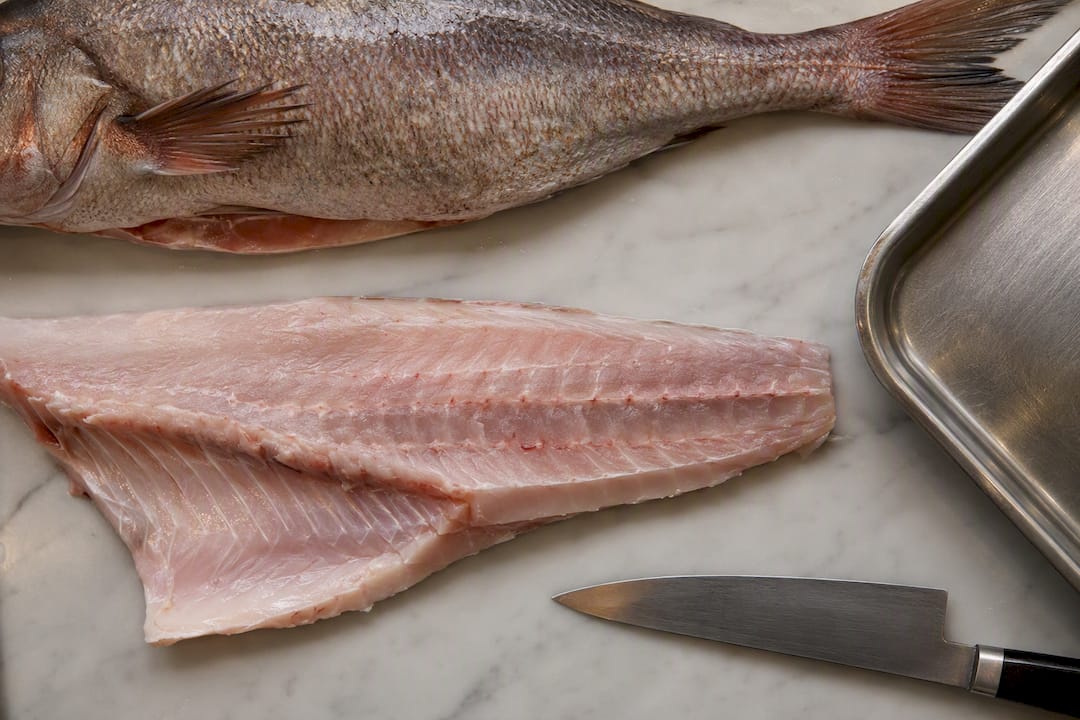
Whole fish age more forgivingly than fillets because the skin and bone structure act as a buffer against moisture loss. A boned-out fillet has far more exposed surface area relative to its mass, so it dries faster and needs a shorter window. Bigger fish generally tolerate longer aging simply because there’s more mass to buffer the drying surface.
How Do Chefs Control Temperature, Humidity, and Airflow?
Dry-aging fish successfully comes down to holding three variables steady, and commercial kitchens increasingly use dedicated equipment to do it instead of relying on a walk-in cooler shelf.
Temperature needs to sit close to freezing without crossing it, typically in the 0°C to 3°C range. Some professional practice pushes even tighter, targeting roughly 0.5°C (about 32.8°F), a window narrow enough that home refrigerator cycling can’t reliably hold it. Cold this deep slows microbial growth to a crawl while leaving the fish’s own enzymes active enough to keep working on texture.
Humidity too low dries the outside into a crust before the interior has aged; too high and you invite surface spoilage. Uneven airflow creates dry pockets on one side of a hanging fish and damp, risky spots on the other.
By the numbers: A 2024 trial published in Food Control held whole rainbow trout at approximately 3°C and 78% relative humidity for 10 days and found the resulting muscle microbiology acceptable under those specific, continuously monitored conditions.
Three equipment paths dominate professional kitchens:
- Dedicated maturation cabinets, like the units DRY AGER® sells, hold precise temperature and humidity while circulating air continuously. Originally built for beef, these cabinets now market specific settings for fish aging, giving kitchens repeatable conditions batch after batch.
- Maturation bags offer a cheaper, lower-tech option that manages moisture at the surface of an individual fish without a full cabinet, though they give you less control over airflow.
- Blast chillers aren’t aging equipment themselves but are often used before or after the aging window to rapidly bring fish through the temperature danger zone.
None of this works without monitoring. Continuous data loggers tracking temperature and humidity, paired with alarms for any drift, turn dry-aging from an informal practice into a documented, repeatable process, which matters both for consistency and for defending the practice if a health inspector asks how you’re controlling it.
Preparing Fish for Dry-Aging: A Chef’s Handling Checklist
What happens in the first twenty minutes after a fish comes out of the water or off the ice determines how predictable the whole aging process will be. Skipping steps here is the single easiest way to shorten your safe aging window without realizing it.
- Scale and gut immediately. Removing the guts and any blood pockets along the spine cuts down the microbial load that would otherwise multiply during aging.
- Rinse briefly, using a short saline rinse if your kitchen’s protocol calls for one, then pat completely dry. Any residual water on the surface undermines the whole point of a dry environment.
- Consider ikejime for fish you can source live or immediately post-catch. This rapid, humane dispatch method reduces stress hormones and slows the onset of rigor mortis, and practitioners report it extends predictable, high-quality aging windows compared to fish that struggled before death.
- Hang or rack with spacing. Fish should never touch each other or the walls of the cabinet. Airflow needs to reach every surface evenly, so orient skin-side toward the airflow source when possible and leave real space between specimens.
- Log everything. Time in, time out, temperature, and relative humidity readings for every batch, plus a cleaning schedule for the cabinet or aging space itself.
Pro Tip: Weigh the fish before it goes into the cabinet and again at any check-in. Weight loss tracks the aging process more reliably than the calendar does, since ambient humidity and airflow speed vary batch to batch even in a controlled cabinet.
Staff hygiene matters just as much as the fish itself. Gloves, sanitized hands, and a cabinet or aging space that’s cleaned on a fixed schedule keep cross-contamination from undoing days of careful temperature control.
Can You Dry-Age Fish Safely at Home?
A standard kitchen refrigerator simply can’t hold the narrow temperature and humidity band that professional dry-aging depends on. Home units cycle several degrees up and down as the compressor kicks on and off, and they run far too dry or too humid depending on what else is stored inside. That’s why practitioner guidance generally caps home dry-aging at one to two days, well short of the 9 to 10 day windows achievable in a dedicated cabinet.
If you want to try it at home anyway, a few practices lower the risk considerably:
- Use the coldest zone of your fridge, usually the back bottom shelf, not the door.
- Set the fish, unwrapped, on a wire rack over a tray so air can reach the underside.
- Line the tray with paper towels and swap them daily to pull away released moisture.
- Check the fish at least twice a day for any change in smell or surface texture.
Watch for three fail signals: a slimy or tacky surface (a sign moisture is pooling instead of evaporating), any sour or ammonia-like odor, and weight loss that seems excessive for the time elapsed. Any one of those means stop and cook the fish immediately rather than pushing the window further.
Beyond two days, leave it to a kitchen with a real cabinet. The gap between a home fridge and a humidity-controlled unit isn’t marginal, it’s the difference between a controlled process and an uncontrolled one.
How Does Dry-Aging Change Flavor and Cooking Technique?
The sensory shift is the entire point, and it’s more pronounced than most cooks expect the first time they taste a properly aged fillet side by side with a fresh one.
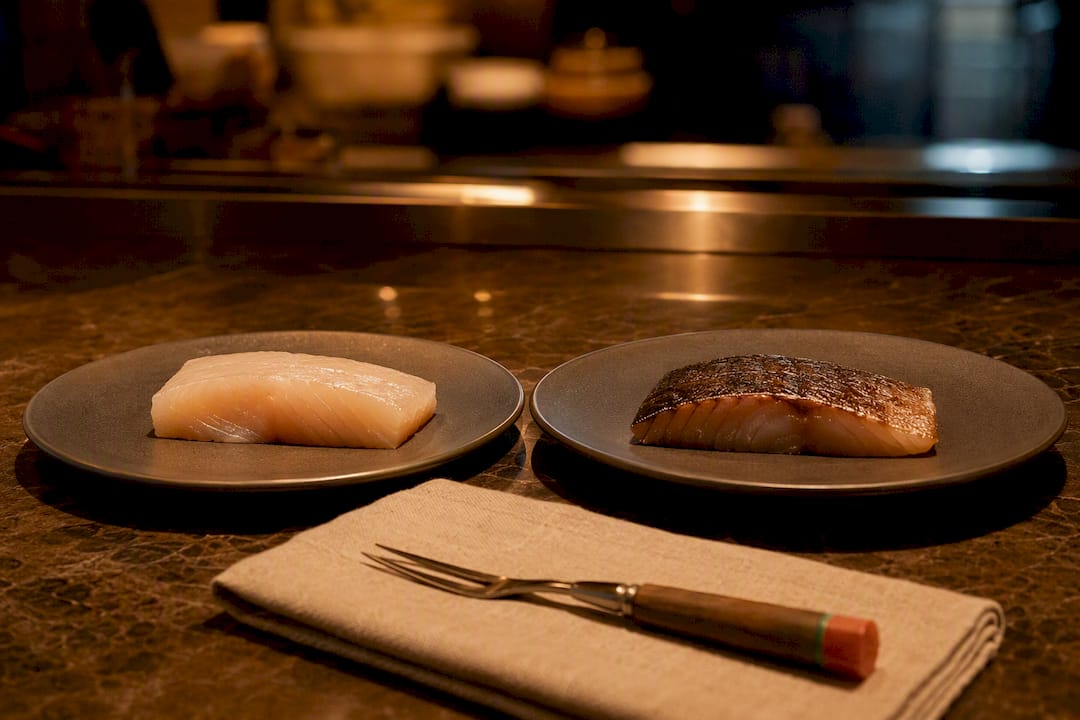
Umami intensifies noticeably, driven by the buildup of IMP and free amino acids described earlier. Texture firms up and takes on a denser, sometimes almost meaty chew, especially in fattier species like tuna. Fat itself tastes more concentrated too, since the water that diluted it has partly evaporated away.
Cooking technique needs to shift to match:
- Sear hot and fast. The dry surface takes a crust almost immediately, so a screaming hot pan for a shorter time beats a gentler, longer cook that risks overshooting the interior.
- Season minimally. The concentrated umami means the fish needs less salt than you’d reach for on a fresh fillet; oversalting an aged piece flattens the exact flavor you aged it to get.
- Go raw where the species allows it. Aged tuna or yellowtail often works beautifully as sashimi or crudo, since the texture change reads as pleasant firmness rather than toughness when the fish isn’t cooked at all.
Pro Tip: Save the bones and head from an aged whole fish for stock. The same concentration effect that intensifies the flesh’s flavor gives you a cleaner, more focused stock than you’d get from fresh bones, and it turns what used to be kitchen waste into a usable ingredient.
On the menu, aged fish reads well next to acid, since a bright citrus or vinegar element cuts through the denser fat and umami instead of getting lost in it.
Food Safety and Microbiology: What the Evidence Actually Supports
The clearest peer-reviewed data point in this entire field comes from a single, tightly controlled trial, and it’s worth being precise about what it does and doesn’t prove. Researchers holding whole rainbow trout at roughly 3°C and 78% relative humidity for 10 days found the resulting muscle microbiology acceptable under those specific conditions. That’s a validated result for one species, at one set of parameters, in one study, not a blanket approval for aging any fish for 10 days at any temperature.
The trial’s methodology matters as much as its headline number. Researchers used continuous data logging of temperature and humidity throughout the aging period, paired with microbiological sampling of dorsal muscle, ventral muscle, and skin at multiple checkpoints. Muscle remained within acceptable ranges through the full 10 days specifically because starting microbial loads were low and the cold chain was respected without interruption from the moment the fish arrived. Break either of those conditions, faster initial spoilage or a gap in refrigeration, and the same 10 day window becomes far less safe.
| Parameter | Trial condition | Why it matters |
|---|---|---|
| Species | Whole rainbow trout | Findings are species-specific, not universal |
| Temperature | Approximately 3°C | Slows microbial growth while enzymes stay active |
| Relative humidity | Approximately 78% | Balances moisture loss against surface spoilage risk |
| Duration | 10 days | Identified as appropriate under these exact controlled conditions |
| Monitoring | Continuous data logging plus microbiological sampling | Documentation makes the result defensible and repeatable |
A broader 2026 critical review of the dry-aging and dry-curing literature draws a firm conclusion: the practice can be safe when continuously monitored and controlled, but no single regulatory standard covers it across species or jurisdictions. That absence puts the validation burden squarely on the food business operator. The review recommends applying existing Good Manufacturing Practice and Good Hygiene Practice frameworks, folding dry-aging into a kitchen’s existing HACCP plan, and running microbiological checks for each new species and cabinet setup rather than assuming one validated protocol transfers automatically to a different fish or a different room.
For any restaurant serious about offering dry-aged fish, that means building a validation routine before service, not after a complaint: log every batch’s temperature and humidity, sample muscle microbiology when introducing a new species or a new aging duration, and treat each combination of species, cabinet, and duration as its own thing to prove out rather than a variation on one you’ve already tested.
Turning Dry-Aged Fish Into Menu-Ready Dishes
Aging reduces weight, and any kitchen running this on a menu needs to price around that reality instead of getting surprised by it. Expect roughly 10% to 20% weight loss over a typical aging window, concentrated mostly in the first several days as surface moisture evaporates fastest. Portion sizes and cost calculations should use the fish’s aged weight, not its weight the day it arrived.
The trim and byproducts from aging are worth treating as ingredients in their own right, not waste. Heads and bones from an aged whole fish make noticeably cleaner stock, since the same flavor concentration that improves the flesh also sharpens what comes off the frame. Crisped skin, rendered hard in a hot pan, gives you a textural element that a fresh, moisture-heavy fillet’s skin can’t match.
A few preparations make the technique’s value obvious on the plate:
- Seared aged tuna, cooked rare in the center, showcasing the denser chew and concentrated umami against a light acid component.
- Pan-seared aged sea bream fillet, skin crisped hard, flesh basted gently to protect the moisture that’s left.
- Monkfish medallions, aged three to four days, poached or seared to keep the naturally firm texture from turning tough.
Pro Tip: Once fish comes out of the aging cabinet, treat it like any other fresh protein for shelf-life purposes: cook or use it within the same timeframe you’d give a fresh delivery, since aging changes flavor and texture, not the clock on freshness after the fact.
How Maturation Shapes the Tasting Experience
Controlled aging is one technique used to chase a specific goal: getting more flavor out of a single ingredient than most diners expect is possible. When a fish spends time under the right cold, dry conditions before it ever reaches the fire, what lands on the plate carries a depth that a same-day fillet simply can’t produce.
That kind of patience shows up throughout tasting menus, where fire-driven technique meets ingredients that have been given time to develop before they’re cooked at all. It’s less about one dramatic dish and more about a kitchen philosophy: let the ingredient tell you when it’s ready, then cook it as directly and cleanly as possible.
If that sounds like the kind of meal worth setting aside an evening for, a table is available, and the menu changes with the seasons.
— YellowRock
Taste the Results at Aflamas
Reading about umami concentration and Maillard crust only gets you so far. Aflamas turns these techniques into a plated experience in Barcelona, where matured proteins and fire-driven cooking come together across a tasting menu built to showcase exactly the kind of flavor depth this article describes.
The tasting menu rotates with the seasons and includes full vegetarian, vegan, gluten-free, and lactose-free adaptations, so a table works whether you’re coming for a special occasion or just curious what a chef-driven approach to maturation actually tastes like. Aflamas also hosts private groups and events in dedicated dining rooms, and gift cards are available for anyone who wants to hand someone else the experience. Reserve a table through the tasting menu page to see how these techniques translate from the aging cabinet to the plate.
Sources
- Cured or fresh? Between fish maturation trends in restaurants and food safety: the case of dry-aged rainbow trout (Food Control 2024)
- Dry-aged and dry-cured fish: a critical review of the literature and food safety aspects (Italian Journal of Food Safety, 2026)
- Dry aging fish in the DRY AGER® Cabinet