Every decision in corporate dinner planning, from guest list to seating chart, should trace back to one measurable objective. Skip that step and you get a pretty room with no point. The elements that matter most, in order, are: a defined purpose and KPI, accurate dietary mapping before invitations go out, venue logistics that match your headcount and format, and a run-of-show that respects your guests’ attention span. Fine-dining operators who run private tasting menus for groups regularly see firsthand how the events that work are the ones planned backward from a goal, not forward from a guest list.
TL;DR:
- Clear goals and KPIs tailored to the event purpose are essential to drive every decision, from guest list to menu design, and ensure measurable results.
- Building the guest list around specific objectives instead of organizational hierarchy improves engagement and directly supports the desired outcome.
- Venue selection must account for kitchen capacity, acoustics, sightlines, accessibility, and weather contingency plans to match guest experience with event scale.
- The catering format should integrate dietary needs from RSVP, with a focus on pacing, menu inclusivity, and how food enhances the event’s program.
- A detailed, timed run-of-show, vendor coordination, and contingency budget are critical for delivering a smooth, impactful corporate dinner.
Table of Contents
- What Is Corporate Dinner Planning, Really?
- How Do You Build the Right Guest List and Manage RSVPs?
- How Do You Choose the Right Venue for a Corporate Dinner?
- What Menu Format Works Best for a Corporate Dinner?
- How Long Should Speeches Be at a Corporate Dinner?
- What Is the Ideal Timeline for Planning a Company Dinner?
- How Do You Measure the Success of a Corporate Dinner?
- When Does a Private Fine-Dining Setting Outperform a Standard Venue?
- What Legal and Safety Requirements Apply to Corporate Dinners?
- How Do You Coordinate Vendors and Suppliers Without Chaos?
- What Risk Management Steps Should You Take Before the Event?
- Planner Perspective: What Experience Teaches You the Hard Way
- Ready to Host a Purpose-Driven Dinner? Here’s How Aflamas Fits
- Sources
- FAQ
What Is Corporate Dinner Planning, Really?
Corporate dinner planning is the coordination of venue, menu, guest experience, and program into a single event that serves a specific business outcome, whether that’s client retention, employee recognition, or fundraising. The discipline sits closer to event production than party planning: it involves budgets, vendor contracts, safety compliance, and measurable results a company can report back on.
Writing the one-paragraph event brief
Before you call a single venue, write a brief that answers four questions: what is the objective, who is the audience, what tone fits the brand, and what KPI proves success. A brief for a client appreciation dinner reads differently than one for a fundraising gala, and that difference should shape every later decision, from menu pricing to who gets a microphone.
Objectives usually fall into a few recognizable buckets, and each one pulls the plan in a different direction:
- Networking and relationship building. Prioritize round tables of eight, longer cocktail hours, and a seating chart engineered for introductions, not alphabetical order.
- Recognition and morale. Build in structured award moments, keep speeches short, and spend more of the budget on food quality than on decor.
- Fundraising or sales influence. Plan for a clear ask moment in the program, track pledges or signed deals, and choose a venue with strong acoustics for the pitch.
Match your KPI to the objective instead of defaulting to attendance count. A recognition dinner might track post-event survey sentiment; a fundraising dinner tracks dollars pledged during the event against a pre-set goal; a client dinner might track deals advanced in the ninety days after. Report these numbers in a short debrief, not a vague “great turnout” email, because aligning every decision to the event’s intended impact is what separates a memorable dinner from a forgettable one.
How Do You Build the Right Guest List and Manage RSVPs?
Start the guest list from the objective, not the org chart. If the goal is deepening three key client relationships, a room of forty focused invitees beats a room of two hundred acquaintances.
- Draft the invite list against the KPI. Ask who, if present, actually moves the objective forward, then cut names that don’t.
- Send invitations six to eight weeks out for a dinner of fifty or more, longer if you’re competing with a busy calendar season like December.
- Collect dietary and access needs at RSVP, not at check-in. A simple form field beats a phone call the week of the event.
- Confirm plus-one policy in writing so the headcount doesn’t creep past your venue’s real capacity.
- Build the seating chart around conversations you want to happen, not around hierarchy.
Dietary mapping is the unglamorous task that saves the night. Every RSVP should capture allergies, vegetarian or vegan preferences, and gluten or lactose restrictions, then feed that list directly to the kitchen days before service, tagged by table number.
Pro Tip: Give every guest with a dietary need a small, discreet table marker the kitchen and servers can see at a glance. It stops the awkward “who ordered the gluten-free plate?” scramble mid-service.
How Do You Choose the Right Venue for a Corporate Dinner?
Room size should match guest perception, not just headcount math. A hundred people in a room built for two hundred feels sparse and quiet; the same group in a room sized for a hundred and twenty feels lively without feeling cramped.
Before signing anything, verify the operational details that never show up in the photos:
- Kitchen throughput. Can the kitchen realistically plate your headcount within the timing window you need, or will course three arrive forty minutes late?
- Load-in access. Confirm loading docks, freight elevators, and stair access for decor, AV, and catering equipment.
- Acoustics and noise curfew. A converted warehouse looks stunning and swallows every toast; a historic hall might have a strict 10 p.m. cutoff.
- Sightlines. Walk the room and check whether pillars or low ceilings block half the tables from seeing the stage.
- Accessibility. Ramps, elevators, and accessible restrooms matter for guests and vendors alike, not as an afterthought.
- Transportation and parking. Confirm valet or nearby lots, and if guests are arriving from multiple hotels, coordinate shuttle timing in advance.
Heritage venues deserve extra scrutiny. Parquet floor protections, weight limits on historic staircases, and undersized kitchens can quietly block you from serving a large seated dinner on a tight timeframe, a detail that only surfaces once you ask the venue manager directly. Always build in a weather and permit contingency, especially for rooftop or outdoor components, and confirm your booking includes a rain plan at no extra cost.
What Menu Format Works Best for a Corporate Dinner?
The service format you choose shapes how guests move and talk, so treat catering as part of the concept rather than a logistics afterthought.
- Set multi-course service keeps everyone seated and focused, ideal for programs with speeches or a fundraising ask that needs full attention.
- Stations and buffets encourage movement and mixing, which suits networking-first events but weakens the room’s focus during any formal moment.
- Live cooking or chef’s-table elements add energy and a sense of occasion, working well for client entertainment where the food itself is part of the pitch.
Plating cadence matters as much as the format. A four-course dinner paced too slowly loses momentum between courses; paced too fast, it rushes past the moments you built the program around. Coordinate with the kitchen on exact course timing tied to your run-of-show, not a vague “whenever ready” arrangement.
Dietary inclusivity works best when it’s built into the main menu rather than bolted on as a separate plate. A tasting menu built for private groups can be adapted across vegetarian, vegan, gluten-free, and lactose-free versions without guests feeling singled out, because the kitchen already has the dietary map from the RSVP stage and plans substitutions course by course instead of scrambling table-side.
How Long Should Speeches Be at a Corporate Dinner?
Keep welcome remarks to roughly seven minutes. Planner guidance consistently favors short, tightly timed remarks over long speeches, because attention drops fast once a microphone stays on too long.
A reliable sequencing works like this: welcome remarks, first course, main program content (awards, recognition, or the fundraising ask), dessert, then music or open networking. Breaking up long stretches of speaking with short interludes, a brief performance, a video, a quick toast, resets the room’s energy instead of letting it flat line.
- Cap the welcome at seven minutes. Anything longer and you’ve lost the room before dinner even starts.
- Place the most important message right after the entrée, when the room is fed and attentive but not yet restless for dessert.
- Use table prompts or a facilitated toast for smaller dinners to spark conversation without a formal program.
- Check AV sightlines from every table, not just the front rows, and test microphones during the walkthrough, not fifteen minutes before doors open.
Pro Tip: Assign one person, and only one, the authority to cut a speech short if it runs long. Nobody wants to be the one who interrupts the CEO, but somebody has to.
What Is the Ideal Timeline for Planning a Company Dinner?
Larger dinners and galas typically need three to six months of lead time, especially for popular venues and in-demand caterers, and per-person costs shift depending on menu complexity and production value.
- Six months out: lock the venue and confirm the date against competing events on the calendar.
- Four months out: book catering, entertainment, and any major decor vendors.
- Two months out: send invitations and finalize the run-of-show draft.
- Three weeks out: close RSVPs, finalize dietary counts, and confirm the seating chart.
- One week out: distribute the event binder to every vendor and staff member with a role that night.
The event binder should exist in two forms: a digital, minute-by-minute run-of-show accessible on mobile for anyone coordinating on-site, and a printed copy for staff who need it without relying on a phone battery. Assign a single point of contact per major vendor category, catering, AV, decor, so questions on the night don’t bounce between three people who all assume someone else has the answer.
Budget in three tiers: essentials (venue, food, core AV), enhancements (entertainment, decor upgrades), and a contingency line of roughly 10 to 15% for the inevitable last-minute add, whether that’s an extra rental chair or a same-day dietary accommodation.
How Do You Measure the Success of a Corporate Dinner?
Send a short survey within 48 hours, while the evening is still fresh, asking guests to rate the experience and note one thing that stood out. Keep it to five questions or fewer; nobody fills out a ten-question form about a dinner they attended two days ago.
- Track engagement actions, not just attendance: how many guests scanned a QR code, took a follow-up meeting, or made a pledge.
- Log leads or relationship touches during the event itself, ideally in a shared note or CRM field, not from memory the next morning.
- Schedule follow-ups within a week while the conversation from the dinner table is still top of mind.
- Package results in a one-page report for stakeholders: objective, KPI result, notable feedback, and a recommendation for next time.
Digital tools make this easier than it used to be. Roughly 59 to 60% of planners now report increasing reliance on contactless registration, mobile agendas, and analytics dashboards to track exactly this kind of engagement data in real time instead of reconstructing it from memory after the fact.
When Does a Private Fine-Dining Setting Outperform a Standard Venue?
A private dining room built for tasting menus solves a problem generic banquet halls often can’t: it removes the noise and distraction that dilute a focused guest journey. When the goal is deep client relationship building or recognizing a small, high-value group, a tightly curated tasting menu experience keeps the evening’s attention on the people at the table, not the room around them.
Aflamas hosts these evenings regularly through its group menu offerings, which shows what operational control actually looks like in practice: bespoke menus built around the group’s dietary map collected in advance, private-room staffing dedicated to that one party for the night, and timing coordinated so courses arrive on the rhythm the host’s program needs, not on a kitchen’s convenience. That kind of control is difficult to replicate in a large multi-event venue running three dinners simultaneously.
The experience built around fire-based technique and seasonal, local ingredients gives hosts a sensory anchor for the evening, something guests remember and talk about afterward, which matters more for a recognition or client dinner than a generic banquet spread ever will.

What Legal and Safety Requirements Apply to Corporate Dinners?
Alcohol service typically requires the venue or caterer to hold the correct liquor license for the jurisdiction, and that license usually dictates service hours and whether a cash bar is even permitted. Confirm this in writing with the venue rather than assuming their standard license covers a private corporate function, especially if you’re serving alcohol past the venue’s usual closing time.
Fire code compliance affects far more than most planners expect: maximum occupancy limits, clear aisle widths between tables, and restrictions on open flame decor like candles or tabletop fire elements. Any venue hosting more than a handful of guests should have posted occupancy limits, and exceeding them is both a safety risk and a liability exposure for the host company.
Permits come into play for anything outside a licensed venue’s four walls: outdoor tents, temporary structures, amplified sound past certain hours, or street closures for guest drop-off. Apply for these well before your final headcount is locked, since municipal permit offices often run on multi-week timelines that don’t bend for a corporate calendar.
Food safety compliance sits with the caterer or venue kitchen, but it’s worth confirming they follow standard handling protocols for the dietary accommodations you’ve mapped, particularly for severe allergies where cross-contamination is a real risk, not a theoretical one. Ask directly how the kitchen separates allergen-free plates during service rather than assuming it’s handled.

How Do You Coordinate Vendors and Suppliers Without Chaos?
Every vendor relationship needs one clear owner on your side and one clear contact on theirs. When four people on the client side are emailing the caterer with slightly different instructions, something gets missed, usually the dietary count or the timing of course three.
Build a shared vendor sheet listing each supplier, their point of contact, delivery or arrival time, and what they need from the venue (power, loading access, a staging area). Circulate it a week before the event, then again the morning of, so nobody’s working from an outdated version. Confirm final headcounts with catering 48 to 72 hours out, since most caterers lock food orders around that window and can’t absorb late additions without a scramble.
Hospitality vendor coordination often runs into terminology gaps, especially around transportation and logistics language that varies between industries; clear vendor terminology around pick-up windows, staging times, and load-in access prevents the kind of miscommunication that turns a scheduled 6 p.m. delivery into a 6:45 scramble. If your event involves guest transportation, coordinating directly with a dedicated chauffeur service for scheduled pickups avoids the confusion of guests arriving in a scattered wave right as doors are supposed to open.
What Risk Management Steps Should You Take Before the Event?
Event insurance covering liability and cancellation is worth the cost for any dinner above a modest guest count, particularly if alcohol is served or the venue requires proof of coverage before signing the contract. Many venues won’t finalize a booking without a certificate of insurance naming them as additionally insured, so confirm this requirement early rather than discovering it two weeks before the event.
Build a simple emergency protocol into your event binder: nearest exits, a designated first-aid contact, and a plan for a medical incident that doesn’t require improvising in front of two hundred guests. Assign someone, not the host giving the welcome speech, to be reachable throughout the night if something goes wrong.
Weather contingencies matter for any outdoor component, from a rooftop cocktail hour to a garden ceremony tied to the dinner. Confirm your venue or rental company offers a rain plan at no additional charge, and know the trigger point (a specific time, a specific forecast) for when you make the call to move indoors.
Finally, keep a contingency line in your budget, not just for weather, but for the caterer who runs short on a dietary substitution or the AV company whose backup mic dies mid-toast. A 10 to 15% cushion, as noted in the logistics section, absorbs these without derailing the evening or the budget report afterward.
Planner Perspective: What Experience Teaches You the Hard Way
The mistakes that sink corporate dinners are rarely dramatic. It’s the late menu change nobody told the kitchen about, the seating chart built around hierarchy instead of conversation, and the welcome speech that runs fifteen minutes because nobody had the authority to cut it short. Every one of those is preventable, and every one of them keeps happening anyway.
The shortcuts that actually work are boring: map dietary needs the day RSVPs close, not the day before the event. Assign one on-the-night contact per vendor so questions don’t bounce between three people. Print the run-of-show even though everyone has a phone, because phones die and printed paper doesn’t.
The mindset shift that separates a good planner from a great one is thinking about the guest’s full arc, from the moment they park the car to the moment they leave, not just the ninety minutes they’re seated at the table.
— YellowRock
Ready to Host a Purpose-Driven Dinner? Here’s How Aflamas Fits
If you’ve been comparing banquet halls and hotel ballrooms for your next corporate dinner, Some restaurants offer private dining rooms built around fire-based technique and seasonal ingredients, where the tasting menu itself becomes part of the evening’s story instead of a background detail.
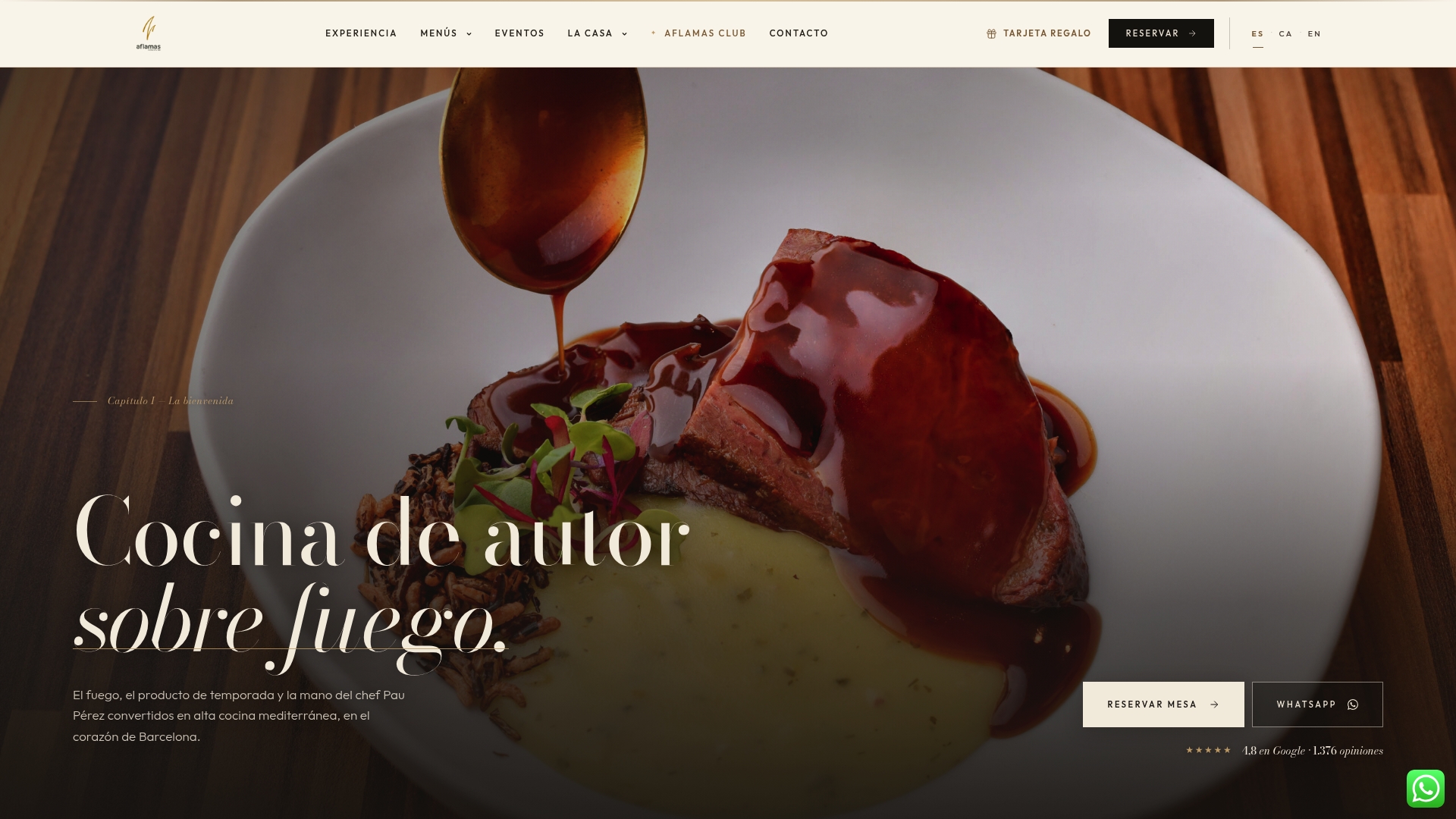
For groups, Aflamas structures its private-event menus through the Menú Grupos offering, designed specifically for private dining rooms and celebrations rather than adapted from a standard restaurant service. The group tasting formats, Alma, Fuego, and Pasión, start from €45, €65, and €95 per person respectively, each fully adaptable for vegetarian, vegan, gluten-free, and lactose-free guests based on the dietary map you collect at RSVP. For a higher-end client dinner, the Menú Selección Autor at €90 per person brings the chef’s signature tasting format to a private group setting.
If you’re planning a company dinner in Barcelona and want the menu, room, and timing professionally handled by a kitchen experienced in private events, consider requesting a sample group menu and a proposal directly from relevant restaurant group offerings pages before you lock your venue.
Sources
- Event planen: Checkliste für Firmenanlässe – JED Events
- Conferences and Congresses in 2026: Key Insights from Central Europe – CTAgency
- Corporate Event Trends Shaping Prague in 2026 – Prague DMC
- Gala planen: Ideen, Location & Kosten | bvents
FAQ
How do you plan a corporate dinner from start to finish?
Start with a one-paragraph brief defining your objective, audience, and success metric, then work backward: book the venue and caterer, curate the guest list against that objective, collect dietary needs at RSVP, and build a minute-by-minute run-of-show. Larger dinners typically need three to six months of lead time for venue and catering bookings.
What are the 5 P’s of event planning?
Definitions vary across the industry, but a commonly used version covers Purpose, People, Program, Place, and Production, essentially why you’re hosting, who attends, what happens, where it happens, and how it gets executed. Purpose should always come first, since it determines every other decision.
What are good corporate dinner game ideas?
Table-based prompts that spark conversation work better than large group games for formal dinners, since they don’t disrupt the meal or the program. A facilitated toast, a quick trivia round tied to company milestones, or a short guided discussion prompt at each table keeps engagement high without derailing the evening’s pacing.
How long should a corporate dinner program run?
Welcome remarks should stay close to seven minutes, and the full program, from welcome through dessert, typically runs two to three hours depending on course count and speech length. Breaking up long speaking segments with short interludes keeps the room’s energy from flattening.
What should be included in a corporate event planning checklist?
A solid checklist covers the event brief and KPI, guest list and dietary mapping, venue logistics (kitchen throughput, load-in, accessibility), menu format, run-of-show timing, budget with contingency, vendor contact sheet, and post-event survey plan. For private tasting-menu events, Aflamas’ group menu page outlines how dietary accommodations and course pacing get built into the plan from the start.