
Pick the vibe first, then the menu follows almost on its own: fancy plated dinner, big-bowl pasta comfort, seafood spread, plant-forward tasting menu, or a grazing table you barely have to cook for. If you want zero stress, build a grazing table. If you want a showstopper moment, do a restaurant-style main with two sides. If half your guests avoid meat or dairy, a vegetarian tasting menu keeps everyone at the same table eating the same food.
TL;DR:
- Focusing on the vibe first simplifies planning, shaping the menu, decor, and pacing based on the event’s formality, timing, and course count.
- Make-ahead proteins like braised short ribs, whole fish, or roasted chicken save time and ensure quality, allowing for impressive restaurant-style presentation.
- High-quality pasta dishes, especially baked or chilled options, can be prepared in advance and served at their best when guests arrive.
- Seafood mains such as scallops, mussels, or salmon are straightforward and photogenic, provided they are bought fresh and cooked with minimal fuss.
- Building a menu around dietary restrictions and offering versatile formats like buffets or grazing tables keeps things simple, inclusive, and budget-friendly.
Table of Contents
- Why “Vibe First” Beats Scrolling for Adult Birthday Dinner Ideas
- Showstopping Mains for a Restaurant-Style Birthday Dinner
- Pasta and Comfort Dishes That Still Feel Like a Celebration
- Seafood Mains That Look Special Without the Fuss
- Vegetarian and Vegan Mains Worth Building a Whole Menu Around
- Buffet and Grazing Table Strategies for a Relaxed Birthday Party
- Themed Menus and Signature Drinks to Anchor the Night
- How to Plan Portions, Timing, and Dietary Needs Without Guessing
- Prep Timeline, Plating Tricks, and Setting the Mood
- What Fine Dining Teaches Home Hosts About Pacing and Plating
- Entertainment and Activities to Round Out the Evening
- Adjusting the Menu for Kids, Elderly Guests, and Mixed Tables
- Budget-Friendly Birthday Dinner Ideas That Don’t Skimp on the Occasion
- Adult Birthday Dinner Ideas That Are Easy to Host at Home
- Skip the Cooking Altogether With Aflamas Group Menus and Gift Cards
- Practical Resources for Recipes and Party Logistics
- Sources
- FAQ
Why “Vibe First” Beats Scrolling for Adult Birthday Dinner Ideas
Most people search for adult birthday dinner ideas and end up with forty recipes and no plan. The fix is to decide the feeling of the night before you decide the food. A “vibe” is really just shorthand for three decisions at once: how formal the night is, how much of it you’re cooking live versus reheating, and how many courses you’re serving. Once you lock that in, ingredient lists and shopping become easy.
Guest count and time budget matter more than most hosts admit. A dinner for four people who linger over wine calls for a different structure than a party of twelve where you’re also playing bartender. Starting with a theme to guide both menu and decor keeps the whole night from feeling like disconnected pieces.
Quick vibe-to-menu pairings:
- Fancy night in: seared steak, herb butter, roasted fingerlings.
- Comfort and pasta: baked rigatoni with a green salad and garlic bread.
- Seafood centered: mussels in white wine broth with crusty bread.
- Plant-forward: stuffed acorn squash with a citrus fennel salad.
- Low-effort grazing: a build-it-yourself charcuterie and dip spread.
Showstopping Mains for a Restaurant-Style Birthday Dinner
If the birthday person wants a “we went somewhere fancy without leaving the house” feeling, this is the category. The trick restaurants use, which home cooks skip, is separating the parts that must happen live from the parts that can happen a day ahead. Sauces, compound butters, and most sides can be made in advance; only the protein itself needs your full attention right before serving.
- Pan-seared steak with herb butter. A good ribeye or New York strip seared hot and rested under a pat of compound butter reads as expensive without demanding restaurant skills. Make the butter two days ahead and let the steak come to room temperature before it hits the pan.
- Herb-crusted rack of lamb. Lamb looks dramatic on a plate and cooks fast once seasoned. Mix the herb crust the morning of, then pat it on right before roasting so it stays crisp.
- Whole roasted branzino or trout. A whole fish on a platter is genuinely impressive and low-cost compared to steak or lamb. Stuff it with lemon and herbs, and it needs almost no sauce work.
- Duck breast with a fruit reduction. The reduction (cherry, orange, or fig) can be made two days out and reheated gently. Duck skin needs to be scored and rendered slowly, but that’s mostly hands-off time.
- Beef Wellington for a smaller crowd. This is the genuine showstopper move, and the puff pastry wrap can be assembled the day before and refrigerated, then baked fresh.
- Braised short ribs. Braises are the ultimate make-ahead main because they taste better the next day. Reheat low and slow, and the meat falls apart on the fork.
- Roasted chicken with a compound butter under the skin. Less expensive than steak, still elegant if you spatchcock it and finish with a pan sauce made from the drippings.
Sample three-course menu: a light citrus and shaved fennel salad to start, braised short ribs with garlic mashed potatoes and roasted asparagus as the main, and a make-ahead chocolate tart for dessert.
Sample single-showstopper menu: whole roasted branzino with lemon, served alongside a simple arugula salad and crusty bread, skipping a formal starter entirely.
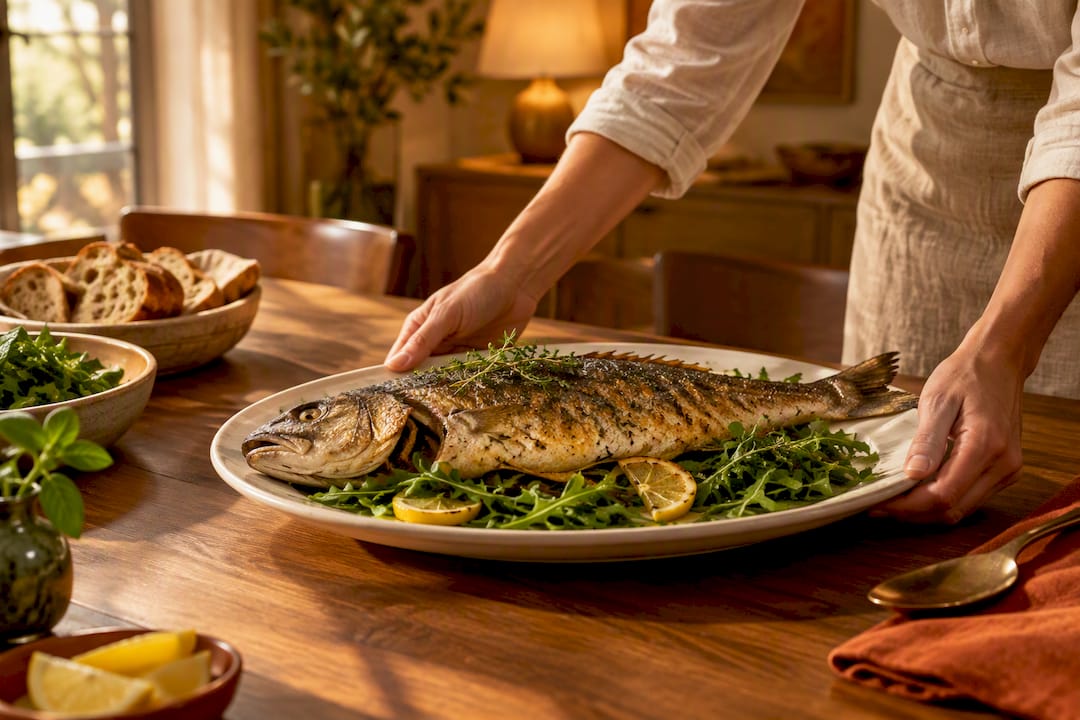
Plating doesn’t need to be complicated to look intentional. Multi-course pacing and attention to how the plate looks matter more than technique. Wipe the plate rim, add one green herb garnish, and serve on the largest plate you own, since white space around food reads as expensive.
Pro Tip: Sear your protein, then let it rest under foil while you plate the sides. That five-minute rest is what keeps a home-cooked steak from looking rushed on the plate.
Pasta and Comfort Dishes That Still Feel Like a Celebration
Pasta gets dismissed as a weeknight fallback, but the right dish elevates it into genuine birthday territory. The advantage for a host: most pasta bakes and sauces improve after resting, which means you can cook almost the entire meal before guests arrive.
- Baked rigatoni with three cheeses. Assemble it completely the day before, refrigerate, and bake for 30 to 35 minutes right before serving.
- Classic carbonara. This one has to be made fresh and fast, so save it for a smaller, more hands-on dinner where you don’t mind cooking while people watch and talk.
- Lobster linguine. A genuine special-occasion pasta. Buy the lobster the morning of, but the sauce base can be started earlier in the day.
- Short-rib ragu over pappardelle. Like the braised short ribs above, this ragu is better on day two, so cook it ahead and just reheat and toss with fresh pasta.
- Mushroom and truffle risotto. Not technically pasta, but it belongs in this comfort category. Prep the stock and mushrooms ahead; the actual risotto stirring only takes about 20 minutes.
- Pesto and burrata pasta salad. A cold option that works well in warmer months and needs zero last-minute cooking.
For portioning, plan on a moderate portion of dry pasta per person as a main course, closer to 55 to 70 grams if it’s one of several dishes on a larger spread.
A medium-bodied red like Chianti or a simple Pinot Noir pairs well with tomato and ragu-based dishes, while a dry white like Vermentino or an unoaked Chardonnay works better alongside cream sauces, risotto, or lobster linguine.
Seafood Mains That Look Special Without the Fuss
Seafood has a reputation for being high-risk to cook, but a handful of dishes are genuinely forgiving and photograph beautifully on the table.
- Seared scallops with a brown butter sauce. Buy dry-packed scallops, pat them completely dry, and sear just two minutes per side over high heat.
- Fish en papillote (baked in parchment). Wrap fish, herbs, and vegetables in parchment paper; it steams itself and looks elegant when guests unwrap their own packet.
- Mussels in white wine and garlic broth. One of the most budget-friendly seafood options, and it comes together in under 20 minutes.
- Garlic butter shrimp skewers. Easy to portion, quick to grill or broil, and a good option if you’re feeding a mixed group with varied appetites.
- Cedar-plank salmon. Buy the plank ahead, soak it the night before, and the grill does the rest of the work for you.
Buy seafood the same day you plan to cook it whenever possible and keep it on ice in the refrigerator until prep time. For scaling, figure 170 to 225 grams of fish or shellfish per person as a main course; for shellfish like mussels, plan on roughly 450 grams per person in the shell. Shellfish allergies are common enough that it’s worth having one non-shellfish option, like the cedar-plank salmon, ready as a swap.
Vegetarian and Vegan Mains Worth Building a Whole Menu Around
The mistake most hosts make with dietary restrictions is treating the vegetarian dish as an afterthought bolted onto a meat-centric menu. Building the whole menu around the most restrictive diet in the group means nobody eats a lesser version of the meal, and it genuinely simplifies your shopping list.
- Stuffed acorn squash with wild rice and cranberries. Visually striking on its own, and naturally vegan if you skip butter for oil.
- Mushroom Wellington. The vegetarian answer to beef Wellington, using the same make-ahead pastry trick.
- Eggplant parmesan, individually plated. Skip the giant casserole dish and stack single-serving portions for a more restaurant-style presentation.
- Charred cauliflower steak with tahini and pomegranate. Dramatic, colorful, and needs almost no advance prep beyond the sauce.
- Butternut squash risotto. Same technique as the mushroom risotto above, just swap the mushrooms for roasted squash.
- Jackfruit or lentil “meatballs” in marinara over polenta. A hearty option that reads as comfort food rather than diet accommodation.
Sample vegetarian three-course menu: roasted beet and goat cheese salad, mushroom Wellington with roasted root vegetables, and a flourless chocolate cake for dessert (naturally gluten-free too).
Buffet and Grazing Table Strategies for a Relaxed Birthday Party
A grazing table is the lowest-stress version of adult party food ideas because almost nothing needs a stove once guests arrive. The one real risk is running out of fridge space or forgetting a serving detail, and both are avoidable with a plan.
- Organize by category, not by dish. Group cheeses together, cured meats together, dips together. Category-based organization makes it easier for guests to build a plate and easier for you to restock.
- Choose items that hold at room temperature. Cured meats, hard and semi-hard cheeses, marinated olives, nuts, and dried fruit can sit out safely for hours.
- Add cold-hold items in small, refreshed batches. Verrines, cold salads, and skewers with dairy or seafood should come out in smaller trays you replace every 90 minutes rather than one giant tray sitting all night.
- Label anything with common allergens. A small card noting nuts, dairy, or gluten saves you from being asked the same question six times.
- Stock utensils per station, not one shared set. Separate tongs or spoons per dish prevent cross-contamination and keep the line moving.
- Calculate portions by grazing hour, not by meal. Plan for roughly 115 to 170 grams of food per person per hour of grazing, adjusting down if you’re also serving a dessert course later.
Themed Menus and Signature Drinks to Anchor the Night
A theme does something practical beyond looking good on Instagram: it collapses a hundred small decisions (what plates, what music, what garnish) into one filter you can run every choice through.
- Mediterranean night: hummus, grilled halloumi, lamb kofta, tabbouleh, and a jug of sangria.
- Tapas and Spanish wine: patatas bravas, gambas al ajillo, jamón, and a Rioja or Albariño pour.
- Rustic Italian: antipasto board, one pasta from the comfort list above, and a simple tiramisu.
- Wine-pairing dinner: three small courses, each matched to a different glass, poured in tasting-size amounts rather than full glasses.
For drinks, a single signature cocktail keeps the bar simple: think an Aperol spritz for a Mediterranean night or a classic Negroni for something more intense. Offer one strong non-alcoholic option too, like a shrub-and-soda or a virgin sangria, so guests who aren’t drinking still get something built with the same care.
How to Plan Portions, Timing, and Dietary Needs Without Guessing
Most menu-planning stress comes from not having a rule to fall back on, so here are the actual numbers. For an intimate dinner of four to six guests, plan a three-course structure: one starter, one main with two sides, and a make-ahead dessert. For a small party of ten to twelve, shift toward a main-plus-buffet-sides hybrid, since a fully plated three-course meal gets logistically hard to serve solo past eight guests.
Portion math that actually holds up:
- Protein mains: 170 to 225 grams per person.
- Starch sides (potatoes, rice, grains): about 115 grams per person.
- Vegetable sides: 85 to 115 grams per person.
- Pasta as a main: 100 to 115 grams dry per person.
- Grazing table food: 115 to 170 grams per person, per hour of grazing.
Guides on avoiding half-finished spreads consistently recommend fewer, well-executed dishes over large multi-dish menus for small adult gatherings, meaning a tight three-plate menu usually beats a table of six mediocre ones.
Dietary handling gets easier when you stop treating it as a separate task. Design the whole menu around whoever has the strictest need at the table, whether that’s gluten-free, vegan, or a shellfish allergy, and build from there. Everyone eating the same plate avoids the awkward “special meal” moment entirely, and it usually cuts your grocery list down, not up.
Confirm your final headcount 48 hours before the event, not the day before. That window still gives you time to adjust shopping and portions without scrambling.
Prep Timeline, Plating Tricks, and Setting the Mood
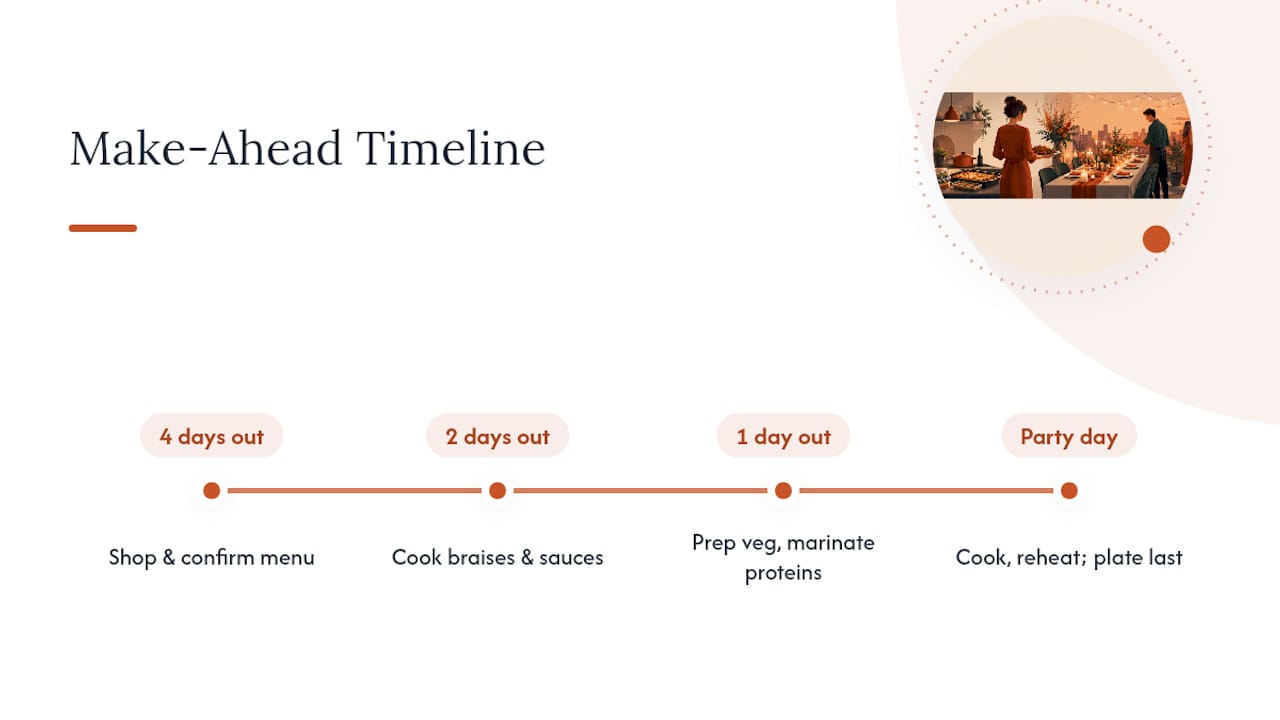
Work backward from the party, not forward from today. Four days out, shop for anything nonperishable and confirm your final menu. Two days out, make anything braised, baked, or sauce-based, since those dishes improve with a rest in the fridge. The day before, prep vegetables, marinate proteins, and set your table so the day of the party is only cooking and reheating.
For heat-holding without a full kitchen brigade, hospitality techniques built for restaurant service translate surprisingly well to a home kitchen: keep a low oven (around 200°F) running to hold cooked sides warm, and plate proteins last so they hit the table at peak temperature.
For lighting, swap overhead lights for lamps, candles, or a dimmer set low. Warm, low light does more to relax a room than any playlist. Speaking of music, a slow-building playlist that starts quiet during appetizers and picks up energy by dessert keeps pacing natural without anyone noticing you planned it.
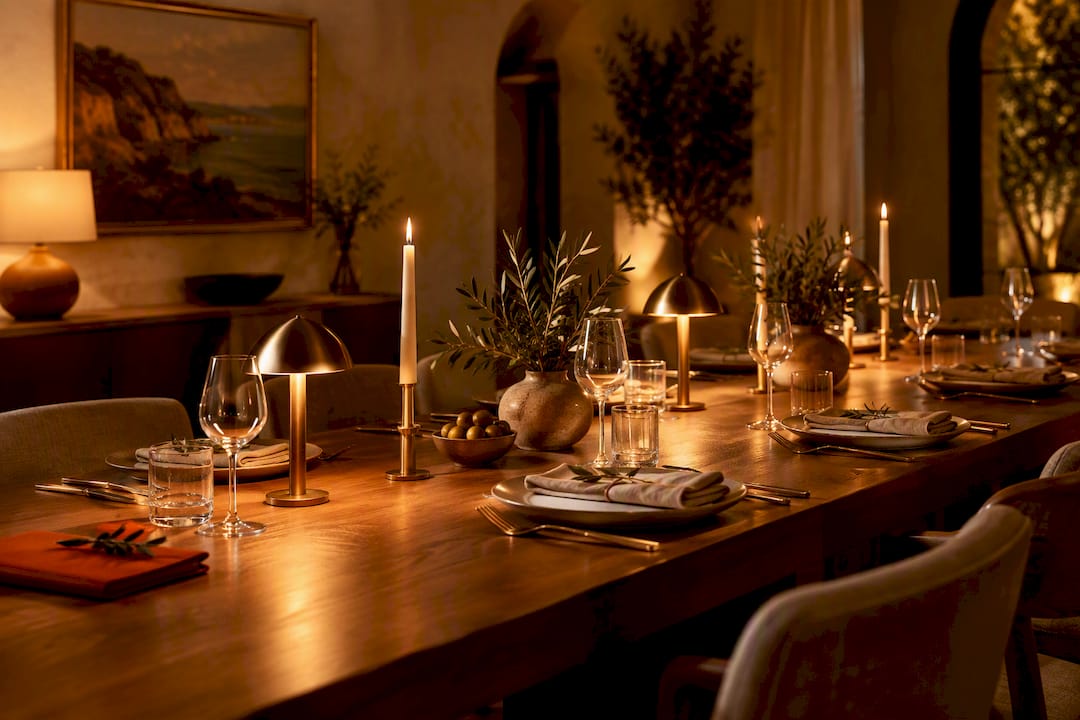
Pro Tip: Plate two or three items per course in small “tasting” portions rather than one giant plate. Guests genuinely enjoy variety more than volume, and smaller portions reheat faster if timing runs long.
What Fine Dining Teaches Home Hosts About Pacing and Plating
Tasting menus work because pacing is deliberate: small courses arrive at intervals that let flavor and conversation both breathe. A home host can borrow that exact structure without needing a professional kitchen.
- Serve smaller portions across more courses instead of one heavy plate; three or four small courses feel more celebratory than one large dinner.
- Plate proteins and sauces separately in small amounts so guests can taste multiple elements without feeling overloaded.
- Build menus that flex for vegetarian, vegan, gluten-free, and lactose-free guests from the start, rather than improvising a substitution at the table.
- Treat plating as a five-second task: wipe the rim, center the food, add one garnish, and stop there.
This kind of course-by-course thinking is exactly what shapes Aflamas’s own signature menu in Barcelona, where fire-based cooking and seasonal ingredients get built into a paced sequence rather than one heavy plate. The same logic scales down to a home table of six just as well as it does to a tasting room of sixty.
Entertainment and Activities to Round Out the Evening
Dinner alone can run out of momentum after dessert, so having one loose activity planned keeps the night going without forcing anything. A short “guess the year” game using photos of the birthday person works for almost any group and takes zero setup beyond printing a few pictures.
For a more hands-on option, a blind wine or cocktail tasting between courses gives guests something to do between plates rather than sitting in silence waiting for the next course. A playlist where each guest adds one song ahead of time also does double duty: it’s entertainment and it’s decor, since the mix itself becomes a talking point.
If the group leans toward games, keep it low-key: a card game like a simplified trivia round about the birthday person, or a single tabletop game that doesn’t require moving away from the table, works better than anything that splits the group up. For a bigger, more structured celebration, some hosts skip the home dinner build entirely and book a private event package instead, trading the cooking for planned activities and letting someone else handle logistics.
The rule of thumb: one planned activity is enough. Adults at a birthday dinner generally want to talk, eat, and relax, not be herded through four organized games back to back.
Adjusting the Menu for Kids, Elderly Guests, and Mixed Tables
A dinner built for adults doesn’t have to fall apart when a few kids or older relatives are in the mix. The easiest fix is building one menu with built-in flexibility rather than cooking two separate meals.
For kids, deconstruct rather than duplicate. If the main is a herb-crusted rack of lamb, plain grilled chicken tenders using the same herb rub keep flavors connected without asking a ten-year-old to eat something unfamiliar. Pasta dishes are naturally kid-friendly already, so a comfort-themed dinner solves this problem almost by accident.
For elderly guests, texture matters more than flavor. Braised short ribs, risotto, and fish en papillote are all naturally soft and easy to eat, while a bone-in steak or whole roasted fish might need to be portioned off the bone before serving. Spice level is worth checking too. Serve any strong heat (chili oil, aggressive garlic) on the side rather than mixed into the base dish.
For a genuinely mixed table spanning several generations, the buffet or grazing format actually solves the most problems at once, since everyone builds their own plate according to their own needs, no separate cooking required. If seating allows, put more reserved or older guests slightly away from speaker setups or high-traffic paths so conversation stays comfortable.
Budget-Friendly Birthday Dinner Ideas That Don’t Skimp on the Occasion
The biggest cost-saver in adult birthday dinner planning isn’t cheaper ingredients. It’s cooking fewer, better dishes instead of a sprawling spread nobody finishes. A single well-executed main with two sides costs less and impresses more than five mediocre dishes.
Braises are the budget host’s best friend. Short ribs, chicken thighs, and pork shoulder all cost less per pound than premium steak cuts and taste better the next day, meaning you can cook two days ahead and skip any last-minute grocery run entirely. Mussels are one of the cheapest genuinely impressive seafood options on this list, often costing a fraction of scallops or lobster per serving.
Buying seasonal produce cuts costs and improves flavor at the same time, since anything out of season gets marked up and tastes worse. A grazing table built mostly around cheese, bread, and produce, with one modest cured meat, comes in far cheaper than a full plated seafood dinner and still reads as generous.
Skip the specialty cocktail ingredients and build one signature drink around whatever’s already reasonably priced that month, whether that’s a citrus-forward spritz in summer or a spiced wine in cooler months. And if hosting at home still feels like more cost and effort than it’s worth once you tally shopping, prep time, and cleanup, a set-price group menu at a restaurant can actually land close to what a from-scratch multi-course dinner costs per person once every ingredient is counted.
Adult Birthday Dinner Ideas That Are Easy to Host at Home
The conventional advice on adult birthday dinner ideas treats “elegant” and “easy” as opposites. They’re not. The gap is almost always in structure, not skill. A braised short rib main, a make-ahead tart, and one wiped plate rim will outperform an ambitious five-course menu attempted live, every time, because the host actually gets to sit down.
Where most guides get it wrong is treating dietary restrictions as a subtraction problem, an extra dish bolted onto an already-finished menu. Building the whole menu around the strictest need in the room isn’t a compromise. It’s the simpler path, and it’s the one fine dining kitchens use by default.
If there’s one thing to prioritize first, it’s the vibe decision, not the recipe search. Decide if the night is a plated showstopper, a pasta comfort night, or a grazing table, and the rest of the planning collapses into a checklist instead of a scramble. Everything else, the sides, the wine, the playlist, follows from that one choice.
— YellowRock
Skip the Cooking Altogether With Aflamas Group Menus and Gift Cards
If reading through make-ahead braises and buffet math has you leaning toward letting someone else handle the birthday dinner, there are restaurants offering fire-driven, chef-built tasting menus served in private dining rooms, with courses adapted for vegetarian, vegan, gluten-free, and lactose-free guests.
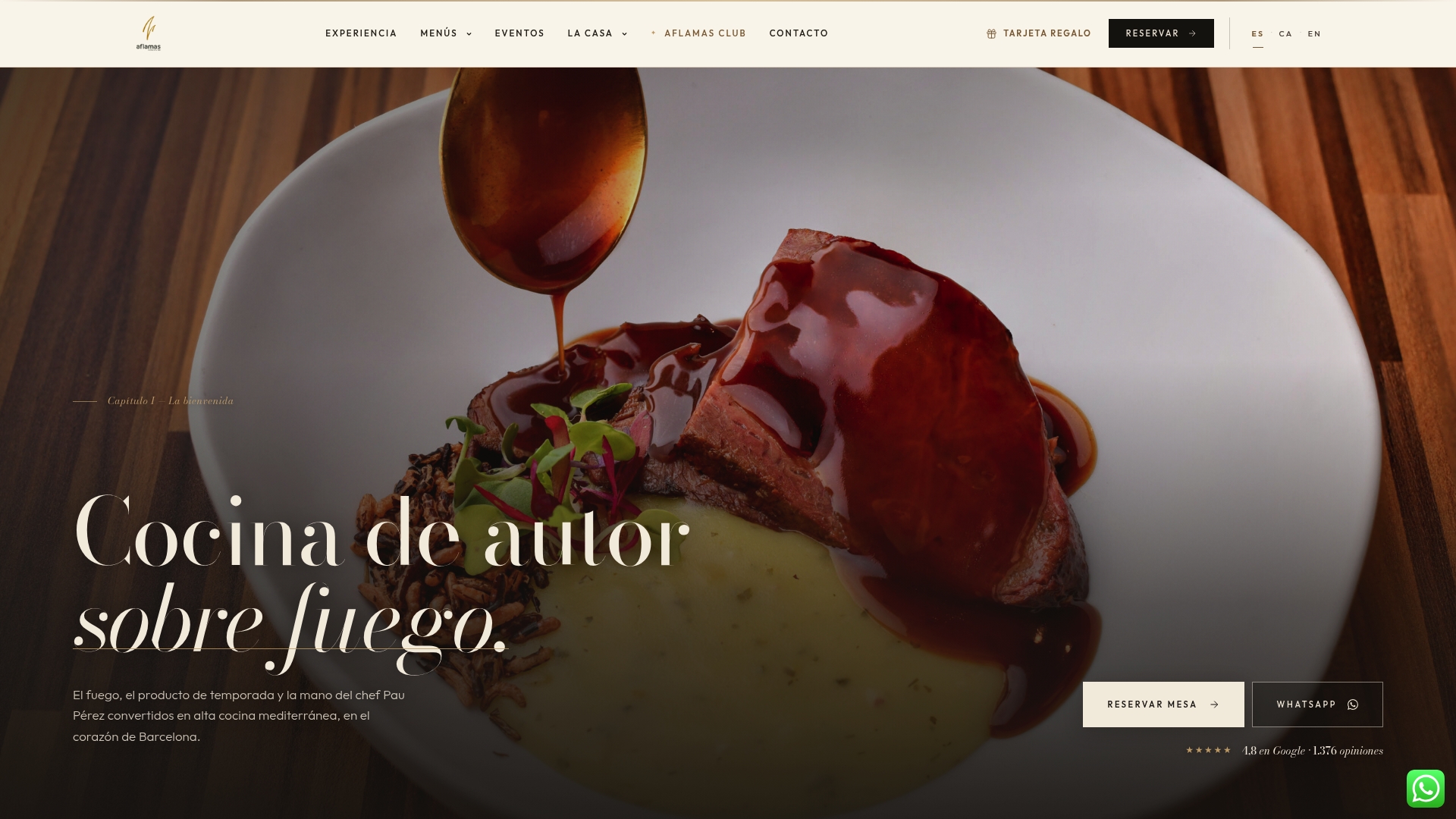
For a small group celebration, the group menu options cover everything from an intimate table to a full private event, with the Alma, Fuego, and Pasión menus available starting from €45, €65, and €95 per person depending on how far you want to take the tasting experience. If you’d rather book the birthday person a night out on their own terms, a gift card lets them choose the date and the menu themselves. Either way, the pacing, plating, and dietary planning are built into the reservation. Check current group availability and menu options directly on the restaurant’s site to lock in a date.
Practical Resources for Recipes and Party Logistics
- 9 Steps to Hosting an Intimate (At Home) Birthday Dinner for theme-first planning.
- How to organize a home birthday buffet for grazing table logistics.
- Luxury Birthday Dinner Party Ideas at Home for pacing and atmosphere.
- Holiday meal prep tips for busy home cooks for make-ahead techniques.
Sources
- 9 Steps to Hosting an Intimate (At Home) Birthday Dinner – Homebody Eats
- ¿Cómo organizar un bufé de cumpleaños en casa? – Simple et Bon
- Luxury Birthday Dinner Party Ideas at Home (2026 Guide) – Dreamy Party Ideas
- How to Plan an Intimate Dinner Party at Home (2026) – At The Italian Table
FAQ
What Are Some Good Birthday Dinner Ideas for Adults?
The strongest options are a restaurant-style main like braised short ribs or seared steak, a pasta night built around a make-ahead bake, or a grazing table if you want minimal cooking. Pick based on how much live cooking you want to do versus reheating, since that decision shapes everything else about the menu.
What Is the Best Dinner for Your Own Birthday?
There’s no single best dinner, but the least stressful option for the actual birthday person is usually one they don’t have to cook. A group tasting menu at a restaurant like Aflamas removes the hosting duties entirely, so the birthday person gets to be a guest at their own party.
What Are Some Good Ideas for a Birthday Dinner Menu?
A reliable structure is one starter, one main with two sides, and a make-ahead dessert, which keeps the meal from feeling either sparse or overwhelming. Fewer, well-executed dishes consistently outperform a large multi-dish spread for small adult gatherings.
What Are Some Good Food Ideas for a Birthday Dinner?
Braised short ribs, whole roasted fish, baked pasta, and a vegetarian stuffed squash all work well because they hold up over time and don’t demand last-minute attention. Building the menu around whoever has the strictest dietary need in the group keeps the food ideas simple rather than doubled up.
How Much Does a Group Menu at Aflamas Cost?
Aflamas group menus start at €45 per person for the Alma menu, with the Fuego and Pasión menus priced from €65 and €95 per person respectively. Pricing for larger private events is available directly through the restaurant.