Modern Catalan gastronomy: creativity and innovation
Catalonia has been named a World Gastronomy Region for 2025–2026, a distinction that surprises many but has a clear explanation. Modern Catalan cuisine is not simply a collection of new techniques applied to old recipes. It is, as Ferran Adrià points out, a profound reinvention of tradition that combines creativity, sustainability, and an unbreakable bond with the region. In this article, you’ll discover what truly sets it apart, who’s leading the way, and how you can experience it firsthand.
Definition and Evolution of New Catalan Cuisine
The question seems simple: what exactly is New Catalan Cuisine? But the answer has layers. It’s not just about using foams or liquid nitrogen. The creative and sustainable reinterpretation of traditional dishes and techniques is its backbone. That means an escudella can become a multi-course experience without losing its soul.
What distinguishes this movement from traditional cuisine is its intention. Traditional cuisine seeks to preserve. New Catalan cuisine seeks to engage with that heritage, question it, and expand upon it. The Catalan culinary landscape is inseparable from its geography: the sea, the mountains, local markets, and the seasons dictate the rhythm of the menus.
"Modern Catalan cuisine does not deny the past. It turns it into a starting point to go further."
The evolution has been gradual yet radical. In the 1990s, molecular cuisine shook the foundations. Today, the movement has matured into something more reflective: less spectacle, more depth. Contemporary signature cuisine in Catalonia prioritizes the product over technique, though without sacrificing innovation.
AppearanceTraditional Catalan cuisineNew Catalan cuisineObjectivePreserve historic recipesReinterpret with creativityTechniquesAncient and artisanalModern and experimentalIngredientsLocal and seasonalLocal, sustainable, and traceablePresentationRustic and heartyMinimalist and conceptualExperienceFamily-friendly and everydaySensory and narrative
Pro tip: If you visit a Mediterranean restaurant serving New Catalan cuisine, always ask about the origin of the ingredients. The best chefs know the name of the farmer who grows their vegetables. That connection is part of the dish.
Sustainability isn’t just a marketing gimmick in this context. It’s a philosophy that influences everything from supplier selection to kitchen waste management. The most prominent chefs work directly with local producers, cutting out middlemen and ensuring freshness. If you want to book a table at a restaurant that embodies these values, it’s a good idea to research their menu offerings beforehand.
Pioneering Chefs and Key Figures in Modern Gastronomy
No culinary movement emerges out of nowhere. Modern Catalan gastronomy has its own luminaries who have shaped it through decades of work, risk-taking, and vision. Knowing them isn’t just general knowledge: it’s understanding why a dish in Barcelona can move you in ways you didn’t expect.
Ferran Adrià and El Bulli are the inevitable turning point. Ferran Adrià’s vision transformed not only Spanish cuisine but the world’s. But what’s most interesting is what came next: a generation of chefs who absorbed that avant-garde and reoriented it toward the roots. The post-El Bulli evolution is characterized by a renewed focus on the region and cultural identity.
The Roca brothers, with El Celler de Can Roca in Girona, represent perhaps the most complete example of this synthesis. Joan in the kitchen, Josep in the dining room, and Jordi in pastry create experiences where technique serves emotion, not the other way around. Carme Ruscalleda, with seven Michelin stars throughout her career, demonstrated that Catalan cuisine could be feminine, poetic, and deeply local all at once.
"The future of Catalan gastronomy lies with those who know how to listen to the land before lighting the fire."
Jordi Cruz, at the helm of ABaC in Barcelona, represents the generation that grew up with the avant-garde already assimilated. His signature cuisine combines technical precision with a very contemporary visual narrative. He does not imitate Adrià: he engages in a dialogue with him.
- Ferran Adrià: Founder of Spanish molecular cuisine, creator of El Bulli.
- Joan, Josep, and Jordi Roca: El Celler de Can Roca, three-time winner of the world’s best restaurant award.
- Carme Ruscalleda: First woman in the world to earn seven Michelin stars.
- Jordi Cruz: The youngest chef to earn two Michelin stars in Spain.
- Paco Pérez: Five Michelin stars spread across several restaurants in Catalonia.
Pro tip: Before booking a table at a Catalan haute cuisine restaurant, read the chef’s recent interviews. The way they talk about ingredients and the region will tell you more about the experience than any menu description.
Menus, tasting menus, and unique experiences at Michelin-starred restaurants in Catalonia
Knowing that exceptional cuisine exists is one thing. Knowing how to access it is quite another. Tasting menus are the gold standard in Catalan haute cuisine, and understanding how they work will help you get the most out of every visit.
Catalonia boasts 52 Michelin stars and stands out for its zero-waste approach and emphasis on local sourcing. This makes it one of the regions with the highest concentration of Michelin-starred restaurants in Europe. Not all stars are created equal: some reward technique, others consistency, and others the overall experience. Knowing the difference allows you to make better choices.
Seasonal tasting menus are the best way to understand each chef’s philosophy. They typically consist of 8 to 16 courses, with optional wine pairings. The average duration is around two and a half hours. It’s not a quick dinner: it’s an experience that requires time and attention.
To fully enjoy this experience, follow these steps:
- Research the restaurant and read the current menu before booking.
- Check out our exclusive dining guide to understand what to expect.
- Review the restaurant checklist so you don’t forget anything important.
- Mention any allergies or dietary restrictions when booking, not on the day of your visit.
- Arrive on time. Tasting menus have tight schedules, and arriving late affects the entire experience.
The Barcelona Gastronomic Forum is another venue where you can connect with this scene without needing to book a high-end restaurant. Chefs, producers, and foodies gather there to discuss the present and future of Catalan cuisine. If you want to delve deeper into haute cuisine before your next visit, it’s a valuable resource. You can also check out our guide to booking exclusive restaurants in Barcelona.
Sustainability, local sourcing, and new trends: the future of Catalan gastronomy
Modern Catalan gastronomy doesn’t just look back to reinterpret. It also looks forward with rare clarity. And what it sees is a model where cuisine and the local territory are inseparable.
Catalonia was designated a World Gastronomy Region for 2025–2026 with an explicit emphasis on local sourcing and zero waste. This recognition is not merely symbolic: it entails concrete commitments from restaurants, producers, and government agencies. Modern Catalan cuisine is landscape, memory, and craftsmanship, and this identity is becoming a global competitive advantage.
The most relevant trends in 2026:
- Comprehensive zero waste: Utilizing every part of the ingredient, from roots to peels.
- Local fermentation: Using house-made ferments with Catalan ingredients to create unique flavors.
- Menu without categories: Menus that eliminate the distinction between appetizer, main course, and dessert.
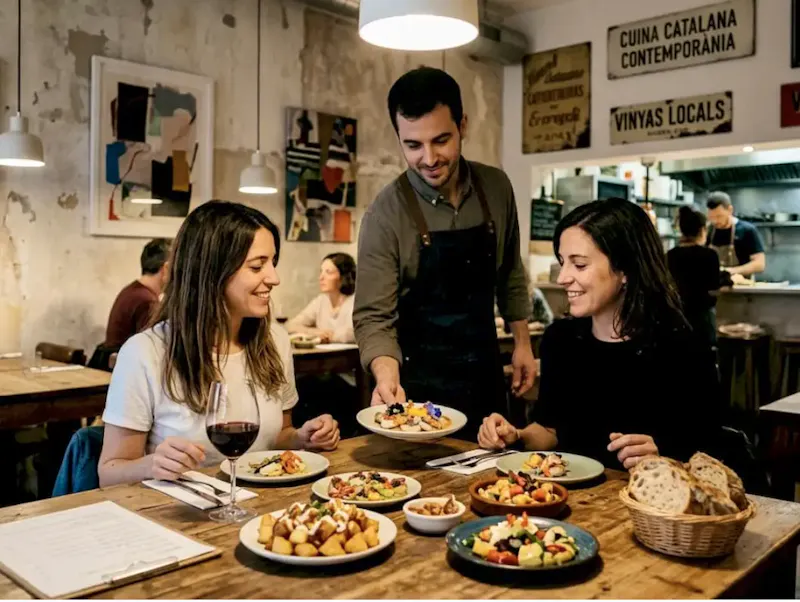
- Ambitious neighborhood cuisine: Restaurants in areas like the Raval or Poblenou that offer haute cuisine without the formal protocol.
- Forgotten ingredients: Reviving native varieties of vegetables, legumes, and grains at risk of extinction.
The most interesting thing about these trends is that they aren’t passing fads. They respond to a real demand from the most discerning diners: verifiable authenticity, reduced environmental impact, and an emotional connection to what they eat. A conscious foodie today doesn’t just ask how a dish is cooked. They ask where it comes from and what impact it has.
Urban neighborhoods are playing a crucial role in this democratization. You no longer need to go to a restaurant with linen tablecloths to enjoy a top-notch dining experience. More casual spots in the Raval or the Born are redefining what it means to eat well in Barcelona. Before your next outing, check the restaurant checklist to be well-prepared.
Discover unique experiences in Barcelona: experience modern Catalan cuisine!
After exploring the history, key players, and trends of modern Catalan cuisine, the next step is to experience it firsthand. At AFLAMAS, a contemporary fine-dining restaurant in Barcelona, you’ll find exactly that synthesis: fire, local ingredients, and technique all working together to create a complete sensory experience.
Our tasting menus change with the seasons, reflect the local terroir, and adapt to different dietary needs, including vegetarian, vegan, gluten-free, and lactose-free options. If you want to understand what exclusive cuisine represents in its most honest and contemporary form, AFLAMAS is your starting point. You can book your table directly on our website and ensure an experience that combines the best of new Catalan cuisine with genuine hospitality. Barcelona awaits you at the table.
Frequently Asked Questions About Modern Catalan Cuisine
What distinguishes modern Catalan cuisine from traditional Catalan cuisine?
Modern cuisine creatively reinvents traditional dishes and techniques through innovation and sustainability, without losing touch with its cultural roots. Traditional cuisine seeks to preserve; modern cuisine seeks to engage and expand.
Which chefs have driven modern Catalan cuisine?
Ferran Adrià, the Roca brothers, Jordi Cruz, and Carme Ruscalleda are the most influential figures, and their leadership following El Bulli has shaped the direction of an entire generation of Catalan chefs.
Where can I sample modern Catalan cuisine in Barcelona?
Restaurants such as El Celler de Can Roca, Moments, and Cinc Sentits offer seasonal tasting menus that represent the best of contemporary Catalan cuisine.
What is the most prevalent current trend in Catalan gastronomy?
Sustainability, local sourcing, and zero waste are the sector’s priorities, reinforced by Catalonia’s designation as a World Gastronomy Region for 2025–2026.
Discover also
What Does Exclusive Cuisine Represent? A Guide for Foodies
Discover what truly defines exclusive cuisine beyond price and luxury. A complete guide to ingredients, techniques, and unique gastronomic experiences.Sant Jordi Restaurant Barcelona | Special Menu Aflamas April 23
Looking for where to dine on Sant Jordi in Barcelona? Discover Aflamas’ special menu, perfect for a romantic dinner on April 23. Book now.Transform your celebrations: the key role of the restaurant in Barcelo
Discover how fine dining restaurants in Barcelona transform your celebrations into unique and unforgettable experiences.Sensory menu: what it is and how to experience it in Barcelona
Discover what a sensory menu is, how it stimulates the five senses, and where to enjoy the best gastronomic experiences in Barcelona, with options for vegetariaAuthor’s menu: what it is and how to enjoy unique experiences
Discover what an author’s menu is, how it is structured, how much it costs in Barcelona, and how to enjoy a unique and personalized gastronomic experience.Essential steps of a tasting dinner in Barcelona
Discover the essential steps of a tasting dinner in Barcelona: structure, real examples with up to 25 courses, and how to experience this unique culinary journe5 irresistible examples of sensory dining experiences in Barcelona
Discover the best examples of sensory dining experiences in Barcelona: darkness, 3D projections, and multisensory fine dining with vegan and gluten-free optionsAuthor’s cuisine: discover innovation and creativity in Barcelona
Discover what author’s cuisine is, how it differs from traditional cuisine, and where to enjoy the best author-driven dining experiences in Barcelona.How to customize a tasting menu for private events
Discover how to design a personalized tasting menu for private events in Barcelona, with vegetarian and vegan options, plus practical tips on logistics and pricTop 8 alternatives to brasseriedumonde.com in 2026: the best dining op
Discover 8 alternatives to brasseriedumonde.com and choose the best option for your dining experience.How to organize exclusive private events in Barcelona
The best gourmet vegetarian menus in Barcelona
Discover why choosing signature restaurants in Barcelona is best
Tasting Menu vs. À la Carte: Which Is Better?
How to Secure a Reservation at an Exclusive Restaurant in Barcelona: C
Descubre la checklist definitiva para reservar restaurantes exclusivos en Barcelona.Checklist for Booking a Restaurant and Enjoying Experiences
Discover the ultimate checklist for booking exclusive restaurants in Barcelona. Key criteria, personalized options, and strategies to secure your perfect diningGuide to Booking at Exclusive Restaurants in Barcelona
Discover how to book a table at exclusive restaurants in Barcelona with this practical guide. Steps, timing, common mistakes, and tips to secure your dining expNavidad
NAVIDAD A DOMICILIO CON AFLAMAS Cocina de Autor en tu Mesa Estas fiestas, celebra en casa sin renunciar al sabor. Aflamas te propone una selección de platos¿Qué es la cocina de autor?
¿Qué es la alta cocina?
View more