
Pick Wagyu when the meal is about indulgence and you want a small, rich portion that melts on the tongue. Pick Angus when you want a satisfying, full-size steak with classic beef flavor and a lower bill. Wagyu runs considerably more expensive per pound and rewards smaller servings, while Angus delivers reliable value across bigger cuts and everyday cooking.
TL;DR:
- Wagyu’s higher marbling percentage and lower fat melting point create a buttery mouthfeel, with smaller, richer portions compared to Angus.
- Angus provides reliable flavor, firmer texture, and better value for larger cuts suitable for everyday meals and traditional cooking methods.
- True Wagyu should be clearly labeled with breed percentages or BMS scores, as vague branding like “Wagyu-style” often indicates diluted products.
- Cooking Wagyu involves quick searing and thin slicing to preserve its melt-in-your-mouth texture, while Angus benefits from high-heat grilling to medium-rare.
- Finishing time, diet, and cut quality influence meat experience nearly as much as breed, making provenance and feeding details critical to selecting high-quality beef.
Table of Contents
- Angus Profile: What Defines Angus and What to Expect on the Plate
- Wagyu Profile: Why the Fat Itself Changes Everything
- Wagyu vs Angus: The Head-to-Head Comparison
- How Do You Choose the Right Beef for Your Situation?
- Understanding Grading Systems and Why Provenance Matters
- Cooking Angus and Wagyu the Right Way
- A Chef’s View: Choosing Angus or Wagyu for a Tasting Menu
- What This Comparison Gets Right (and Where Most Advice Falls Short)
- Taste the Difference Yourself
- Sources
Angus Profile: What Defines Angus and What to Expect on the Plate
Angus cattle are a Scottish-origin Bos taurus breed prized for consistent marbling and a straightforward, beefy flavor that most American diners grew up eating. Intramuscular fat (IMF) in Angus typically runs lower than Wagyu in intramuscular fat, as shown in comparative sensory testing(https://www.animbiosci.org/upload/pdf/ajas-20-0201.pdf), which gives it a firmer bite and a more pronounced meaty taste rather than a fatty one.
That firmness is exactly why Angus performs so well across different cooking styles:
- Ribeye and strip steaks hold up beautifully to high-heat grilling without falling apart.
- Rump and chuck cuts respond well to slow braising, developing deep flavor over time.
- Ground Angus keeps its structure in burgers instead of turning greasy.
The real advantage for most households is portion economics. You get a full, satisfying plate without needing to ration bites, which makes Angus the practical choice for weeknight dinners, family cookouts, and anyone who wants steak flavor without a luxury price tag.
Wagyu Profile: Why the Fat Itself Changes Everything
Wagyu isn’t one breed. It’s a category covering several Japanese cattle lines, most notably Japanese Black, prized for extreme marbling that can visually resemble a cut of pork belly more than a cut of beef. The distinguishing trait isn’t just how much fat Wagyu carries. It’s what that fat is made of.
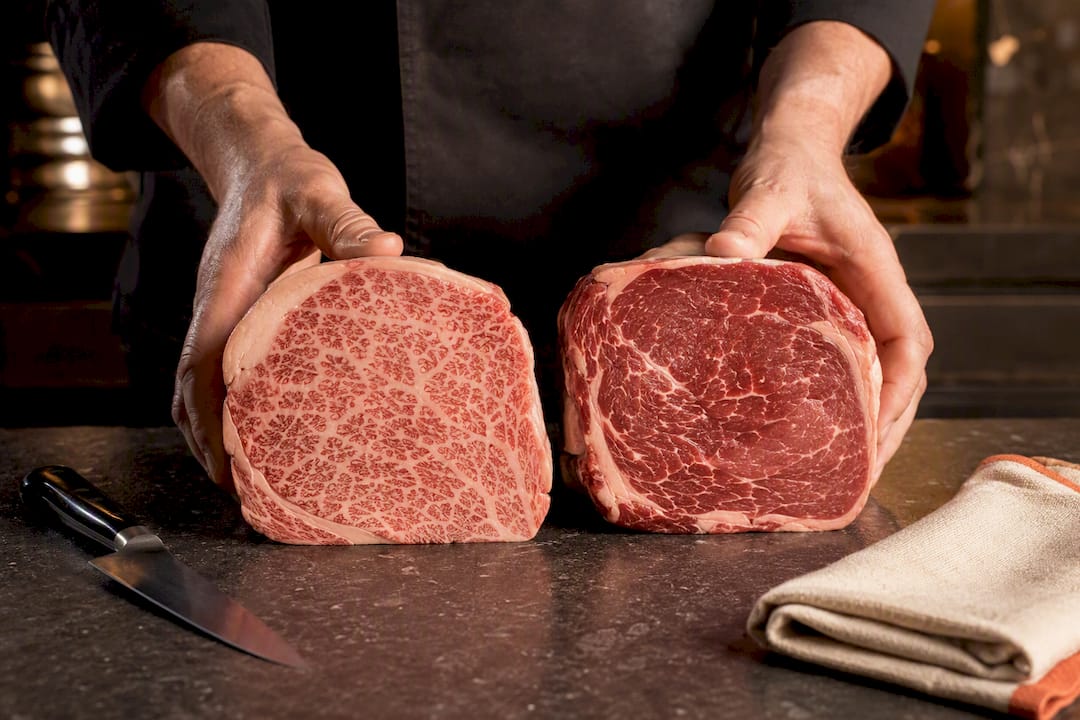
Wagyu intramuscular fat has a lower melting point and a higher concentration of monounsaturated fatty acids than Angus fat, which is why it seems to dissolve at close to body temperature rather than requiring heat to soften.
That fat chemistry drives everything else about the eating experience:
- A butter-like mouthfeel that coats the palate instead of chewing like traditional steak.
- Smaller portion sizes (often three to five ounces) because the richness satisfies faster than lean beef.
- Minimal seasoning, since salt and a hot pan are usually all the fat needs.
- Higher prices, driven by genetics, longer finishing periods, and strict certification standards in Japan.
Wagyu vs Angus: The Head-to-Head Comparison
The clearest data point in this whole debate comes from a controlled sensory study comparing ribeye from both breeds. Wagyu measured 33.90% intramuscular fat versus 20.87% for Angus, and scored higher across tenderness, juiciness, and overall acceptability in blind tasting panels. That’s not a marginal gap. It’s roughly 13 percentage points of marbling difference, enough to change texture, not just flavor intensity.
Fat quality tells the rest of the story. Wagyu’s higher oleic acid and MUFA content explains the “melts in your mouth” sensation, while Angus fat stays firmer and chewier at serving temperature, which many diners actually prefer for a traditional steak bite. Objective texture measurements back up the sensory panels too, with Wagyu often showing lower shear force values, though outcomes shift depending on the cut and how the cattle were finished.
| Factor | Angus | Wagyu |
|---|---|---|
| Marbling / IMF | ~20.87% | ~33.90% |
| Fat melting point | Higher, firmer | Lower, buttery |
| Flavor profile | Robust, beefy | Rich, delicate, fatty |
| Tenderness | Good | Exceptional |
| Relative price | Moderate | High to very high |
| Best cuts | Ribeye, strip, chuck | Ribeye, sirloin, small cuts |
| Cooking suitability | Grill, braise, sear | Quick sear, thin slices |
Quick decision guide:
- Splurging on a special occasion or want a few unforgettable bites? Choose Wagyu.
- Feeding a group or cooking a full steak dinner on a normal budget? Choose Angus.
- Want both textures on one plate? Order a smaller Wagyu course alongside an Angus main.
How Do You Choose the Right Beef for Your Situation?
Start with the occasion, not the price tag. A weeknight dinner calls for different beef than an anniversary meal, and matching expectations to the right breed avoids disappointment either way.
- Define the occasion first. Casual meal, milestone celebration, or dinner party centerpiece each point toward a different cut and breed.
- Set a per-person budget, since Wagyu is typically sold and priced by the ounce rather than the pound.
- Check the label language. Terms like “fullblood,” “F1,” “percent Wagyu,” and BMS (Beef Marbling Standard) score all indicate different breed content, and none of them are interchangeable with USDA grades.
- Ask your butcher or server about days on feed, country of origin, and whether the beef is domestic Wagyu-cross or imported Japanese Wagyu.
- Watch for red flags, like “Wagyu-style” labeling with no percentage disclosed, which usually signals a marketing term rather than verified breed content.
Pro Tip: If a menu lists “Wagyu” with no percentage or BMS score attached, ask directly. Genuine high-grade Wagyu sellers are proud to disclose it, and vague labeling is often the first sign of a diluted product.
Understanding Grading Systems and Why Provenance Matters
Japan grades Wagyu using the BMS scale, which runs roughly from 1 to 12 and measures marbling density directly, unlike the broader USDA system.
American Wagyu products, by contrast, usually carry breed-content labels such as F1 or purebred rather than a BMS number, since true Japanese-style grading isn’t standardized outside Japan.
Angus quality, meanwhile, gets evaluated under USDA’s Prime, Choice, and Select grades, which measure marbling too, but on a completely different scale and standard than BMS.
- These two systems don’t map onto each other, so a “Prime” Angus steak and a mid-range BMS Wagyu steak aren’t directly comparable despite both signaling quality within their own category.
- Finishing time and diet also shift outcomes considerably. Longer grain finishing tends to raise marbling and soften fat texture regardless of breed.
- When shopping, look for named certification programs (Certified Angus Beef, Japanese Wagyu export certification) rather than generic marketing language.
Cooking Angus and Wagyu the Right Way
Angus steaks reward a hot, dry sear. Cook ribeye or strip to 130 to 135°F internal for medium rare, then rest it five to seven minutes before cutting.
Wagyu asks for a different approach entirely:
- Cut it into smaller portions before cooking, since a little goes further than expected.
- Sear quickly over high heat for 60 to 90 seconds per side. Long cooking renders away the fat that makes Wagyu special.
- Season with salt only. Heavy spice rubs mask the buttery flavor you’re paying a premium for.
- Rest briefly, then slice thin against the grain to maximize the melting sensation in each bite.
Pro Tip: Serve Wagyu slightly warm rather than hot off the pan. A minute or two of rest lets the fat settle into a silkier texture instead of running off the plate.
A Chef’s View: Choosing Angus or Wagyu for a Tasting Menu
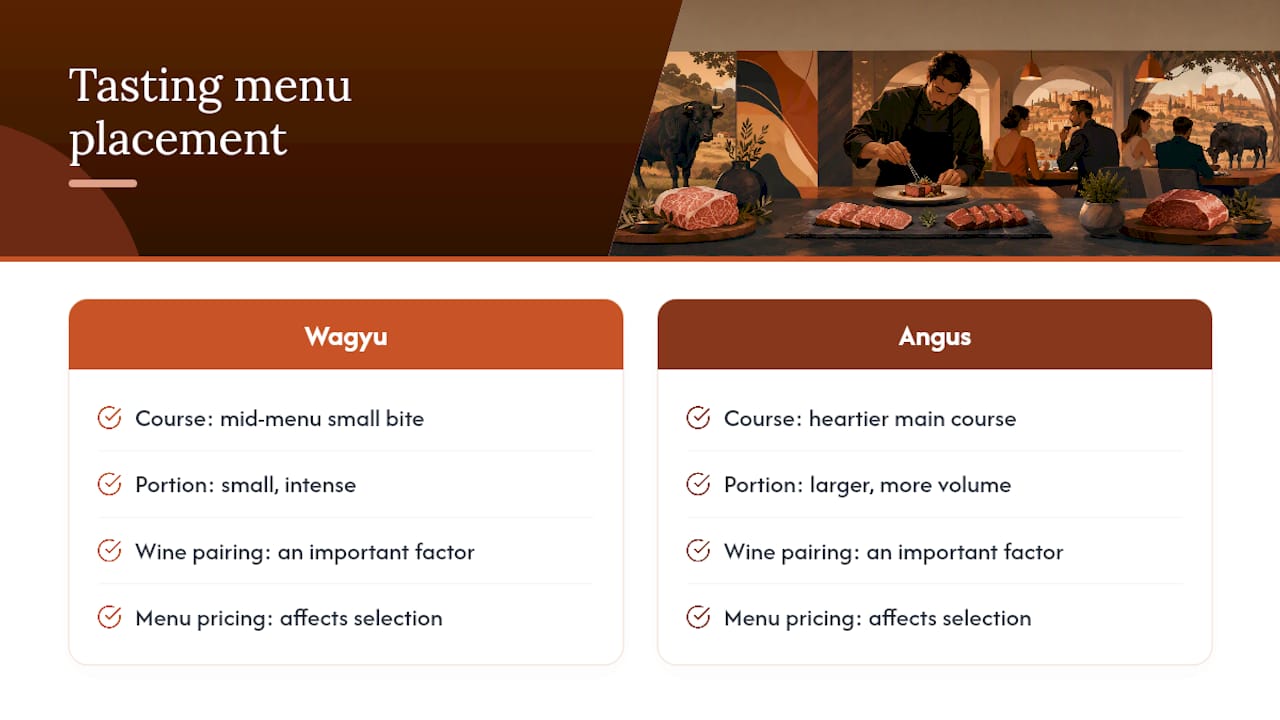
At Aflamas, the decision often comes down to course placement. Wagyu works best as a small, intense bite mid-menu, while Angus suits a heartier main course where diners want volume alongside flavor. Portion size, pairing wine, and overall menu pricing all factor into which breed earns its spot on a given night’s tasting menu.
What This Comparison Gets Right (and Where Most Advice Falls Short)
Most beef comparisons treat this as a simple hierarchy, with Wagyu automatically ranked “better” because it costs more and scores higher on marbling charts. That framing misses the point. The sensory data confirms Wagyu wins on tenderness and juiciness, but “better” depends entirely on what you’re trying to eat that night.
Where conventional advice really falls short is treating breed name as destiny. Research on crossbred cattle shows that finishing time, diet, and even the specific cut often move the needle on eating quality as much as breed content alone. A well-finished Angus ribeye can outperform a poorly finished low-percentage Wagyu cut, despite the fancier label.
If there’s one thing readers should prioritize first, it’s asking about finish and feed before they ask about breed name. A vendor who can answer questions about days on feed and breed percentage is a far better signal of quality than any marketing term printed on a menu. Trust the fat chemistry and the sourcing details over the hype attached to the word “Wagyu” itself.
— YellowRock
Taste the Difference Yourself
Reading about marbling percentages only goes so far. Both breeds can be served prepared with the technique each one demands, so you can taste the difference between Angus’s robust bite and Wagyu’s buttery melt in a single sitting.
Reserve a table through the tasting menu to experience how Aflamas balances portion, pairing, and price across a full course lineup, or check the signature menu if you’re looking for something more focused on a specific cut. Availability for specific beef preparations shifts with the season and current sourcing, so confirm details when booking. Planning a celebration for someone else? A gift card lets them make that same call for themselves.