The best group tasting menu is one set menu, built around the reason for the dinner, that moves from light to rich, follows the season and is confirmed with the kitchen in advance for every dietary need. Decide the purpose, the headcount and the per-person budget first. The courses come after. Below are concrete ideas, a structure you can copy and the logistics that decide whether a team dinner or celebration runs smoothly.
TL;DR
- Start with the occasion, guest count, budget per person and end time. Those four facts shape the menu more than any dish does.
- Use one shared progression for everyone: snacks, cold, fish or vegetable, fire-cooked main, dessert. Vary only the dishes that dietary needs force you to change.
- Build around seasonal Catalan produce. It tastes better and it keeps the menu coherent.
- Send dietary restrictions and allergies to the restaurant well before the date. Spanish rules require restaurants to give allergen information for every dish.
- At Aflamas, group formats start at €45 per person (Alma), with Fuego from €65 and Pasión from €95.
Table of Contents
- Start with the purpose of the dinner
- Group tasting menu ideas that work
- How to structure the courses
- Balancing individual preferences with one shared menu
- Dietary needs and allergies: what to ask and when
- Planning a team dinner in Barcelona
- Our perspective
- Our group menus and how to book
- Checklist before you book
- FAQ
- Sources
Start with the purpose of the dinner
A tasting menu for 12 colleagues celebrating a quarter-end is not the same job as a 40th birthday for 16 friends. Before you look at dishes, write down four things.
The purpose. A team dinner needs conversation, so you want a menu that does not demand silence or heavy concentration. A milestone celebration can carry more theater: dishes finished at the table, a toast timed with a course. A client dinner needs predictability and a clear end time.
The guest count. Small groups (6 to 10) can share one table and one rhythm, and the kitchen can plate every course at once. Larger groups usually need a private room or a reserved section, and a set menu helps there because every guest receives the same course at the same moment.
The budget per person. Decide whether drinks are inside or outside the figure. A menu at one price with wine pairing and coffee added later can surprise the person paying. Agree on the total, not only the food price.
The schedule. A full tasting progression takes time. Plan for a long dinner, and tell guests the start and expected finish. If people must catch a train or a flight, say so when you book, so the kitchen can set the pace.

If you are choosing between a few price levels, our guide to what tasting menu prices actually buy you explains what changes between a lower and a higher tier.
Group tasting menu ideas that work
Here are six themes that suit groups. Each one gives guests something to talk about and gives the kitchen a clear idea to cook toward.
1. A fire-led menu
Cooking over live fire gives a group a shared reference point: smoke, char, embers. A menu can open with a cold, bright starter, move to vegetables roasted in the coals, then fish, then a main grilled over wood, and close with a dessert that picks up a smoky note, such as caramelized fruit. Fire is our own focus at Aflamas, which is why our Fuego group menu is built around it.
2. A seasonal Catalan menu
Catalan cooking leans on seasonal, local produce, and Barcelona’s city authorities describe the cuisine’s emphasis on seasonal and zero-kilometre ingredients. That gives you a natural theme. In the colder months, traditional Catalan food includes escudella i carn d’olla in winter and calçots during the cold season, while escalivada appears in spring and summer. A contemporary kitchen does not serve these as they were served a century ago. It takes the flavor idea (roasted vegetables, a deep broth, a smoky sauce) and reworks it with modern technique. If your guests are visiting from abroad, this is the menu that tells them where they are. For context on what is truly Catalan rather than generally Spanish, see our piece on Catalan vs Spanish cuisine.
3. A sharing-style opening
Spain’s dining culture treats tapas as a social format, and pintxos as a creative Basque take on tapas. You can borrow that spirit without turning dinner into a tapas crawl: open the menu with three or four small bites passed around the table, then move to individual plated courses. It breaks the ice, gets people reaching and talking, and buys the kitchen time to settle the room.
4. A multisensory menu
Some groups want an evening that feels like an event. Chefs who took part in a blind tasting organized by ONCE said that removing sight heightened their attention to flavor and made them more aware of their other senses. You do not need to blindfold anyone to use the idea. Aroma at the table, a texture contrast in one course, a dish eaten by hand: small choices make a group notice what it is eating. We explain the approach in our guide to designing multisensory dining.
5. A menu with a wine thread
For a celebration, a pairing gives the dinner a spine. Small pours keep a long menu comfortable, and a non-alcoholic pairing should be offered alongside, so nobody feels left out. Our notes on how chefs and sommeliers pair wine with a tasting menu and wine pairing basics will help you decide before you talk to the restaurant.
6. A plant-forward or pescatarian menu
If half the table avoids meat, do not make a separate lesser menu. Build the whole progression around vegetables and fish, so everyone eats the same story. Our page on the pescatarian tasting menu in Barcelona shows what that can look like.
How to structure the courses
A group set menu works when each course has a job. A reliable arc for a dinner of six to eight courses looks like this.
| Stage | Purpose | Example idea |
|---|---|---|
| Welcome bites | Settle the room, start conversation | Two or three small bites passed around the table |
| Cold and bright | Wake the palate | Raw or lightly cured seasonal vegetable or fish, with acidity |
| Vegetable or sea | Build depth | Coal-roasted vegetable, or a fish with a light broth |
| Main fire course | The centerpiece | A cut cooked over wood, served with one sauce and one garnish |
| Pre-dessert | Reset | Citrus, herbs, something cold |
| Dessert and coffee | Close warmly | A dessert with a touch of smoke or caramel, then coffee or infusion |
Three principles keep the progression cohesive.
Move from light to rich, then reset. Do not put two creamy dishes back to back, and do not follow a heavy main with another heavy course. A sharp pre-dessert makes the sweet course taste better.
Repeat a few ingredients across courses. If the first course uses citrus and the dessert returns to it, the dinner feels designed rather than assembled. The same goes for a technique: when fire appears at the start and the middle, a smoky dessert feels like a payoff.
Let the season choose the produce. A tomato dish in January is a weak dish. Ask the restaurant what is at its best now, and accept their substitution when the market changes. Our seasonal menu page shows how we treat this.
If you are unsure whether you want a fixed progression or one the chef decides on the day, read how chefs’ choice menus differ from omakase and tasting menu vs omakase.
Balancing individual preferences with one shared menu
The usual worry with a set menu for groups is that someone will not like something. Three habits solve most of it.
Collect restrictions, not opinions. Ask each guest a single question: any allergies, intolerances or foods you cannot eat for medical, religious or ethical reasons? Dislikes are a different matter. A tasting menu is a trust exercise, and a long list of dislikes from ten guests produces a bland dinner.
Keep the menu the same wherever you can. The more variations on the table, the slower the service and the weaker the group feeling. A well-built menu already contains a vegetarian or gluten-free solution for most courses. Only swap the dishes that need it, and keep the swap equal in quality and presentation.
Offer a choice at one point only. Some groups like to give guests a choice at the main course, between fish and meat for example. One decision is manageable; three become an administrative burden. Collect choices before the day, not at the table.
The pace matters too. A kitchen serving a group needs to fire every plate together. That is easier when the menu is fixed and the number of guests is confirmed. Late arrivals slow the whole table, so tell guests the start time is firm.
Dietary needs and allergies: what to ask and when
This is the part of event menu planning where a mistake is serious, so treat it as a process.
- Ask early. Send the question when you send the invitation, and set a reply deadline well before the date.
- Ask specifically. “Celiac or mild sensitivity?” matters, because the kitchen handles them differently. The same goes for “allergic to nuts or only tree nuts?”
- Send the list to the restaurant in writing. Give names, the restriction and its severity. Do not rely on a phone call alone.
- Confirm again a few days before. Guests change their minds and plans, and a second check catches new restrictions.
- Remind guests to tell the server on the day. A message on the day is the last safety net.
Spanish restaurants are bound by clear rules here. Under European and Spanish regulation, hospitality businesses must inform customers about allergenic ingredients in every dish, either on written menus or through verbal communication backed by a written or electronic record. The same regional protocol says each shift needs at least one trained person in the kitchen and one in the service area for allergen management. Ask the restaurant how it handles this for a group booking, and who will brief the servers.
For guests with celiac disease, the risk is not only the ingredient but cross-contact in the kitchen. Our guide to gluten cross-contact in restaurants in Spain explains what to ask. Guests with a serious allergy should also check with their own doctor before a long dinner they cannot control, and carry any prescribed emergency medication.
Planning a team dinner in Barcelona
A team dinner in Barcelona has local quirks that a generic guide misses.
Timing. Dinner in Spain often starts later than visitors expect. If your group includes people from abroad, an early reservation helps them, and a later one suits locals. Pick a time and say it clearly in the invitation. For a weeknight team dinner, allow more time at the end for a coffee and a calm goodbye, not a rush to the metro.
Location and access. Choose a restaurant that is easy to reach on foot or by metro from the office or the hotel. Tell the restaurant if anyone uses a wheelchair or has limited mobility.
Privacy. If you will discuss business, or a presentation, or give a speech, ask whether a private room is available. A private dining room removes the noise and gives a speaker a captive and comfortable audience.
Local ingredients. Barcelona sits between the sea and the mountains, which is why its food mixes seafood with inland produce and legumes. A menu that uses that range lets a visiting team taste the city. Ask the kitchen to explain two or three dishes briefly as they arrive, which turns the meal into a shared story.

Budget and payment. Clarify before the day whether the price is per person, whether service and drinks are included, and whether a deposit is required. Agree who receives the invoice and what details it needs.
A sample timeline for 12 guests:
- Four to six weeks ahead: choose the format and the date, and request the room.
- Three weeks ahead: confirm the guest count and send the dietary questionnaire.
- One week ahead: send the final list of restrictions and the final headcount to the restaurant in writing.
- Two days ahead: reconfirm arrival time, and any changes.
- On the day: appoint one person as the contact for the restaurant.
Our perspective
We cook with fire and with what is in season around Barcelona, and that shapes how we think about group menus. A group does not need more dishes. It needs a clear idea carried from the first bite to the last.
That is why we build our group formats as three distinct experiences rather than one menu with a price list. Alma is the entry point, Fuego puts live fire at the center, and Pasión is the most complete progression. A host can choose according to the mood of the evening and the budget, without guessing what each tier means.
We also treat dietary needs as part of the design, not an afterthought. Vegetarian, vegan, gluten-free and lactose-free versions are part of what we offer, and the best results come when a host tells us early. Then the kitchen can plan the substitutions course by course, so every guest sits down to a menu that feels written for them.
Privacy is the last piece. When a group has its own room, the service can follow the group’s rhythm: a longer pause for a toast, a faster pace before a flight. That is what makes a long dinner feel generous instead of long.
YellowRock
Our group menus and how to book
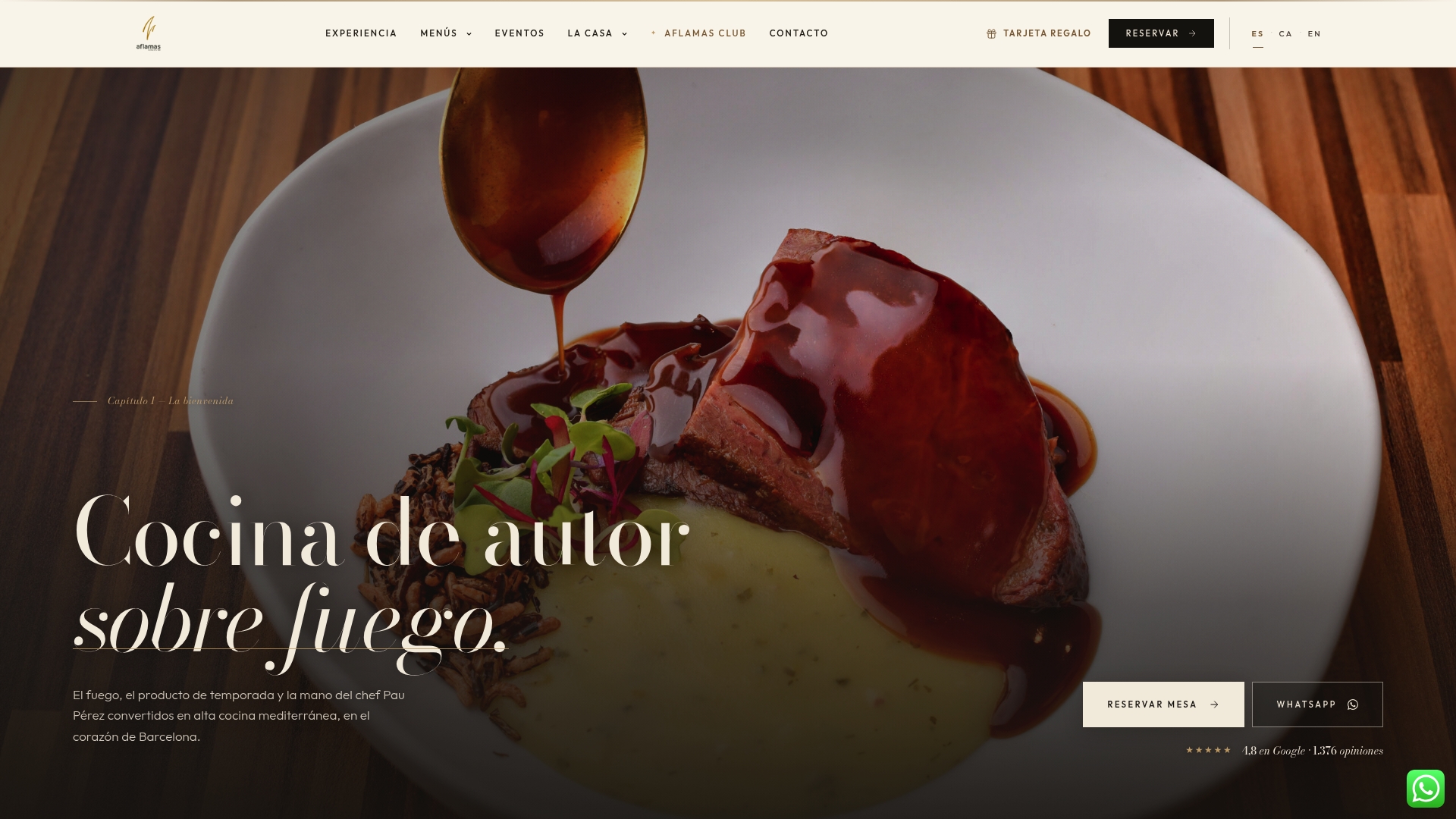
If you are planning a dinner for a team, a family or a celebration, our group menus start at €45 per person with Alma, from €65 with Fuego and from €95 with Pasión. They are built for groups, with private dining and the dietary adaptations described above. For the full picture and to ask for a quote, see our group menu page.
If only some of your guests are coming as a group, individual tasting menus run from Menú Ejecutivo at €35 per person to Menú Selección Autor at €90 per person. Giving a dinner as a present instead? Our gift card lets the recipient choose the date, and our guide on choosing between a gift card and a voucher lays out what to check in Spain.
Checklist before you book
- Is the purpose of the evening clear, and does the menu match it?
- Do you have a final headcount, and a date by which it can still change?
- Is the price per person confirmed, with a clear answer on drinks, coffee, service and deposit?
- Have all dietary restrictions been sent in writing, with severity?
- Do you know the start time, the expected end time, and who can approve changes on the day?
- Has the restaurant said who briefs the service team on allergens?
- Have you asked about a private room if you need to speak or present?
For smaller celebrations, the same logic applies at a smaller scale, as we show in our guide to tasting menu planning for intimate wedding dinners.
FAQ
How far ahead should I book a group tasting menu?
Book as soon as the date is fixed, especially for Fridays, Saturdays and the holiday season. Larger groups need more notice because a private room and the kitchen’s preparation both depend on the headcount. Confirm the final number and the dietary list in writing about a week before.
How many courses should a group set menu have?
Six to eight courses, including small opening bites and dessert, suits most groups. It gives the kitchen room to build a progression without making the dinner exhausting. If your guests have a hard end time, tell the restaurant, so it can adjust the number of courses or the pace.
Can a group set menu cover vegetarian, vegan, gluten-free and lactose-free guests?
Yes, if you tell the restaurant in advance. At Aflamas we adapt our menus for these diets. Send each restriction in writing, with names, so the kitchen can plan course by course. Spanish rules also require restaurants to provide allergen information for every dish.
What is a good budget per person for a team dinner?
That depends on what is included. At Aflamas, group menus start at €45 per person with Alma, €65 with Fuego and €95 with Pasión, and our individual tasting menus run from €35 to €150 per person. Always confirm whether drinks, service and coffee sit inside the price.
Is it better to choose the menu for everyone or let guests choose?
A single menu for everyone gives the smoothest service and the strongest group feeling. If you want to offer a choice, limit it to one course, usually the main, and collect the answers before the day.
Sources
- Comida española: platos típicos de cada región (Visit Spain)
- Traditional Catalan cuisine as a sustainable option (Info Barcelona)
- La comida típica de Barcelona, entre el mar y la montaña
- Protocolo de gestión de alérgenos en hostelería (Generalitat Valenciana)
- Chefs con estrellas Michelin y la cata a ciegas de ONCE (Servimedia)